Eclesiastes 2
The Orthodox Jewish Bible · Toque num versículo para ver as referências cruzadas.
The Futility of Pleasure
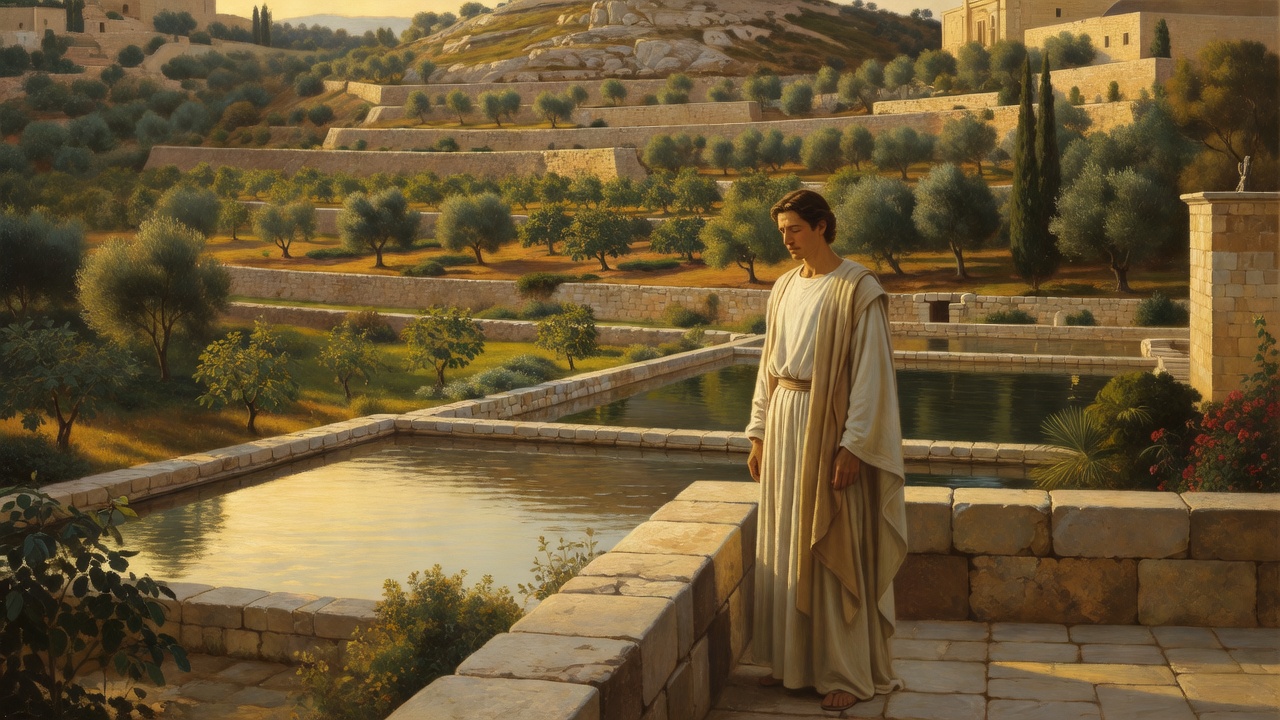
1I said in mine lev, Come now, I will test thee with simchah, therefore enjoy tov; and, hinei, this also is hevel. 2I said of laughter, It is mad; and of simchah, What doeth it accomplish? 3I searched in mine lev to draw my basar on with yayin, my mind guiding me with chochmah; and to lay hold on sichlut (folly), till I might see what was tov for bnei haAdam, which they should do under Shomayim all the few days of their life. 4I undertook me great works; I built me batim (houses); I planted me kramim (vineyards); 5I made me ganot (gardens) and parks, and I planted all kinds of fruit trees in them; 6I made me reservoirs of mayim, to water therewith the forest of trees tzomeiach (sprouting up); 7I bought me avadim and shfakhot, and had bnei bayit (avadim born in my bais); also I had great possessions of herds and tzon more than all that were in Yerushalayim before me; 8I amassed for me also kesef and zahav, and the treasure of melachim and of the provinces; I acquired for me men singers and women singers, and the delights of bnei haAdam, musical instruments of all kinds.
9So I was great, and excelled more than all that were before me in Yerushalayim; also my chochmah remained with me. 10And whatsoever mine eyes desired I kept not from them, I withheld not my lev from any simchah; for my lev rejoiced in all my amal (labor); and this was my chelek (portion) for all my amal. 11Then I looked on kol ma'asim that my hands had wrought, and on the amal that I had labored to do; and, hinei, all was hevel and chasing after ruach, and there was no profit under the shemesh.
The Wise and the Foolish
12And I turned myself to consider chochmah, and holelot, and sichlut; for what can the adam do who cometh after HaMelech? Even that which hath been done already. 13Then I saw that chochmah excelleth sichlut, as far as ohr excelleth choshech. 14The chacham (wise man) hath eyes in his rosh; but the kesil (fool) walketh in choshech; but I myself perceived also that the same mikreh (fortune) happeneth to them all. 15Then said I in my lev, As the mikreh befalls the kesil, so also will the same mikreh befall me; and wherein have I then been of more chochmah? Then I said in my lev, This also is hevel. 16For no zichron (remembrance) of the chacham — no less the kesil — remains l'olam; seeing that in hayamim haba'im (the days to come) all shall be forgotten. How can the chacham die just like the kesil? 17Therefore I hated HaChayyim (Life); because the ma'aseh that is wrought under the shemesh is grievous unto me; for all is hevel and chasing after ruach.
The Futility of Work
18Yea, I hated all my amal for which I had toiled under the shemesh; because I must leave it unto the adam that shall occupy my place after me. 19And who hath da'as whether he shall be a chacham or a kesil? Nevertheless shall he have shlitah (control, authority) over all my amal for which I have toiled, and have poured out my chochmah under the shemesh. This also is hevel. 20Therefore I turned aside to give up my lev to despair over all the wearisome amal with which I toiled under the shemesh. 21For there is an adam whose amal is with chochmah, and da'as, and kishron (skill); yet to an adam that hath not worked for it he must leave it for his chelek. This also is hevel and a ra'ah rabbah. 22For what hath adam for all his amal, and for all the striving of his lev, wherein he hath labored under the shemesh? 23For all his yamim are machovim (sorrows), and his travail ka'as (grief, vexation); yea, his lev taketh not rest balailah. This also is hevel.
24There is nothing better for adam, than that he should eat and drink, and that he should make his nefesh find satisfaction in his amal. Also this I saw; even this was from the Yad HaElohim. 25For who can eat, or who can find enjoyment without Hashem? 26For to the adam that is pleasing in His sight, Hashem gives chochmah, and da'as, and simchah; but to the choteh (sinner) Hashem giveth travail; Hashem giveth the work of gathering and storing up, that Hashem may give to him that pleases HaElohim. This also is hevel and chasing after ruach.
Você sabia?
A Busca por Prazer e Significado
- O narrador de Eclesiastes testa o valor da riqueza realizando grandes projetos de construção, plantando vinhedos e pomares, construindo reservatórios e acumulando ouro, prata e servos, superando todos os que governaram em Jerusalém antes dele.Fontes: o próprio texto bíblico · Jerusalem
- Embora a sabedoria seja reconhecida como superior à insensatez assim como a luz supera as trevas, o autor observa que tanto o sábio quanto o tolo enfrentam no fim o mesmo destino da morte e do esquecimento.Fontes: o próprio texto bíblico
- Apesar do desespero com a futilidade de deixar o fruto do trabalho para um sucessor desconhecido, o capítulo conclui que poder comer, beber e desfrutar do próprio trabalho é um dom que vem das mãos de Deus.Fontes: o próprio texto bíblico
Notas escritas com auxílio de IA a partir de fontes abertas (Theographic Bible Metadata, CC BY-SA 4.0; Easton’s Bible Dictionary, domínio público) e revisadas antes de publicar.
Lugares deste capítulo
Só aparecem lugares com identificação de alta confiança (90% ou mais segundo as fontes acadêmicas reunidas pelo OpenBible). Mapa da época: DARE (Digital Atlas of the Roman Empire), CC BY 4.0; mapa atual: © colaboradores do OpenStreetMap; lugares: OpenBible.info (CC BY 4.0).
Créditos e licença desta tradução
The Orthodox Jewish Bible
The Orthodox Jewish Bible - Tanakh and Orthodox Jewish Brit Chadasha - The Holy Bible
copyright © 2002-2011, 2021, 2024 Artists for Israel International
Language: English
Contributor: Artists for Israel International
THE ORTHODOX JEWISH TANAKH
Artists For Israel Intl Inc.
This version also appears with the Orthodox Yiddish Triglot which presents the Hebrew Yiddish script in Latin script and an English word for word translation, available at afii.org/Torah
To donate PayPal.Me
This translation is made available to you under the terms of the
Creative Commons Attribution license 4.0.
You may share and redistribute this Bible translation or extracts from it in any format, provided that:
You include the above copyright and source information.
If you make any changes to the text, you must indicate that you did so in a way that makes it clear that the original licensor is not necessarily endorsing your changes.
Pictures included with Scriptures and other documents on this site are licensed just for use with those Scriptures and documents.
For other uses, please contact the respective copyright owners.
Note that in addition to the rules above, revising and adapting God's Word involves a great responsibility to be true to God's Word. See Revelation 22:18-19.
2026-01-06
Títulos de seção adaptados da Berean Standard Bible (domínio público); não fazem parte do texto bíblico desta tradução.
Fonte: http://ebible.org/engojb/ · eBible.org