Deuteronômio 19
The Orthodox Jewish Bible · Toque num versículo para ver as referências cruzadas.
Cities of Refuge
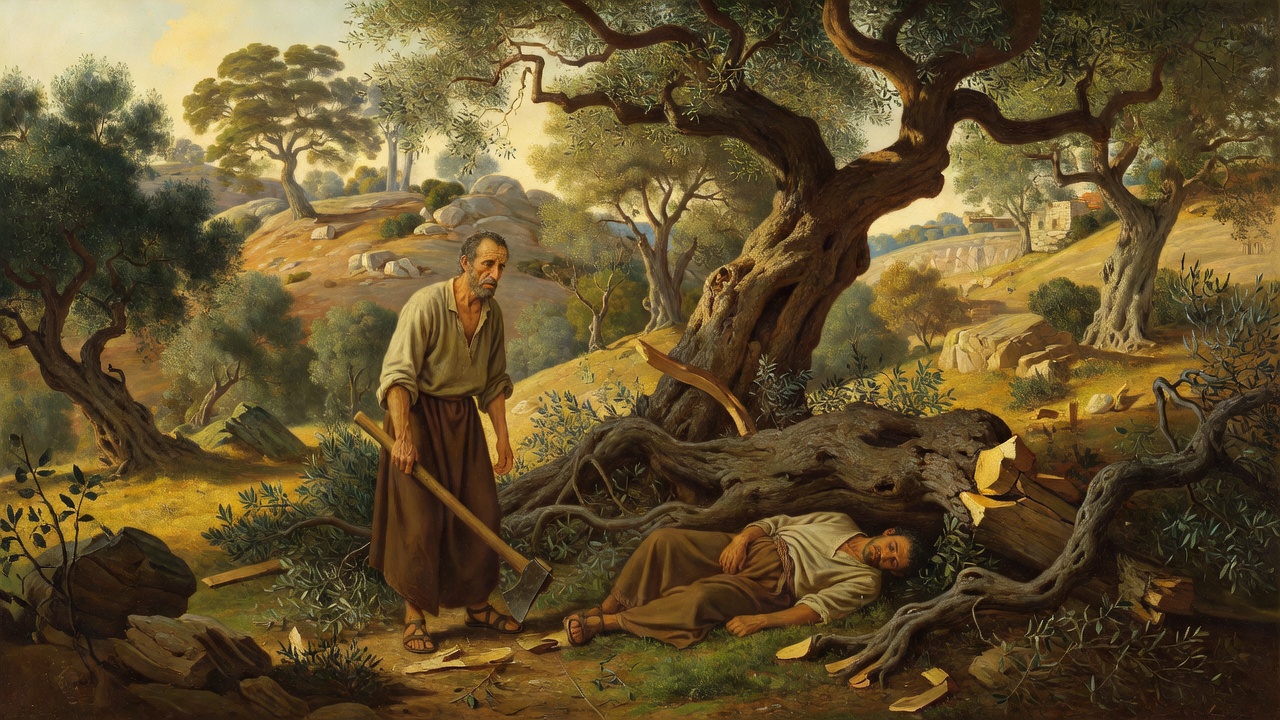
1When Hashem Eloheicha hath cut off the Goyim, whose land Hashem Eloheicha giveth thee, and thou dispossess them, and dwellest in their towns, and in their batim (houses), 2Thou shalt separate shalosh arim (three towns) for thee in the midst of thy land, which Hashem Eloheicha giveth thee to possess it. 3Thou shalt prepare yourselves roads, and divide the territory of thy land, which Hashem Eloheicha giveth thee to inherit, into three parts, that every slayer may flee there. 4And this is the case of the slayer, which shall flee there, that he may live: Whoso killeth his neighbor without da'as, whom he hated not in time past; 5As when an ish goeth into the wood with his neighbor to cut wood, his hand swings a stroke with the axe to cut down the tree, the head slippeth from the handle, and strikes upon his neighbor, that he die; he shall flee unto one of those towns, and live; 6Lest the Go'el HaDahm pursue the slayer, while his lev is hot, and overtake him, because the way is long, and slay him; whereas he was not worthy of death, inasmuch as he hated him not in time past. 7Therefore I command thee, saying, Thou shalt separate shalosh arim for thee. 8And if Hashem Eloheicha enlarge thy territory, as He hath sworn unto Avoteicha, and give thee kol ha'aretz which He promised to give unto Avoteicha; 9If thou shalt be shomer over all these mitzvot to do them, which I command thee today, to love Hashem Eloheicha, and to walk ever in His ways; then shalt thou add three towns more for thee, beside these three; 10That dahm naki (innocent blood) be not shed in thy land, which Hashem Eloheicha giveth thee for a nachalah, and so damim be upon thee.
11But if any ish hate his neighbor, and lie in wait for him, and rise up against him, and strike him mortally that he die, and fleeth into one of these towns; 12Then the zekenim of his town shall send and have him taken from there, and deliver him into the yad of the Goel HaDahm, that he may die. 13Thine eye shall not pity him, but thou shalt put away the guilt of dahm naki from Yisroel, that it may go well with thee.
14Thou shalt not remove thy neighborʼs landmark, which they of old time have set in thine nachalah, which thou shalt inherit in the eretz that Hashem Eloheicha giveth thee to possess it.
The Testimony of Two or Three Witnesses
15Ed echad shall not rise up against an ish for any avon (iniquity), or for any chattat (sin), in any sin that he sinneth: at the mouth of shney edim, or at the mouth of shloshah edim, shall the matter be established. 16If an ed chamas (malicious, false witness) rise up against any ish to testify against him that which is wrong; 17Then both the men, between whom the controversy is, shall stand before Hashem, before the kohanim and the shofetim, which shall be in those days; 18And the shofetim shall make diligent inquiry; and, hinei, if the witness be an ed sheker (false witness), and hath testified falsely against his brother; 19Then shall ye do unto him, as he had thought to have done unto his brother: so shalt thou put harah away from among you. 20And those which remain shall hear, and fear, and shall henceforth commit no more any such rah among you. 21And thine eye shall not pity; but nefesh shall go for nefesh, eye for eye, tooth for tooth, yad for yad, regel for regel.
Você sabia?
Cidades de refúgio, limites e justiça imparcial
- A lei ordenava que Israel separasse três cidades de refúgio e construísse estradas de acesso através de três regiões da terra. Essas cidades designadas permitiam que alguém que matasse o próximo por acidente, como no caso do ferro de um machado que se soltasse do cabo, fugisse em segurança do vingador do sangue.Fontes: o próprio texto bíblico
- Mudar o marco que demarcava a propriedade herdada de um vizinho era estritamente proibido. Esses marcos delimitavam as heranças de terra concedidas às famílias, e deslocá-los constituía uma apropriação indevida de terras.Fontes: o próprio texto bíblico
- Para evitar condenações injustas, uma única testemunha nunca era suficiente para estabelecer uma acusação, sendo necessários dois ou três testemunhos. Caso uma investigação de sacerdotes e juízes comprovasse que a testemunha havia mentido com malícia, ela recebia a pena exata que planejava impor ao acusado.Fontes: o próprio texto bíblico
Notas escritas com auxílio de IA a partir de fontes abertas (Theographic Bible Metadata, CC BY-SA 4.0; Easton’s Bible Dictionary, domínio público) e revisadas antes de publicar.
Créditos e licença desta tradução
The Orthodox Jewish Bible
The Orthodox Jewish Bible - Tanakh and Orthodox Jewish Brit Chadasha - The Holy Bible
copyright © 2002-2011, 2021, 2024 Artists for Israel International
Language: English
Contributor: Artists for Israel International
THE ORTHODOX JEWISH TANAKH
Artists For Israel Intl Inc.
This version also appears with the Orthodox Yiddish Triglot which presents the Hebrew Yiddish script in Latin script and an English word for word translation, available at afii.org/Torah
To donate PayPal.Me
This translation is made available to you under the terms of the
Creative Commons Attribution license 4.0.
You may share and redistribute this Bible translation or extracts from it in any format, provided that:
You include the above copyright and source information.
If you make any changes to the text, you must indicate that you did so in a way that makes it clear that the original licensor is not necessarily endorsing your changes.
Pictures included with Scriptures and other documents on this site are licensed just for use with those Scriptures and documents.
For other uses, please contact the respective copyright owners.
Note that in addition to the rules above, revising and adapting God's Word involves a great responsibility to be true to God's Word. See Revelation 22:18-19.
2026-01-06
Títulos de seção adaptados da Berean Standard Bible (domínio público); não fazem parte do texto bíblico desta tradução.
Fonte: http://ebible.org/engojb/ · eBible.org