Salmos 128
George Noyes Bible · Toque num versículo para ver as referências cruzadas.
The Blessed Fear of the LORD
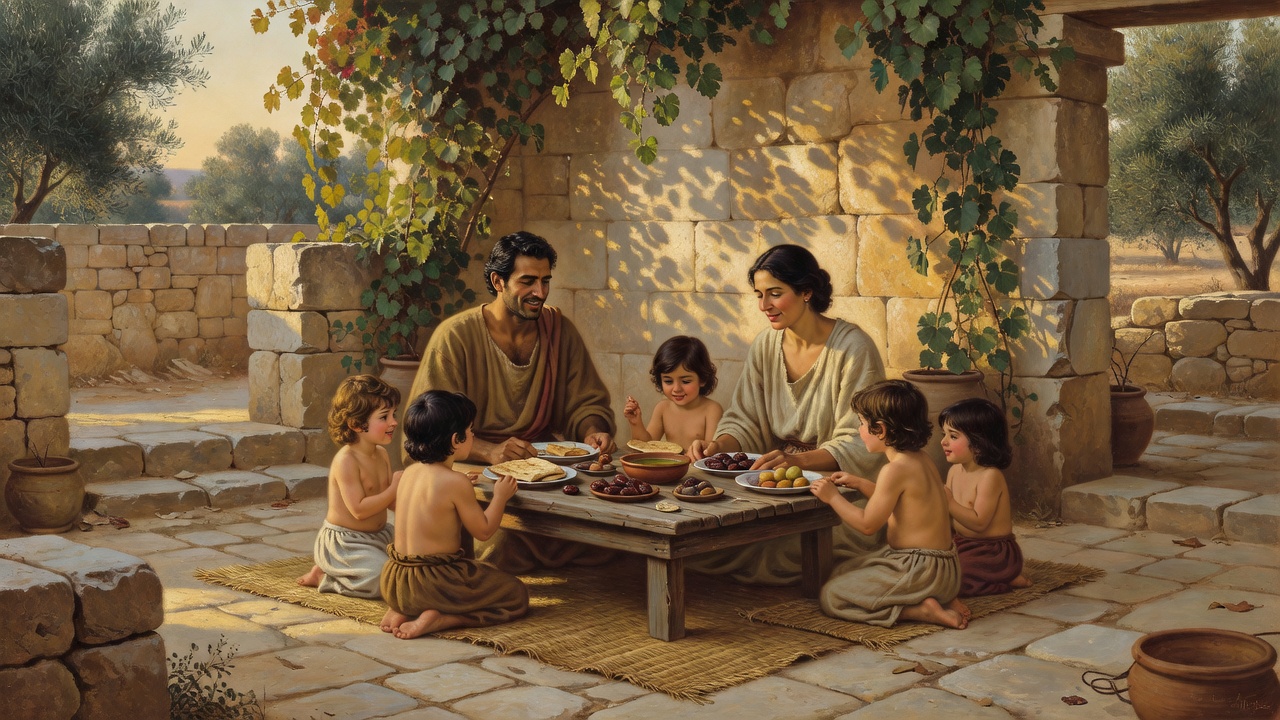
1“A psalm of the steps, or the goings up.” Happy is he who feareth the LORD, Who walketh in his ways! 2Thou shalt eat the labor of thy hands; Happy shalt thou be, and it shall be well with thee! 3Thy wife shall be like a fruitful vine within thy house; Thy children like olive-branches round about thy table. 4Behold! thus happy is the man who feareth the LORD! 5Jehovah shall bless thee out of Zion, And thou shalt see the prosperity of Jerusalem all the days of thy life; 6Yea, thou shalt see thy children's children. Peace be to Israel!
Você sabia?
Bênçãos da Família e a Paz de Jerusalém
- O Salmo 128 emprega metáforas agrícolas conhecidas para retratar a abundância doméstica, comparando a esposa a uma videira frutífera e os filhos reunidos à mesa a vigorosos brotos de oliveira.Fontes: o próprio texto bíblico
- O salmo é classificado como um Cântico de Peregrinação (ou de degraus), ligando o trabalho diário e a felicidade familiar ao bem-estar coletivo de Sião e de Jerusalém.Fontes: o próprio texto bíblico · Zion
- A bênção final de paz sobre Israel reflete o próprio significado tradicional de Jerusalém, cujo nome expressa a ideia de posse ou fundamento de paz.Fontes: o próprio texto bíblico · Jerusalem
Notas escritas com auxílio de IA a partir de fontes abertas (Theographic Bible Metadata, CC BY-SA 4.0; Easton’s Bible Dictionary, domínio público) e revisadas antes de publicar.
Lugares deste capítulo
Só aparecem lugares com identificação de alta confiança (90% ou mais segundo as fontes acadêmicas reunidas pelo OpenBible). Mapa da época: DARE (Digital Atlas of the Roman Empire), CC BY 4.0; mapa atual: © colaboradores do OpenStreetMap; lugares: OpenBible.info (CC BY 4.0).
Créditos e licença desta tradução
George Noyes Bible
The Holy Bible, translated into English by George Noyes (1869)
Public Domain
Language: English
Dialect: archaic British
Translation by: George Noyes
2019-10-24
Títulos de seção adaptados da Berean Standard Bible (domínio público); não fazem parte do texto bíblico desta tradução.
Fonte: http://ebible.org/engnoy/ · eBible.org