Levítico 21
NET Bible · Toque num versículo para ver as referências cruzadas.
1The Lord said to Moses: “Say to the priests, the sons of Aaron – say to them, ‘For a dead person no priest is to defile himself among his people, 2except for his close relative who is near to him: his mother, his father, his son, his daughter, his brother, 3and his virgin sister who is near to him, who has no husband; he may defile himself for her. 4He must not defile himself as a husband among his people so as to profane himself. 5Priests must not have a bald spot shaved on their head, they must not shave the corner of their beard, and they must not cut slashes in their body.
6“‘They must be holy to their God, and they must not profane the name of their God, because they are the ones who present the Lord’s gifts, the food of their God. Therefore they must be holy. 7They must not take a wife defiled by prostitution, nor are they to take a wife divorced from her husband, for the priest is holy to his God. 8You must sanctify him because he presents the food of your God. He must be holy to you because I, the Lord who sanctifies you all, am holy. 9If a daughter of a priest profanes herself by engaging in prostitution, she is profaning her father. She must be burned to death.
Rules for the High Priest
10“‘The high priest – who is greater than his brothers, on whose head the anointing oil is poured, who has been ordained to wear the priestly garments – must neither dishevel the hair of his head nor tear his garments. 11He must not go where there is any dead person; he must not defile himself even for his father and his mother. 12He must not go out from the sanctuary and must not profane the sanctuary of his God, because the dedication of the anointing oil of his God is on him. I am the Lord. 13He must take a wife who is a virgin. 14He must not marry a widow, a divorced woman, or one profaned by prostitution; he may only take a virgin from his people as a wife. 15He must not profane his children among his people, for I am the Lord who sanctifies him.’”
Rules for the Priesthood
16The Lord spoke to Moses: 17“Tell Aaron, ‘No man from your descendants throughout their generations who has a physical flaw is to approach to present the food of his God. 18Certainly no man who has a physical flaw is to approach: a blind man, or one who is lame, or one with a slit nose, or a limb too long, 19or a man who has had a broken leg or arm, 20or a hunchback, or a dwarf, or one with a spot in his eye, or a festering eruption, or a feverish rash, or a crushed testicle. 21No man from the descendants of Aaron the priest who has a physical flaw may step forward to present the Lord’s gifts; he has a physical flaw, so he must not step forward to present the food of his God. 22He may eat both the most holy and the holy food of his God, 23but he must not go into the veil-canopy or step forward to the altar because he has a physical flaw. Thus he must not profane my holy places, for I am the Lord who sanctifies them.’”
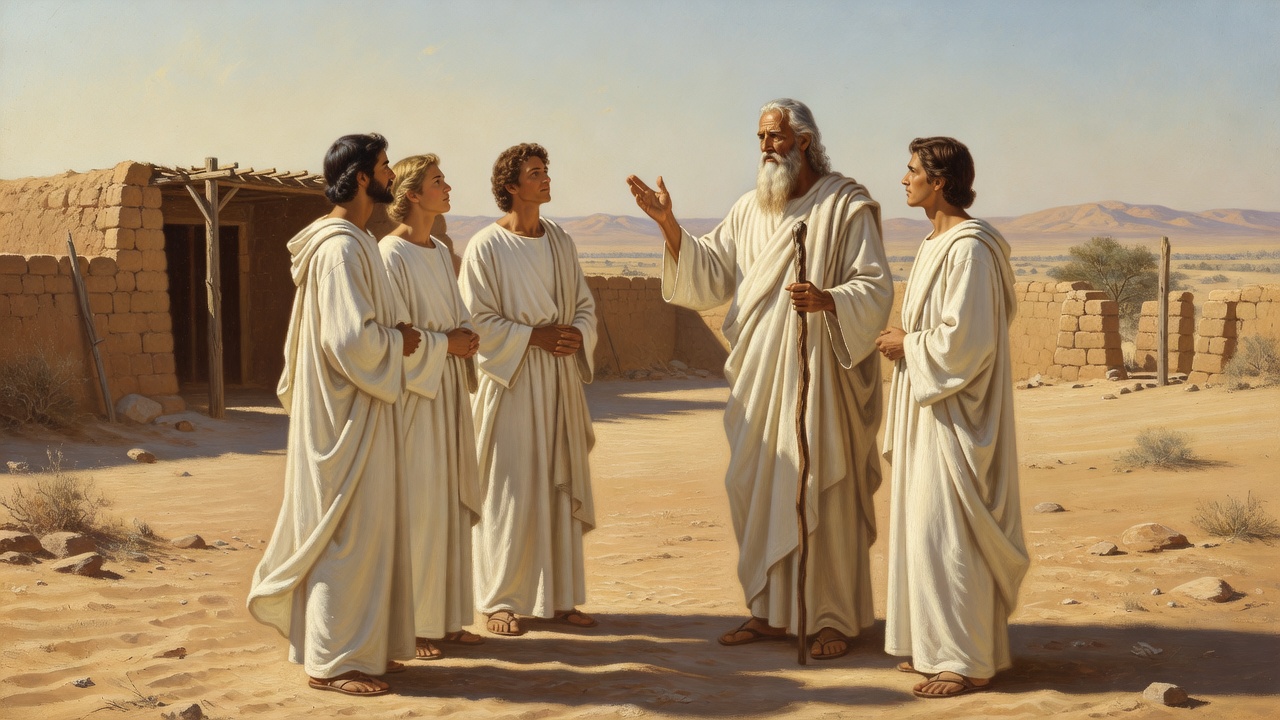
24So Moses spoke these things to Aaron, his sons, and all the Israelites.
Você sabia?
Santidade e Requisitos para o Sacerdócio
- Os sacerdotes comuns só podiam guardar luto por parentes consanguíneos imediatos — pais, filhos e irmãos solteiros —, enquanto o sumo sacerdote era estritamente proibido de se contaminar por qualquer cadáver, incluindo seus próprios pais, e não podia rasgar suas vestes em sinal de luto.Fontes: o próprio texto bíblico
- Enquanto os sacerdotes comuns eram proibidos de se casar com mulheres divorciadas ou prostitutas, o sumo sacerdote tinha uma exigência ainda mais rigorosa: só podia se casar com uma virgem do seu próprio povo.Fontes: o próprio texto bíblico
- Os descendentes de Arão com defeitos físicos ou lesões eram impedidos de apresentar ofertas queimadas no altar, mas ainda tinham permissão plena para comer das porções de alimentos santos e santíssimos.Fontes: o próprio texto bíblico
Notas escritas com auxílio de IA a partir de fontes abertas (Theographic Bible Metadata, CC BY-SA 4.0; Easton’s Bible Dictionary, domínio público) e revisadas antes de publicar.
Créditos e licença desta tradução
NET Bible
NET Bible®, New English Translation (NET)
copyright © 1996-2016 Biblical Studies Press, L. L. C.
Please see https://netbible.com/copyright/ for full NET Bible copyright and permissions information. You can also read the NET Bible at http://NETBible.org .
Language: English
Dialect (if applicable): American
Language in English: English
Translation by:
Please see https://netbible.com/copyright/ for full NET Bible copyright and permissions information. You can also read the NET Bible at http://NETBible.org .
The NET Bible (New English Translation) is a completely new translation of the Bible with 58,506 translators’ notes ! It was completed by more than 25 scholars – experts in the original biblical languages – who worked directly from the best currently available Hebrew, Aramaic, and Greek texts. Turn the pages and see the breadth of the translators’ notes, documenting their decisions and choices as they worked.
The translators’ notes make the original languages far more accessible, allowing you to look over the translator’s shoulder at the very process of translation. This level of documentation is a first for a Bible translation, making transparent the textual basis and the rationale for key renderings (including major interpretive options and alternative translations).
This unparalleled level of detail helps connect people to the Bible in the original languages in a way never before possible without years of study of Hebrew, Aramaic, and Greek. It unlocks the riches of the Bible’s truth from entirely new perspectives.
A donation is appreciated. Donate at Bible.org/donations_form so we can continue to provide our material for free for our 16,000+ articles on Bible.org and our world class Bible Study tool at lumina.bible.org .
2026-10-02
Fonte: http://ebible.org/engnet/ · eBible.org