1 Crônicas 7
NET Bible · Toque num versículo para ver as referências cruzadas.
1The sons of Issachar:
Tola, Puah, Jashub, and Shimron – four in all.
2The sons of Tola:
Uzzi, Rephaiah, Jeriel, Jahmai, Jibsam, and Samuel. They were leaders of their families. In the time of David there were 22,600 warriors listed in Tola’s genealogical records.
3The son of Uzzi:
Izrachiah.
The sons of Izrahiah:
Michael, Obadiah, Joel, and Isshiah. All five were leaders.
4According to the genealogical records of their families, they had 36,000 warriors available for battle, for they had numerous wives and sons. 5Altogether the genealogical records of the clans of Issachar listed 87,000 warriors.
Benjamin’s Descendants
6The sons of Benjamin:
Bela, Beker, and Jediael – three in all.
7The sons of Bela:
Ezbon, Uzzi, Uzziel, Jerimoth, and Iri. The five of them were leaders of their families. There were 22,034 warriors listed in their genealogical records.
8The sons of Beker:
Zemirah, Joash, Eliezer, Elioenai, Omri, Jeremoth, Abijah, Anathoth, and Alameth. All these were the sons of Beker. 9There were 20,200 family leaders and warriors listed in their genealogical records.
10The son of Jediael:
Bilhan.
The sons of Bilhan:
Jeush, Benjamin, Ehud, Kenaanah, Zethan, Tarshish, and Ahishahar. 11All these were the sons of Jediael. Listed in their genealogical records were 17,200 family leaders and warriors who were capable of marching out to battle.
12The Shuppites and Huppites were descendants of Ir; the Hushites were descendants of Aher.
Naphtali’s Descendants
13The sons of Naphtali:
Jahziel, Guni, Jezer, and Shallum – sons of Bilhah.
Manasseh’s Descendants
14The sons of Manasseh:
Asriel, who was born to Manasseh’s Aramean concubine. She also gave birth to Makir the father of Gilead. 15Now Makir married a wife from the Huppites and Shuppites. (His sister’s name was Maacah.)
Zelophehad was Manasseh’s second son; he had only daughters.
16Maacah, Makir’s wife, gave birth to a son, whom she named Peresh. His brother was Sheresh, and his sons were Ulam and Rekem.
17The son of Ulam:
Bedan.
These were the sons of Gilead, son of Makir, son of Manasseh. 18His sister Hammoleketh gave birth to Ishhod, Abiezer, and Mahlah.
19The sons of Shemida were Ahian, Shechem, Likhi, and Aniam.
Ephraim’s Descendants
20The descendants of Ephraim:
Shuthelah, his son Bered, his son Tahath, his son Eleadah, his son Tahath, 21his son Zabad, his son Shuthelah
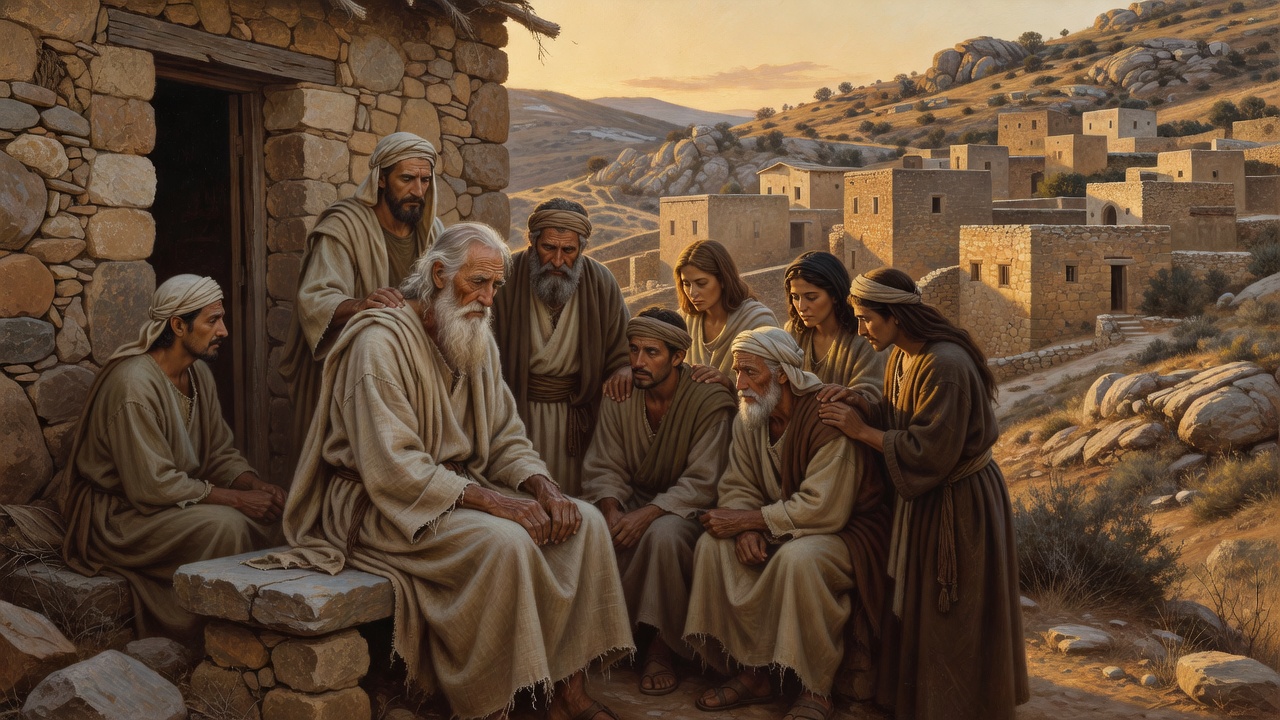
(Ezer and Elead were killed by the men of Gath, who were natives of the land, when they went down to steal their cattle. 22Their father Ephraim mourned for them many days and his brothers came to console him. 23He had sexual relations with his wife; she became pregnant and gave birth to a son. Ephraim named him Beriah because tragedy had come to his family. 24His daughter was Sheerah, who built Lower and Upper Beth Horon, as well as Uzzen Sheerah),
25his son Rephah, his son Resheph, his son Telah, his son Tahan, 26his son Ladan, his son Ammihud, his son Elishama, 27his son Nun, and his son Joshua.
28Their property and settlements included Bethel and its surrounding towns, Naaran to the east, Gezer and its surrounding towns to the west, and Shechem and its surrounding towns as far as Ayyah and its surrounding towns. 29On the border of Manasseh’s territory were Beth-Shean and its surrounding towns, Taanach and its surrounding towns, Megiddo and its surrounding towns, and Dor and its surrounding towns. The descendants of Joseph, Israel’s son, lived here.
Asher’s Descendants
30The sons of Asher:
Imnah, Ishvah, Ishvi, and Beriah. Serah was their sister.
31The sons of Beriah:
Heber and Malkiel, who was the father of Birzaith.
32Heber was the father of Japhlet, Shomer, Hotham, and Shua their sister.
33The sons of Japhlet:
Pasach, Bimhal, and Ashvath. These were Japhlet’s sons.
34The sons of his brother Shemer:
Rohgah, Hubbah, and Aram.
35The sons of his brother Helem:
Zophah, Imna, Shelesh, and Amal.
36The sons of Zophah:
Suah, Harnepher, Shual, Beri, Imrah, 37Bezer, Hod, Shamma, Shilshah, Ithran, and Beera.
38The sons of Jether:
Jephunneh, Pispah, and Ara.
39The sons of Ulla:
Arah, Hanniel, and Rizia.
40All these were the descendants of Asher. They were the leaders of their families, the most capable men, who were warriors and served as head chiefs. There were 26,000 warriors listed in their genealogical records as capable of doing battle.
Você sabia?
Genealogias das tribos do norte
- A genealogia de Efraim destaca uma mulher chamada Seerá, a quem se atribui a edificação de Bete-Horom Alta e Baixa, bem como de Uzém-Seerá. Esses povoados estratégicos ficavam ao longo do desfiladeiro montanhoso que descia para a planície costeira.Fontes: Beth-horon · Uzzen-sheerah · o próprio texto bíblico
- Uma breve narrativa relata que os filhos de Efraim, Ézer e Eleade, foram mortos pelos moradores de Gate durante uma tentativa de roubar gado. Efraim lamentou a perda por muitos dias antes de seus parentes virem consolá-lo, e seu filho seguinte recebeu o nome de Berias por causa dessa tragédia.Fontes: Gath · o próprio texto bíblico
- O capítulo traça a linhagem de Efraim até Josué, filho de Num, situando o destacado líder da conquista em sua ascendência tribal ao lado de figuras como Elisama e Amiúde.Fontes: o próprio texto bíblico
Notas escritas com auxílio de IA a partir de fontes abertas (Theographic Bible Metadata, CC BY-SA 4.0; Easton’s Bible Dictionary, domínio público) e revisadas antes de publicar.
Lugares deste capítulo
- Lower Beth-horon · Hoje: Beit Ur al Tahta · 31.895, 35.084 · versículo 24
- Upper Beth-horon · Hoje: Beit Ur al Fauqa · 31.886, 35.114 · versículo 24
- Gezer · Hoje: Tel Gezer · 31.859, 34.919 · versículo 28
- Shechem · Hoje: Tell Balatah · 32.214, 35.282 · versículo 28
- Megiddo · Hoje: Tel Megiddo · 32.585, 35.184 · versículo 29
- Taanach · Hoje: Tell Ta’anakh · 32.522, 35.219 · versículo 29
Só aparecem lugares com identificação de alta confiança (90% ou mais segundo as fontes acadêmicas reunidas pelo OpenBible). Mapa da época: DARE (Digital Atlas of the Roman Empire), CC BY 4.0; mapa atual: © colaboradores do OpenStreetMap; lugares: OpenBible.info (CC BY 4.0).
Créditos e licença desta tradução
NET Bible
NET Bible®, New English Translation (NET)
copyright © 1996-2016 Biblical Studies Press, L. L. C.
Please see https://netbible.com/copyright/ for full NET Bible copyright and permissions information. You can also read the NET Bible at http://NETBible.org .
Language: English
Dialect (if applicable): American
Language in English: English
Translation by:
Please see https://netbible.com/copyright/ for full NET Bible copyright and permissions information. You can also read the NET Bible at http://NETBible.org .
The NET Bible (New English Translation) is a completely new translation of the Bible with 58,506 translators’ notes ! It was completed by more than 25 scholars – experts in the original biblical languages – who worked directly from the best currently available Hebrew, Aramaic, and Greek texts. Turn the pages and see the breadth of the translators’ notes, documenting their decisions and choices as they worked.
The translators’ notes make the original languages far more accessible, allowing you to look over the translator’s shoulder at the very process of translation. This level of documentation is a first for a Bible translation, making transparent the textual basis and the rationale for key renderings (including major interpretive options and alternative translations).
This unparalleled level of detail helps connect people to the Bible in the original languages in a way never before possible without years of study of Hebrew, Aramaic, and Greek. It unlocks the riches of the Bible’s truth from entirely new perspectives.
A donation is appreciated. Donate at Bible.org/donations_form so we can continue to provide our material for free for our 16,000+ articles on Bible.org and our world class Bible Study tool at lumina.bible.org .
2026-10-02
Fonte: http://ebible.org/engnet/ · eBible.org