Provérbios 11
Updated Brenton English Septuagint · Toque num versículo para ver as referências cruzadas.
Dishonest Scales
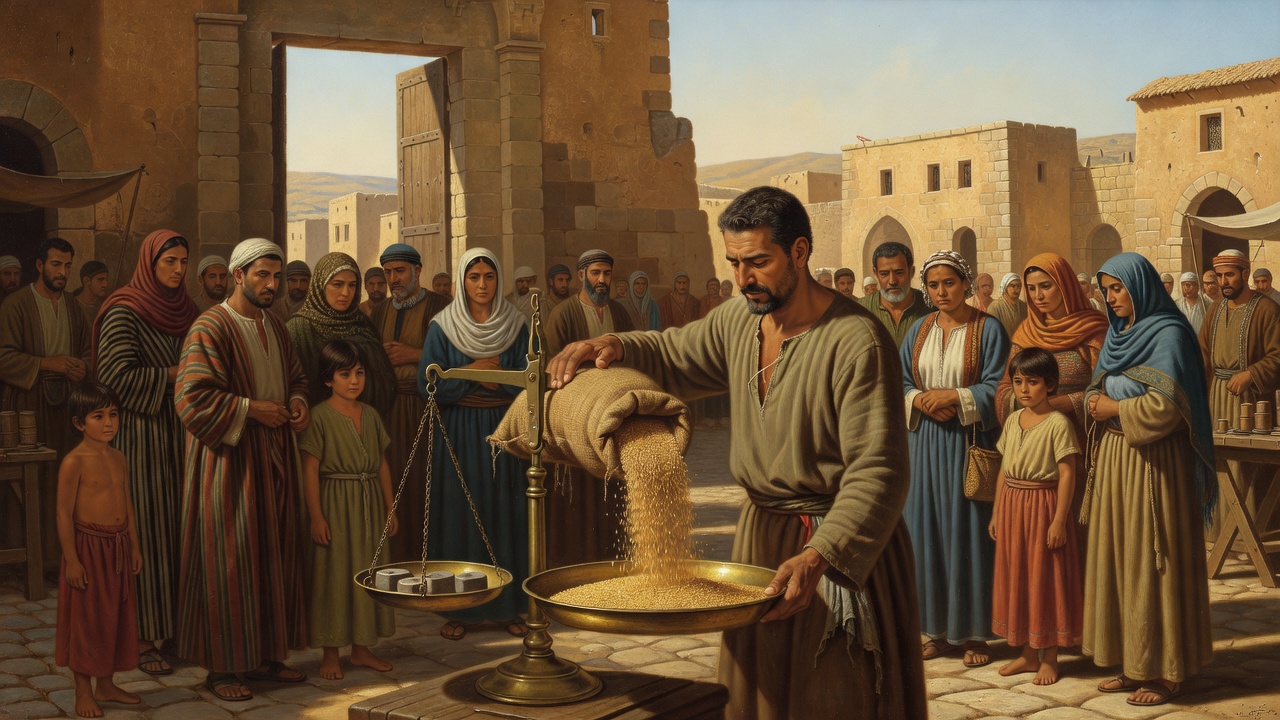
1False balances are an abomination before the Lord:
But a just weight is acceptable unto him.
2Wherever pride enters, there will be also disgrace:
But the mouth of the lowly meditates wisdom.
3When a just man dies he leaves regret:
But the destruction of the ungodly is speedy, and causes joy.
5Righteousness traces out blameless paths:
But ungodliness encounters unjust dealing.
6The righteousness of upright men delivers them:
But transgressors are caught in their own destruction.
7At the death of a just man his hope does not perish:
But the boast of the ungodly perishes.
8A righteous man escapes from a snare,
And the ungodly man is delivered up in his place.
9In the mouth of ungodly men is a snare to citizens:
But the understanding of righteous men is prosperous.
10In the prosperity of righteous men a city prospers:
11But by the mouths of ungodly men it is overthrown.
12A man void of understanding sneers at his fellow citizens:
But a sensible man is quiet.
13A double-tongued man discloses the secret counsels of an assembly:
But he that is faithful in spirit conceals matters.
14They that have no guidance fall like leaves:
But in much counsel there is safety.
15A bad man does harm wherever he meets a just man:
And he hates the sound of safety.
16A gracious wife brings glory to her husband:
But a woman hating righteousness is a theme of dishonor.
The slothful come to want:
But the diligent support themselves with wealth.
17A merciful man does good to his own soul:
But the merciless destroys his own body.
18An ungodly man performs unrighteous works:
But the seed of the righteous is a reward of truth.
19A righteous son is born for life:
But the persecution of the ungodly ends in death.
20Perverse ways are an abomination to the Lord:
But all they that are blameless in their ways are acceptable to him.
21He that unjustly strikes hands shall not be unpunished:
But he that sows righteousness shall receive a faithful reward.
22As an ornament in a swine’s snout,
So is beauty to an ill-minded woman.
23All the desire of the righteous is good:
But the hope of the ungodly shall perish.
24There are some who scatter their own, and make it more:
And there are some also who gather, yet have less.
25Every sincere soul is blessed:
But a passionate man is not graceful.
26May he that hoards corn leave it to the nation:
But blessing be on the head of him that gives it.
27He that devises good counsels seeks good favor:
But as for him that seeks after evil, evil shall overtake him.
28He that trusts in wealth shall fall;
But he that helps righteous men shall rise.
29He that deals not graciously with his own house shall inherit the wind;
And the fool shall be servant to the wise man.
30Out of the fruit of righteousness grows a tree of life;
But the souls of transgressors are cut off before their time.
31If the righteous scarcely be saved,
Where shall the ungodly and the sinner appear?
Você sabia?
Integridade, riqueza e a comunidade
- O comércio antigo dependia de balanças com pesos de pedra para medir metais preciosos e mercadorias. O capítulo começa condenando balanças desonestas e elogiando o peso justo, ressaltando que a honestidade nas transações cotidianas reflete a conduta perante Deus.Fontes: o próprio texto bíblico
- Provérbios 11 destaca o impacto cívico do comportamento individual, observando que a estabilidade e a alegria de uma cidade dependem da integridade dos justos, de sábios conselheiros e de líderes retos, em contraste com a influência destrutiva dos ímpios.Fontes: o próprio texto bíblico
- Nas sociedades agrícolas, reter grãos em tempos de escassez para inflacionar os preços causava sofrimento generalizado. O capítulo contrasta quem retém o cereal, atraindo a maldição do povo, com aquele que se dispõe a vendê-lo para sustentar seus vizinhos.Fontes: o próprio texto bíblico
Notas escritas com auxílio de IA a partir de fontes abertas (Theographic Bible Metadata, CC BY-SA 4.0; Easton’s Bible Dictionary, domínio público) e revisadas antes de publicar.
Créditos e licença desta tradução
Updated Brenton English Septuagint
Spelling and formatting update of the Brenton English Septuagint with Apocrypha
Public Domain
Language: English
Dialect: Mixed
Translation by: Sir Lancelot C. L. Brenton
Contributor: Adam Boyd
Original work was by Sir Lancelot C. L. Brenton in 1851.
CC0 Public Domain dedication on language updates by Adam Boyd in 2020.
2026-02-18
Títulos de seção adaptados da Berean Standard Bible (domínio público); não fazem parte do texto bíblico desta tradução.
Fonte: http://ebible.org/englxxup/ · eBible.org