Deuteronômio 24
Isaac Leeser Tanakh · Toque num versículo para ver as referências cruzadas.
Marriage and Divorce Laws
1When a man hath taken a wife, and married her, and it come to pass, that if she find no favor in his eyes, because he hath found some scandalous thing in her, he may write her a bill of divorcement, and give it in her hand, and send her away out of his house; 2And she shall depart out of his house; and if she go and become another man's wife; 3And the latter husband hate her, and write her a bill of divorcement, and give it in her hand, and send her away out of his house; or if the latter husband, who took her as his wife, should die: 4Then shall her former husband, who had sent her away, not be at liberty to take her again to be his wife, after she hath been defiled; for it is abomination before the Lord; and thou shalt not bring sin upon the land, which the Lord thy God giveth thee for an inheritance. 5When a man hath taken a new wife, he shall not go out to war, neither shall he be charged with any public business: he shall be free for his house one year, and shall cheer up his wife whom he hath taken.
Additional Laws
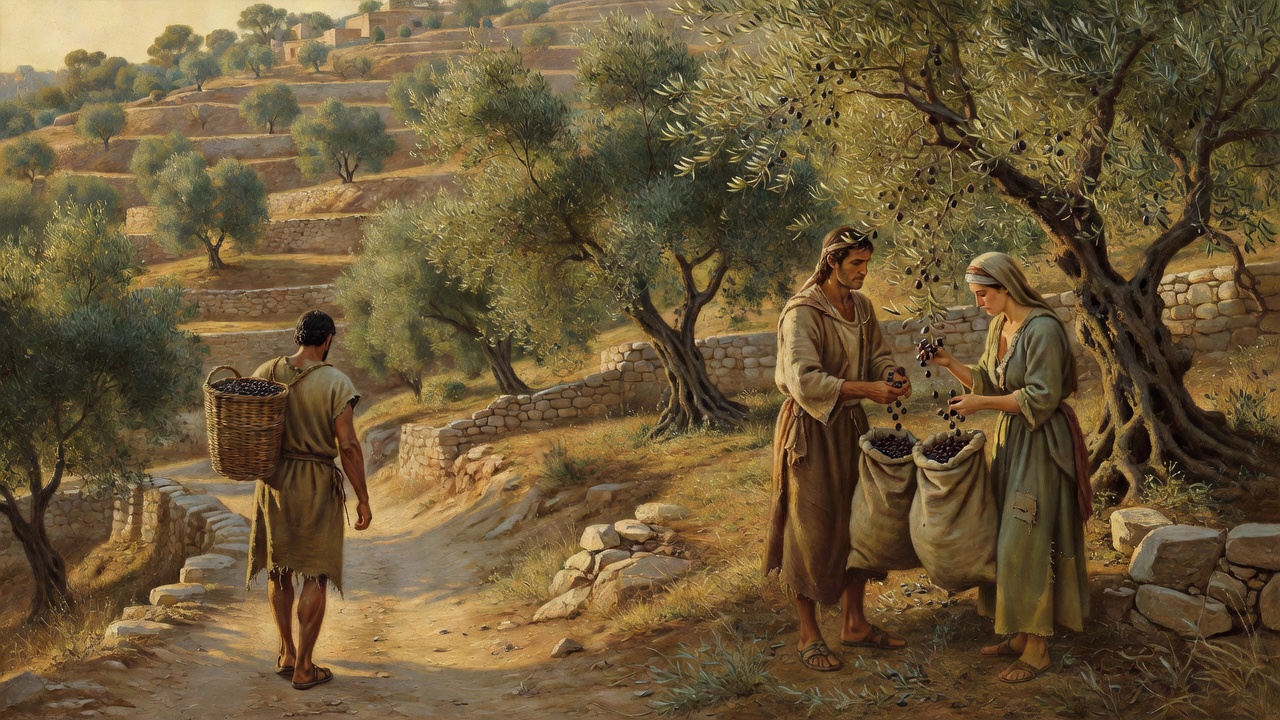
6No man shall take to pledge the nether or the upper millstone; for he taketh a man's life to pledge. 7If a man be found stealing any one of his brethren of the children of Israel, and he treateth him as a slave, and selleth him: then shall that thief die; and thou shalt put the evil away from the midst of thee. 8Take heed of the plague of leprosy, to observe diligently, and to do according to all that the priests, the Levites, may instruct you; as I have commanded them, so shall ye observe to do. 9Remember what the Lord thy God did unto Miriam on the journey, at your coming forth out of Egypt. 10When thou dost lend thy brother any thing as a loan, thou shalt not go into his house to take his pledge. 11In the street shalt thou stand, and the man to whom thou dost lend shall bring out unto thee the pledge into the street. 12And if he be a poor man, thou shalt not lie down with his pledge: 13Thou shalt punctually deliver him the pledge again when the sun goeth down, that he may lie under his own cover, and bless thee; and unto thee shall it be as righteousness before the Lord thy God. 14Thou shalt not withhold the wages of a hired man, of the poor and needy, [whether he be] of thy brethren, or of the strangers that are in thy land within thy gates. 15On the same day shalt thou give him his wages, that the sun may not go down upon it; for he is poor, and his soul longeth for it; so that he may not cry against thee unto the Lord, and it be sin in thee. 16Fathers shall not be put to death for the children, neither shall children be put to death for the fathers: for his own sin shall every man be put to death. 17Thou shalt not pervert the cause of the stranger, or of the fatherless; and thou shalt not take in pledge the raiment of a widow; 18But thou shalt remember that thou waste a bond-man in Egypt, and that the Lord thy God redeemed thee thence; therefore do I command thee to do this thing. 19When thou cuttest down thy harvest in thy field, and forgettest a sheaf in the field, thou shalt not go back to fetch it; for the stranger, for the fatherless, and for the widow shall it be; in order that the Lord thy God may bless thee in all the work of thy hands. 20When thou beatest thy olive-tree, thou shalt not go over the boughs again; for the stranger, for the fatherless, and for the widow shall it be. 21When thou gatherest the grapes of thy vineyard, thou shalt not glean the small fruit afterward; for the stranger, for the fatherless, and for the widow shall it be. 22And thou shalt remember that thou wast a bond-man in the land of Egypt; therefore do I command thee to do this thing:
Você sabia?
Leis de Compaixão, Justiça e Proteção Social
- As leis de colheita israelitas exigiam que os proprietários deixassem feixes esquecidos de cereais, azeitonas restantes e respigos de uvas para os grupos vulneráveis: o estrangeiro residente, o órfão e a viúva. Esse sistema de assistência apoiava-se na memória coletiva de que os israelitas haviam sido escravos no Egito.Fontes: o próprio texto bíblico · Egypt
- Devedores e trabalhadores assalariados contavam com limites legais explícitos. Os credores eram proibidos de entrar na casa de um devedor para tomar penhores, de reter mós indispensáveis ao sustento diário ou de guardar a capa de dormir de uma pessoa pobre após o pôr do sol, além de deverem pagar os diaristas antes do anoitecer.Fontes: o próprio texto bíblico
- Ao dar instruções sobre doenças infecciosas da pele e as orientações dos sacerdotes levíticos, o texto relembra a aflição que atingiu Miriã, irmã de Moisés e Arão, durante a caminhada pelo deserto após a saída do Egito.Fontes: o próprio texto bíblico · Miriam · Egypt
Notas escritas com auxílio de IA a partir de fontes abertas (Theographic Bible Metadata, CC BY-SA 4.0; Easton’s Bible Dictionary, domínio público) e revisadas antes de publicar.
Lugares deste capítulo
Só aparecem lugares com identificação de alta confiança (90% ou mais segundo as fontes acadêmicas reunidas pelo OpenBible). Mapa da época: DARE (Digital Atlas of the Roman Empire), CC BY 4.0; mapa atual: © colaboradores do OpenStreetMap; lugares: OpenBible.info (CC BY 4.0).
Créditos e licença desta tradução
Isaac Leeser Tanakh
The Isaac Leeser Tanakh (Jewish Bible)
Public Domain
Language: English
Dialect: archaic British
Translation by: Isaac Leeser
2020-10-14
Títulos de seção adaptados da Berean Standard Bible (domínio público); não fazem parte do texto bíblico desta tradução.
Fonte: http://ebible.org/englee/ · eBible.org