Salmos 32
JPS TaNaKH 1917 · Toque num versículo para ver as referências cruzadas.
The Joy of Forgiveness
1A Psalm of David. Maschil. Happy is he whose transgression is forgiven, whose sin is pardoned. 2Happy is the man unto whom the LORD counteth not iniquity, and in whose spirit there is no guile. 3When I kept silence, my bones wore away through my groaning all the day long. 4For day and night Thy hand was heavy upon me; my sap was turned as in the droughts of summer. Selah 5I acknowledged my sin unto Thee, and mine iniquity have I not hid; I said: 'I will make confession concerning my transgressions unto the LORD' — and Thou, Thou forgavest the iniquity of my sin. Selah 6For this let every one that is godly pray unto Thee in a time when Thou mayest be found; surely, when the great waters overflow, they will not reach unto him. 7Thou art my hiding-place; Thou wilt preserve me from the adversary; with songs of deliverance Thou wilt compass me about. Selah 8'I will instruct thee and teach thee in the way which thou shalt go; I will give counsel, Mine eye being upon thee.' 9Be ye not as the horse, or as the mule, which have no understanding; whose mouth must be held in with bit and bridle, that they come not near unto thee. 10Many are the sorrows of the wicked; but he that trusteth in the LORD, mercy compasseth him about. 11Be glad in the LORD, and rejoice, ye righteous; and shout for joy, all ye that are upright in heart.
Você sabia?
A Alegria do Perdão e da Orientação
- O salmo abre com um título que o designa como um Masquil de Davi, termo tradicionalmente associado a um poema instrutivo ou contemplativo, refletindo sobre o contraste entre a angústia do pecado oculto e a bênção do perdão.Fontes: o próprio texto bíblico
- O termo hebraico Selá aparece três vezes neste salmo (versículos 4, 5 e 7), sendo comumente interpretado como uma pausa musical ou um momento de reflexão durante a recitação do texto.Fontes: o próprio texto bíblico
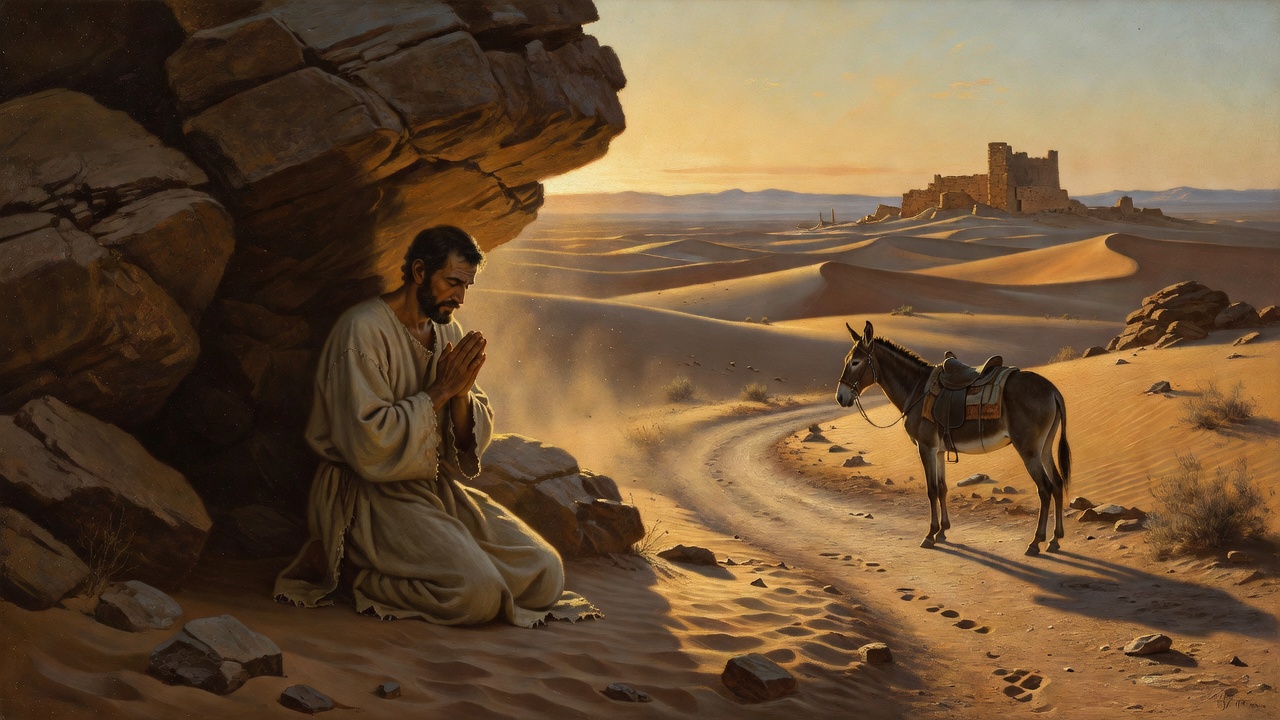
- O salmo utiliza a figura de animais de tração, contrastando a pessoa que segue voluntariamente o conselho divino com cavalos e mulas obstinados, que exigem freio e rédea para serem conduzidos.Fontes: o próprio texto bíblico
Notas escritas com auxílio de IA a partir de fontes abertas (Theographic Bible Metadata, CC BY-SA 4.0; Easton’s Bible Dictionary, domínio público) e revisadas antes de publicar.
Créditos e licença desta tradução
JPS TaNaKH 1917
The Jewish Bible (Old Testament) in English, published by the Jewish Publication Society in 1917
Public Domain
Language: English
Dialect: American
Translation by: Jewish Publication Society
This copy of the Old JPS TaNaKH by the Jewish Publication Society is brought to you courtesy of eBible.org . For the new JPS TaNaKH (1972, 1978, 1980), please see jps.org .
2023-09-19
Títulos de seção adaptados da Berean Standard Bible (domínio público); não fazem parte do texto bíblico desta tradução.
Fonte: http://ebible.org/engjps/ · eBible.org