Eclesiastes 4
JPS TaNaKH 1917 · Toque num versículo para ver as referências cruzadas.
The Evil of Oppression
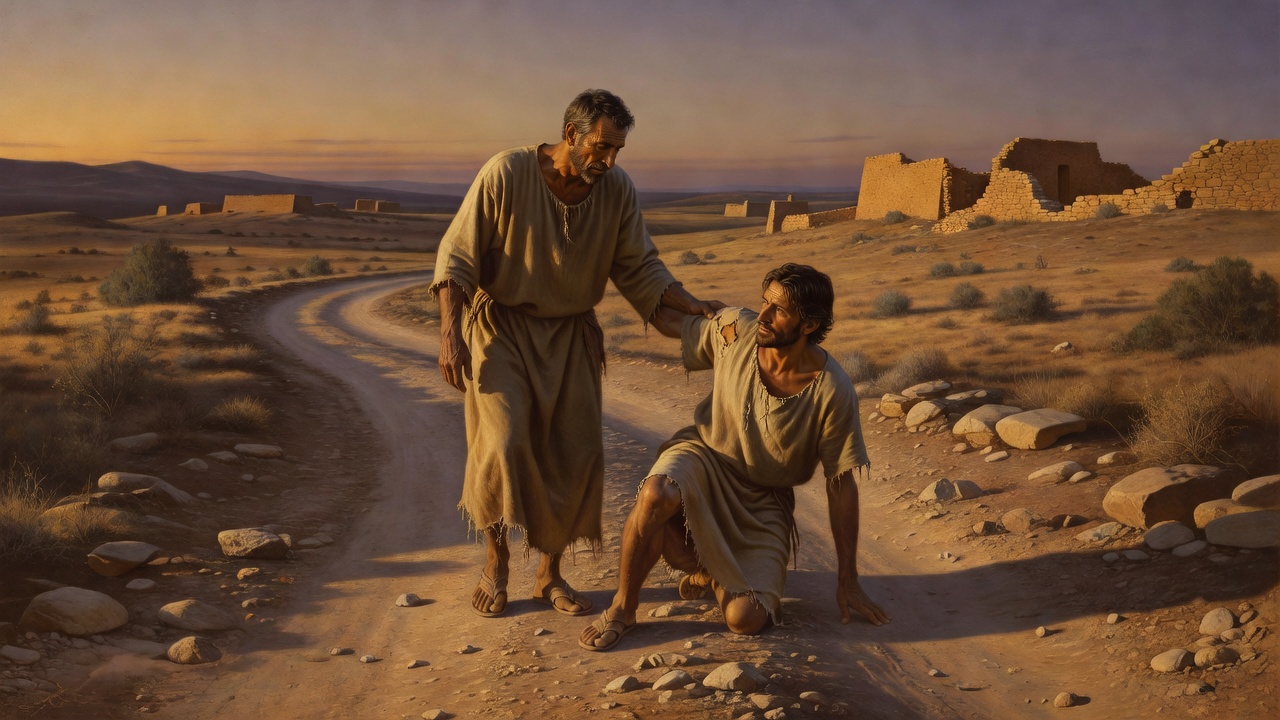
1But I returned and considered all the oppressions that are done under the sun; and behold the tears of such as were oppressed, and they had no comforter; and on the side of their oppressors there was power, but they had no comforter. 2Wherefore I praised the dead that are already dead more than the living that are yet alive; 3but better than they both is he that hath not yet been, who hath not seen the evil work that is done under the sun. 4Again, I considered all labour and all excelling in work, that it is a man's rivalry with his neighbour. This also is vanity and a striving after wind. 5The fool foldeth his hands together, and eateth his own flesh. 6Better is a handful of quietness, than both the hands full of labour and striving after wind. 7Then I returned and saw vanity under the sun. 8There is one that is alone, and he hath not a second; yea, he hath neither son nor brother; yet is there no end of all his labour, neither is his eye satisfied with riches: 'for whom then do I labour, and bereave my soul of pleasure?' This also is vanity, yea, it is a grievous business. 9Two are better than one; because they have a good reward for their labour. 10For if they fall, the one will lift up his fellow; but woe to him that is alone when he falleth, and hath not another to lift him up. 11Again, if two lie together, then they have warmth; but how can one be warm alone? 12And if a man prevail against him that is alone, two shall withstand him; and a threefold cord is not quickly broken.
The Futility of Power
13Better is a poor and wise child than an old and foolish king, who knoweth not how to receive admonition any more. 14For out of prison he came forth to be king; although in his kingdom he was born poor. 15I saw all the living that walk under the sun, that they were with the child, the second, that was to stand up in his stead. 16There was no end of all the people, even of all them whom he did lead; yet they that come after shall not rejoice in him. Surely this also is vanity and a striving after wind.
Você sabia?
Opressão, Companheirismo e a Fama Passageira
- Eclesiastes destaca o valor prático do companheirismo na vida diária, explicando que dois trabalhadores obtêm melhor retorno do seu trabalho, podem ajudar um ao outro a se levantar após uma queda, aquecer-se mutuamente e resistir juntos a agressores.Fontes: o próprio texto bíblico
- O texto contrasta a miséria do trabalho solitário com a tranquilidade da moderação, observando que alguns acumulam riquezas sem cessar, mesmo sem ter companheiro, filho ou irmão com quem compartilhá-las.Fontes: o próprio texto bíblico
- A passagem ilustra a natureza efêmera da aclamação política por meio da figura de um jovem pobre e sábio que sai da prisão para governar no lugar de um rei tolo, conquistando grande apoio que mais tarde é esquecido pelas gerações seguintes.Fontes: o próprio texto bíblico
Notas escritas com auxílio de IA a partir de fontes abertas (Theographic Bible Metadata, CC BY-SA 4.0; Easton’s Bible Dictionary, domínio público) e revisadas antes de publicar.
Créditos e licença desta tradução
JPS TaNaKH 1917
The Jewish Bible (Old Testament) in English, published by the Jewish Publication Society in 1917
Public Domain
Language: English
Dialect: American
Translation by: Jewish Publication Society
This copy of the Old JPS TaNaKH by the Jewish Publication Society is brought to you courtesy of eBible.org . For the new JPS TaNaKH (1972, 1978, 1980), please see jps.org .
2023-09-19
Títulos de seção adaptados da Berean Standard Bible (domínio público); não fazem parte do texto bíblico desta tradução.
Fonte: http://ebible.org/engjps/ · eBible.org