Deuteronômio 20
JPS TaNaKH 1917 · Toque num versículo para ver as referências cruzadas.
Laws of Warfare
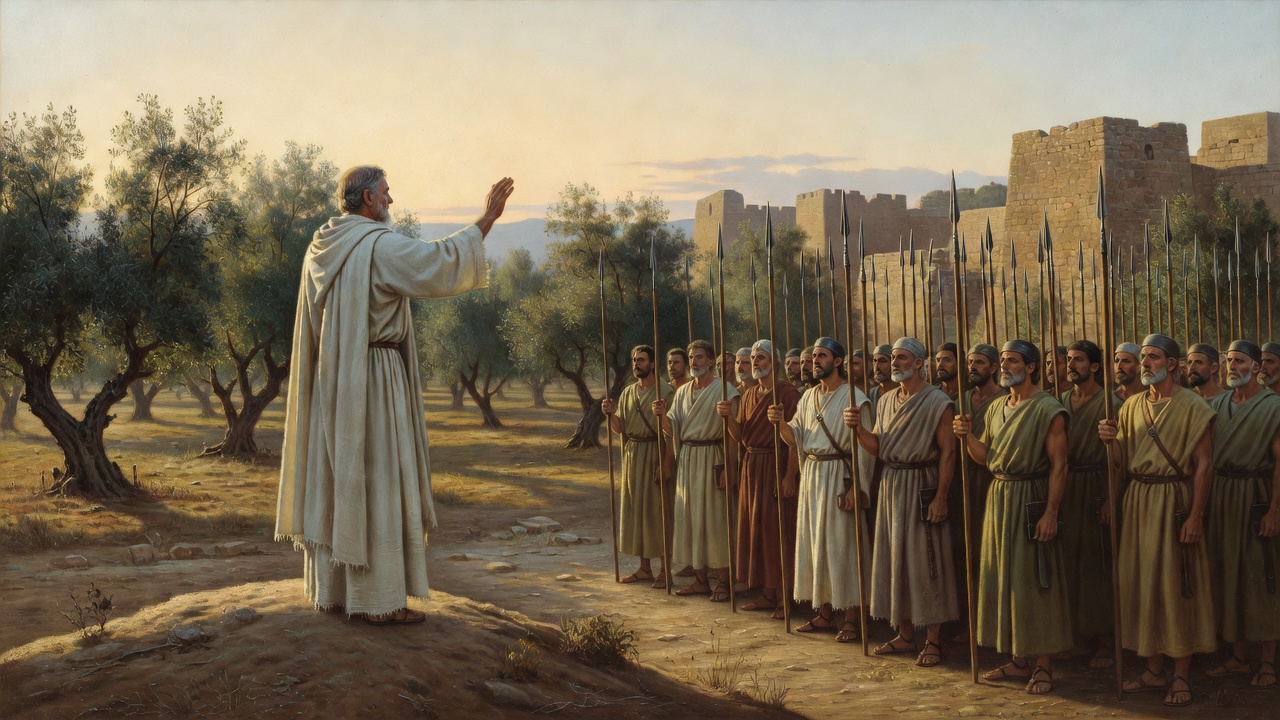
1When thou goest forth to battle against thine enemies, and seest horses, and chariots, and a people more than thou, thou shalt not be afraid of them; for the LORD thy God is with thee, who brought thee up out of the land of Egypt. 2And it shall be, when ye draw nigh unto the battle, that the priest shall approach and speak unto the people, 3and shall say unto them: 'Hear, O Israel, ye draw nigh this day unto battle against your enemies; let not your heart faint; fear not, nor be alarmed, neither be ye affrighted at them; 4for the LORD your God is He that goeth with you, to fight for you against your enemies, to save you.' 5And the officers shall speak unto the people, saying: 'What man is there that hath built a new house, and hath not dedicated it? let him go and return to his house, lest he die in the battle, and another man dedicate it. 6And what man is there that hath planted a vineyard, and hath not used the fruit thereof? let him go and return unto his house, lest he die in the battle, and another man use the fruit thereof. 7And what man is there that hath betrothed a wife, and hath not taken her? let him go and return unto his house, lest he die in the battle, and another man take her.' 8And the officers shall speak further unto the people, and they shall say: 'What man is there that is fearful and faint-hearted? let him go and return unto his house, lest his brethren's heart melt as his heart.' 9And it shall be, when the officers have made an end of speaking unto the people, that captains of hosts shall be appointed at the head of the people. 10When thou drawest nigh unto a city to fight against it, then proclaim peace unto it. 11And it shall be, if it make thee answer of peace, and open unto thee, then it shall be, that all the people that are found therein shall become tributary unto thee, and shall serve thee. 12And if it will make no peace with thee, but will make war against thee, then thou shalt besiege it. 13And when the LORD thy God delivereth it into thy hand, thou shalt smite every male thereof with the edge of the sword; 14but the women, and the little ones, and the cattle, and all that is in the city, even all the spoil thereof, shalt thou take for a prey unto thyself; and thou shalt eat the spoil of thine enemies, which the LORD thy God hath given thee. 15Thus shalt thou do unto all the cities which are very far off from thee, which are not of the cities of these nations. 16Howbeit of the cities of these peoples, that the LORD thy God giveth thee for an inheritance, thou shalt save alive nothing that breatheth, 17but thou shalt utterly destroy them: the Hittite, and the Amorite, the Canaanite, and the Perizzite, the Hivite, and the Jebusite; as the LORD thy God hath commanded thee; 18that they teach you not to do after all their abominations, which they have done unto their gods, and so ye sin against the LORD your God. 19When thou shalt besiege a city a long time, in making war against it to take it, thou shalt not destroy the trees thereof by wielding an axe against them; for thou mayest eat of them, but thou shalt not cut them down; for is the tree of the field man, that it should be besieged of thee? 20Only the trees of which thou knowest that they are not trees for food, them thou mayest destroy and cut down, that thou mayest build bulwarks against the city that maketh war with thee, until it fall.
Você sabia?
Leis sobre a Guerra
- Antes de entrar em combate, os oficiais israelitas anunciavam isenções específicas do serviço militar, dispensando homens que tivessem construído uma casa ainda não dedicada, plantado uma vinha ainda não colhida, ficado noivos ou sentissem medo.Fontes: o próprio texto bíblico
- A lei estabelecia políticas de guerra diferentes para cidades distantes em comparação com as cidades da Terra Prometida; às cidades distantes ofereciam-se primeiro termos de paz, enquanto os habitantes das nações locais deviam ser totalmente destruídos para evitar a idolatria.Fontes: o próprio texto bíblico
- Durante longos cercos, as forças israelitas eram proibidas de cortar árvores frutíferas para construir estruturas de cerco, limitando o corte de madeira apenas a árvores que sabiam não produzir alimento.Fontes: o próprio texto bíblico
Notas escritas com auxílio de IA a partir de fontes abertas (Theographic Bible Metadata, CC BY-SA 4.0; Easton’s Bible Dictionary, domínio público) e revisadas antes de publicar.
Lugares deste capítulo
- Egypt · 30.129, 31.308 · versículo 1
Só aparecem lugares com identificação de alta confiança (90% ou mais segundo as fontes acadêmicas reunidas pelo OpenBible). Mapa da época: DARE (Digital Atlas of the Roman Empire), CC BY 4.0; mapa atual: © colaboradores do OpenStreetMap; lugares: OpenBible.info (CC BY 4.0).
Créditos e licença desta tradução
JPS TaNaKH 1917
The Jewish Bible (Old Testament) in English, published by the Jewish Publication Society in 1917
Public Domain
Language: English
Dialect: American
Translation by: Jewish Publication Society
This copy of the Old JPS TaNaKH by the Jewish Publication Society is brought to you courtesy of eBible.org . For the new JPS TaNaKH (1972, 1978, 1980), please see jps.org .
2023-09-19
Títulos de seção adaptados da Berean Standard Bible (domínio público); não fazem parte do texto bíblico desta tradução.
Fonte: http://ebible.org/engjps/ · eBible.org