Malaquias 1
Geneva Bible 1599 · Toque num versículo para ver as referências cruzadas.
Sobre este livro
Sobre Malaquias
- O Easton's Bible Dictionary (1897) apresenta Malaquias, nome que significa "mensageiro" ou "anjo", como o último dos profetas menores e o autor do último livro do cânon do Antigo Testamento. Nada se sabe dele além do que se contém em seu livro de profecias.Fontes: Easton: Malachi · Malachi
- Alguns supuseram que o nome fosse apenas um título para um mensageiro de Jeová, e não um nome próprio. O Easton's Bible Dictionary (1897), porém, conclui que há razão para considerar Malaquias o nome habitual do profeta.Fontes: Easton: Malachi · Malachi
- O Easton's Bible Dictionary (1897) data as profecias por volta de 420 a.C., depois do segundo retorno de Neemias da Pérsia, ou possivelmente antes desse retorno. Como Esdras não o menciona e ele não fala da restauração do templo, o dicionário infere que profetizou depois de Ageu e Zacarias.Fontes: Easton: Malachi
- O Easton's Bible Dictionary (1897) trata Malaquias como contemporâneo de Neemias, comparando Malaquias 2:8 com Neemias 13:15 e Malaquias 2:10-16 com Neemias 13:23. Nota também que os serviços do templo ainda existiam, citando Malaquias 1:10, 3:1 e 3:10.Fontes: Easton: Malachi
Notas escritas com auxílio de IA a partir de fontes abertas (Theographic Bible Metadata, CC BY-SA 4.0; Easton’s Bible Dictionary, domínio público) e revisadas antes de publicar.
The LORD’s Love for Israel
1The burden of the woorde of the Lord to Israel by the ministerie of Malachi. 2I haue loued you, sayth the Lord: yet yee say, Wherein hast thou loued vs? Was not Esau Iaakobs brother, saith the Lord? yet I loued Iaakob, 3And I hated Esau, and made his mountaines wast, and his heritage a wildernes for dragons. 4Though Edom say, wee are impouerished, but we will returne and build the desolate places, yet sayeth the Lord of hostes, they shall builde, but I will destroy it, and they shall call them, The border of wickednes, and the people, with whome the Lord is angrie for euer. 5And your eyes shall see it, and yee shall say, The Lord will be magnified vpon the border of Israel.
The Polluted Offerings
6A sonne honoureth his father, and a seruant his master. If then I be a father, where is mine honour? and if I be a master, where is my feare, sayth the Lord of hostes vnto you, O Priestes, that despise my Name? and yee say, Wherein haue we despised thy Name? 7Ye offer vncleane bread vpon mine altar, and you say, Wherein haue we polluted thee? In that ye say the table of the Lord is not to be regarded. 8And if yee offer the blinde for sacrifice, it is not euill: and if ye offer the lame and sicke, it is not euill: offer it nowe vnto thy prince: will he be content with thee, or accept thy person, saieth the Lord of hostes? 9And nowe, I pray you, pray before God, that he may haue mercie vpon vs: this hath beene by your meanes: will hee regard your persons, sayth the Lord of hostes? 10Who is there euen among you, that would shut the doores? and kindle not fire on mine altar in vaine, I haue no pleasure in you, sayeth the Lord of hostes, neither will I accept an offering at your hande. 11For from the rising of the sunne vnto the going downe of the same, my Name is great among the Gentiles, and in euery place incense shalbe offred vnto my Name, and a pure offering: for my Name is great among the heathen, sayeth the Lord of hostes. 12But ye haue polluted it, in that ye say, The table of the Lord is polluted and the fruit thereof, euen his meat is not to be regarded. 13Ye said also, Beholde, it is a wearines, and ye haue snuffed at it, sayth the Lord of hostes, and ye offred that which was torne, and the lame and the sicke: thus yee offred an offring: shoulde I accept this of your hand, sayth the Lord? 14But cursed be the deceiuer, which hath in his flocke a male, and voweth, and sacrificeth vnto ye Lord a corrupt thing: for I am a great King, sayth the Lord of hostes, and my Name is terrible among the heathen.
Você sabia?
A honra a Deus e os sacrifícios defeituosos
- O nome Malaquias significa mensageiro ou anjo. Embora alguns tenham sugerido que fosse um título em vez de um nome próprio, a tradição geralmente o considera o nome pessoal do profeta, situando seu ministério na época de Neemias, após Ageu e Zacarias.Fontes: Malachi
- A mensagem inicial relembra os irmãos gêmeos Jacó e Esaú, antepassados de Israel e Edom. O texto contrasta o amor da aliança com Israel com a desolação que recai sobre a região montanhosa de Edom.Fontes: Esau (Edom) · Jacob (Israel) · Edom · o próprio texto bíblico
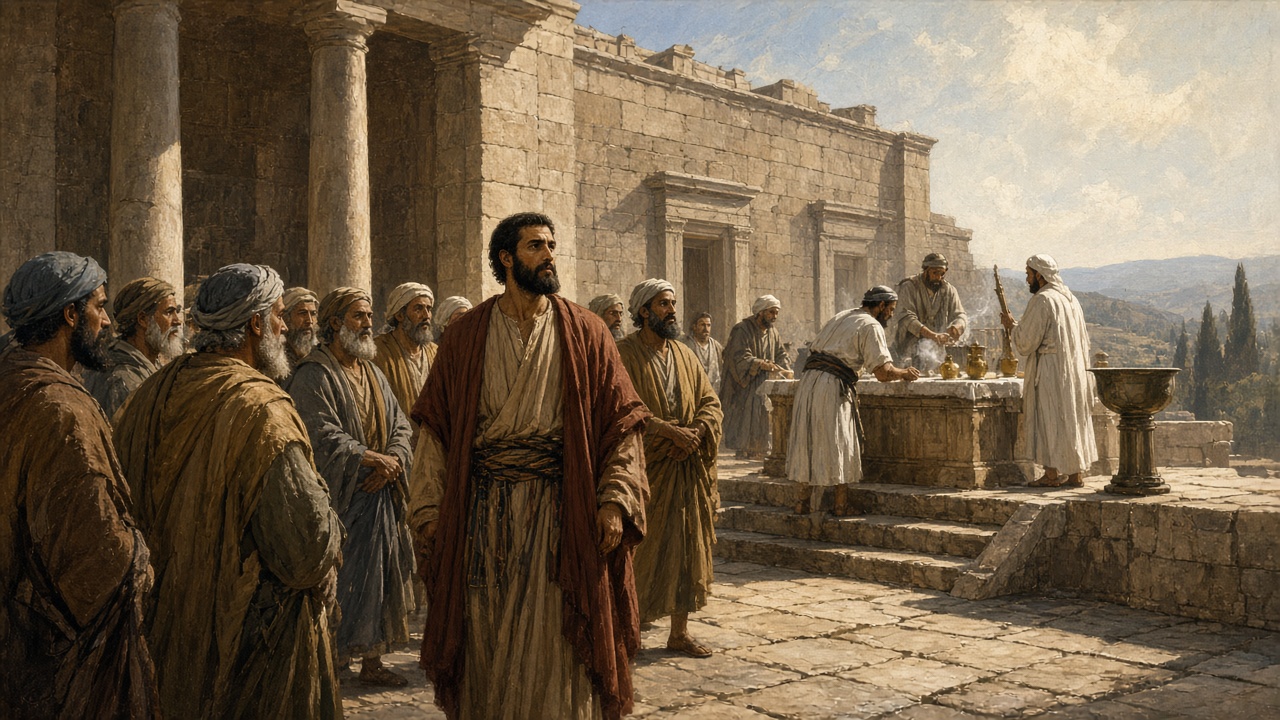
- Os sacerdotes são repreendidos por oferecerem animais cegos, mancos e doentes no altar em vez de espécimes saudáveis. Malaquias expõe esse desrespeito perguntando se até mesmo um governador aceitaria tributos tão defeituosos.Fontes: o próprio texto bíblico
Notas escritas com auxílio de IA a partir de fontes abertas (Theographic Bible Metadata, CC BY-SA 4.0; Easton’s Bible Dictionary, domínio público) e revisadas antes de publicar.
Lugares deste capítulo
- Edom · 30.746, 35.604 · versículo 4
Só aparecem lugares com identificação de alta confiança (90% ou mais segundo as fontes acadêmicas reunidas pelo OpenBible). Mapa da época: DARE (Digital Atlas of the Roman Empire), CC BY 4.0; mapa atual: © colaboradores do OpenStreetMap; lugares: OpenBible.info (CC BY 4.0).
Créditos e licença desta tradução
Geneva Bible 1599
The Geneva Bible in Old English of 1599
Public Domain
Language: English
Dialect: Old
This digital copy is freely available world-wide, with no copyright restrictions, courtesy of eBible.org and many others. Note that the spelling used is the original spelling, which is not modern English.
2024-03-16
Títulos de seção adaptados da Berean Standard Bible (domínio público); não fazem parte do texto bíblico desta tradução.
Fonte: http://ebible.org/enggnv/ · eBible.org