Deuteronômio 14
Geneva Bible 1599 · Toque num versículo para ver as referências cruzadas.
Clean and Unclean Animals
1Ye are the children of the Lord your God. Ye shall not cut yourselues, nor make you any baldnesse betweene your eyes for the dead. 2For thou art an holy people vnto ye Lord thy God, and the Lord hath chosen thee to be a precious people vnto himselfe, aboue all the people that are vpon the earth. 3Thou shalt eate no maner of abomination. 4These are the beastes, which ye shall eate, the beefe, the sheepe, and the goate, 5The hart, and the roe buck, and the bugle, and the wilde goate, and the vnicorne, and the wilde oxe, and the chamois. 6And euery beast that parteth ye hoofe, and cleaueth the clift into two clawes, and is of the beasts that cheweth the cudde, that shall ye eate. 7But these ye shall not eate, of them that chew the cud, and of them that deuide and cleaue the hoofe onely: ye camell, nor the hare, nor the cony: for they chewe the cudde, but deuide not ye hoofe: therefore they shall be vncleane vnto you: 8Also the swine, because he deuideth the hoofe, and cheweth not the cud, shalbe vncleane vnto you: ye shall not eate of their flesh, nor touch their dead carkeises. 9These ye shall eate, of all that are in the waters: all that haue finnes and scales shall ye eate. 10And whatsoeuer hath no finnes nor scales, ye shall not eate: it shall be vncleane vnto you. 11Of all cleane birdes ye shall eate: 12But these are they, whereof ye shall not eate: the eagle, nor the goshawke, nor the osprey, 13Nor the glead nor the kite, nor the vulture, after their kind, 14Nor all kinde of rauens, 15Nor the ostrich, nor the nightcrow, nor the semeaw, nor the hawke after her kinde, 16Neither the litle owle, nor the great owle, nor the redshanke, 17Nor the pellicane, nor the swanne, nor the cormorant: 18The storke also, and the heron in his kinde, nor the lapwing, nor the backe. 19And euery creeping thing that flieth, shall be vncleane vnto you: it shall not be eaten. 20But of all cleane foules ye may eate. 21Ye shall eate of nothing that dieth alone, but thou shalt giue it vnto the stranger that is within thy gates, that he may eate it: or thou maiest sell it vnto a stranger: for thou art an holy people vnto the Lord thy God. Thou shalt not seethe a kid in his mothers milke.
Giving Tithes
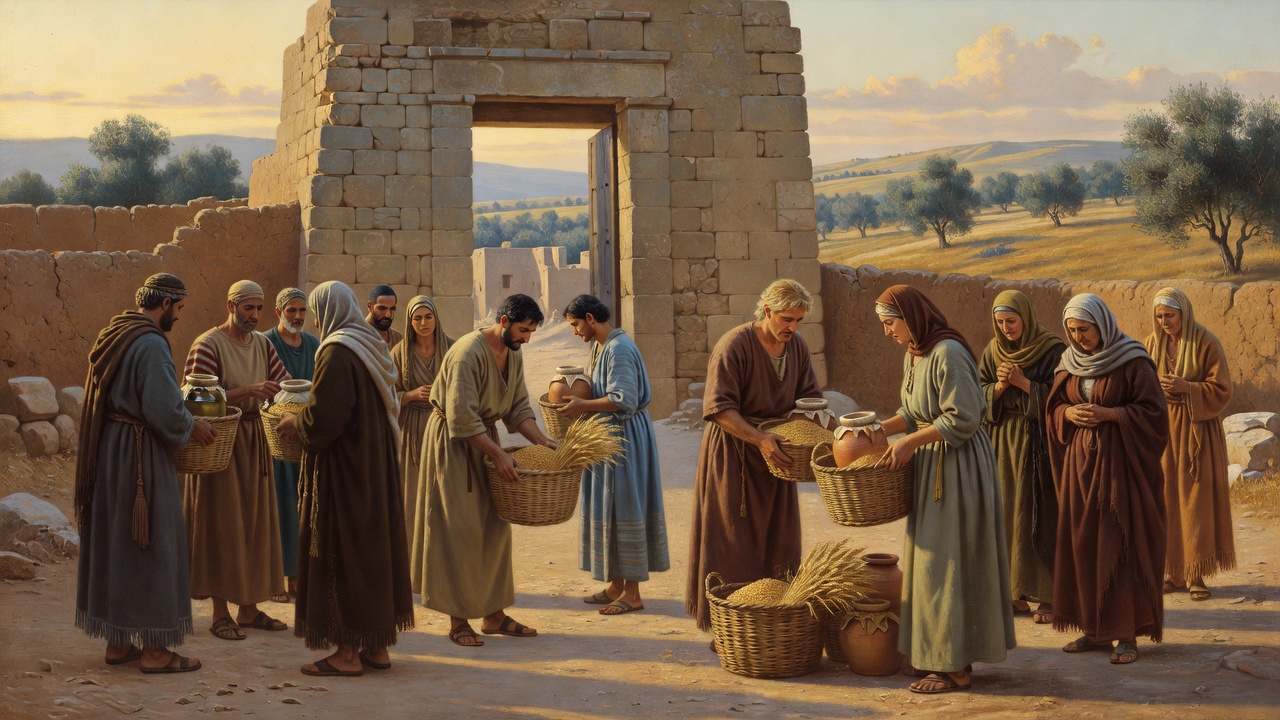
22Thou shalt giue the tithe of all the increase of thy seede, that commeth foorth of the fielde yeere by yeere. 23And thou shalt eate before the Lord thy God (in the place which he shall chose to cause his Name to dwell there) the tithe of thy corne, of thy wine, and of thine oyle, and the first borne of thy kine and of thy sheepe, that thou maiest learne to feare the Lord thy God alway. 24And if the way be too long for thee, so that thou art not able to cary it, because the place is farre from thee, where the Lord thy God shall chose to set his Name, when the Lord thy God shall blesse thee, 25Then shalt thou make it in money, and take the money in thine hand, and goe vnto the place which the Lord thy God shall chose. 26And thou shalt bestowe the money for whatsoeuer thine heart desireth: whether it be oxe, or sheepe, or wine, or strong drinke, or whatsoeuer thine heart desireth: and shalt eate it there before the Lord thy God, and reioyce, both thou, and thine household. 27And the Leuite that is within thy gates, shalt thou not forsake: for he hath neither part nor inheritance with thee. 28At the end of three yeere thou shalt bring foorth all the tithes of thine increase of the same yeere, and lay it vp within thy gates. 29Then ye Leuite shall come, because he hath no part nor inheritance with thee, and the stranger, and the fatherlesse, and the widowe, which are within thy gates, and shall eate, and be filled, that the Lord thy God may blesse thee in al the worke of thine hand which thou doest.
Você sabia?
Leis Alimentares e Disposições sobre o Dízimo
- As leis alimentares de Deuteronômio 14 distinguem os animais terrestres puros dos impuros com base em dois critérios físicos: ter o casco fendido e ruminar. As criaturas aquáticas só eram consideradas próprias para o consumo se tivessem tanto barbatanas quanto escamas.Fontes: o próprio texto bíblico
- Para atender às famílias que moravam longe do santuário escolhido, a lei permitia converter os dízimos agrícolas em prata para a viagem. Ao chegar ao local central, os adoradores podiam usar o dinheiro para comprar alimentos festivos e celebrar com sua família.Fontes: o próprio texto bíblico
- A cada três anos, o dízimo da colheita era recolhido e armazenado nas cidades locais em vez de ser levado ao santuário central. Esse suprimento era reservado para sustentar os membros da comunidade que não possuíam herança de terras, como levitas, estrangeiros residentes, órfãos e viúvas.Fontes: o próprio texto bíblico
Notas escritas com auxílio de IA a partir de fontes abertas (Theographic Bible Metadata, CC BY-SA 4.0; Easton’s Bible Dictionary, domínio público) e revisadas antes de publicar.
Créditos e licença desta tradução
Geneva Bible 1599
The Geneva Bible in Old English of 1599
Public Domain
Language: English
Dialect: Old
This digital copy is freely available world-wide, with no copyright restrictions, courtesy of eBible.org and many others. Note that the spelling used is the original spelling, which is not modern English.
2024-03-16
Títulos de seção adaptados da Berean Standard Bible (domínio público); não fazem parte do texto bíblico desta tradução.
Fonte: http://ebible.org/enggnv/ · eBible.org