1 Coríntios 10
Geneva Bible 1599 · Toque num versículo para ver as referências cruzadas.
Warnings from Israel’s Past
1Moreouer, brethren, I woulde not that yee shoulde bee ignorant, that all our fathers were vnder that cloude, and all passed through that sea, 2And were all baptized vnto Moses, in that cloude, and in that sea, 3And did all eat the same spiritual meat, 4And did all drinke the same spirituall drinke (for they dranke of the spiritual Rocke that folowed them: and the Rocke was Christ) 5But with many of them God was not pleased: for they were ouerthrowen in ye wildernes. 6Nowe these things are our ensamples, to the intent that we should not lust after euil things as they also lusted. 7Neither bee ye idolaters as were some of them, as it is written, The people sate downe to eate and drinke, and rose vp to play. 8Neither let vs commit fornication, as some of them committed fornication, and fell in one day three and twentie thousand. 9Neither let vs tempt Christ, as some of them also tempted him, and were destroyed of serpents. 10Neither murmure ye, as some of them also murmured, and were destroyed of the destroyer. 11Nowe all these things came vnto them for ensamples, and were written to admonish vs, vpon whome the endes of the world are come. 12Wherefore, let him that thinketh he standeth, take heede lest he fall. 13There hath no tentation taken you, but such as appertaine to man: and God is faithfull, which will not suffer you to be tempted aboue that you be able, but wil euen giue the issue with the tentation, that ye may be able to beare it.
Flee from Idolatry
14Wherefore my beloued, flee from idolatrie. 15I speake as vnto them which haue vnderstanding: iugde ye what I say. 16The cup of blessing which we blesse, is it not the communion of the blood of Christ? The bread which we breake, is it not the communion of the body of Christ? 17For we that are many, are one bread and one body, because we all are partakers of one bread. 18Beholde Israel, which is after the flesh: are not they which eate of the sacrifices partakers of the altar? 19What say I then? that the idole is any thing? or that that which is sacrificed to idoles, is any thing? 20Nay, but that these things which the Gentiles sacrifice, they sacrifice to deuils, and not vnto God: and I would not that ye should haue fellowship with the deuils. 21Ye can not drinke the cup of the Lord, and the cup of the deuils. Ye can not be partakers of the Lords table, and of the table of the deuils. 22Doe we prouoke the Lord to anger? are we stronger then he?
All to God’s Glory
23All things are lawfull for me, but all things are not expedient: all things are lawfull for me, but all things edifie not. 24Let no man seeke his owne, but euery man anothers wealth. 25Whatsoeuer is solde in the shambles, eate ye, and aske no question for conscience sake. 26For the earth is the Lords, and all that therein is. 27If any of them which beleeue not, call you to a feast, and if ye wil go, whatsoeuer is set before you, eate, asking no question for conscience sake. 28But if any man say vnto you, This is sacrificed vnto idoles, eate it not, because of him that shewed it, and for the conscience (for the earth is the Lords, and all that therein is) 29And the conscience, I say, not thine, but of that other: for why should my libertie be condemned of another mans conscience? 30For if I through Gods benefite be partaker, why am I euill spoken of, for that wherefore I giue thankes? 31Whether therefore ye eate, or drinke, or whatsoeuer ye doe, doe all to the glory of God. 32Giue none offence, neither to the Iewes, nor to the Grecians, nor to the Church of God: 33Euen as I please all men in all things, not seeking mine owne profite, but the profite of many, that they might be saued.
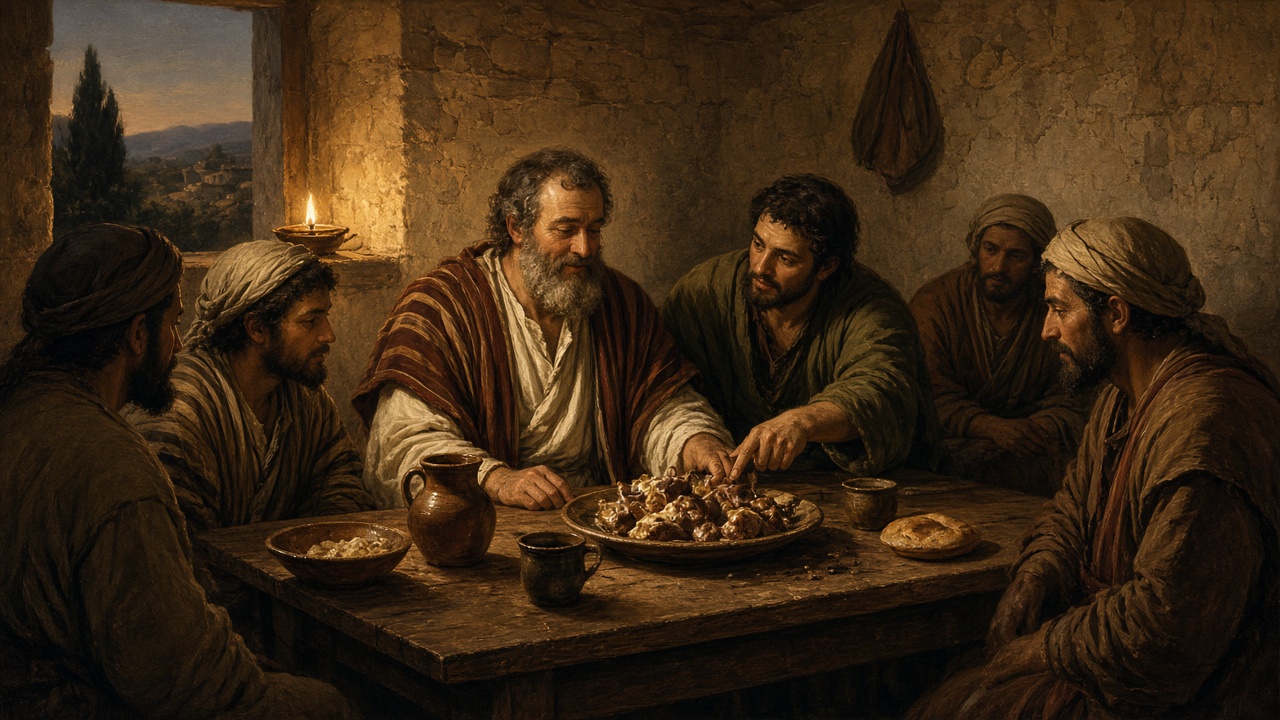
Você sabia?
Advertências do deserto e a mesa do Senhor
- Paulo diz que não quer que os coríntios ignorem que os antepassados estiveram todos debaixo da nuvem e passaram todos pelo mar, e que foram batizados em Moisés na nuvem e no mar. Todos comeram o mesmo alimento espiritual e beberam a mesma bebida espiritual da rocha espiritual que os acompanhava, e ele afirma que essa rocha era Cristo.Fontes: o próprio texto bíblico
- Paulo diz que Deus não se agradou da maioria deles, pois foram abatidos no deserto. Ele menciona a idolatria, a imoralidade sexual em que vinte e três mil morreram num só dia, o ato de pôr Cristo à prova, que trouxe morte por serpentes, e as queixas, punidas pelo anjo destruidor, e chama esses fatos de exemplos registrados como advertências.Fontes: o próprio texto bíblico
- Ele chama o cálice da bênção e o pão que é partido de participação no sangue e no corpo de Cristo, e afirma que os sacrifícios dos pagãos são oferecidos a demônios, não a Deus, de modo que as duas mesas não podem ser partilhadas. O que se vende no mercado de carne pode ser comido sem levantar questões de consciência, pois "Do Senhor é a terra e a sua plenitude", mas, se alguém disser que foi oferecido a ídolos, convém recusar por causa da consciência dessa pessoa.Fontes: o próprio texto bíblico
Notas escritas com auxílio de IA a partir de fontes abertas (Theographic Bible Metadata, CC BY-SA 4.0; Easton’s Bible Dictionary, domínio público) e revisadas antes de publicar.
Créditos e licença desta tradução
Geneva Bible 1599
The Geneva Bible in Old English of 1599
Public Domain
Language: English
Dialect: Old
This digital copy is freely available world-wide, with no copyright restrictions, courtesy of eBible.org and many others. Note that the spelling used is the original spelling, which is not modern English.
2024-03-16
Títulos de seção adaptados da Berean Standard Bible (domínio público); não fazem parte do texto bíblico desta tradução.
Fonte: http://ebible.org/enggnv/ · eBible.org