Levítico 21
Free Bible Version · Toque num versículo para ver as referências cruzadas.
Holiness Required of Priests
1The Lord told Moses, “Tell Aaron's sons, the priests: A priest is not to make himself unclean by touching the dead body of any of his relatives. 2The only exceptions are for his immediate family. This includes his mother, father, son, daughter, or brother, 3or his unmarried sister since she is a close relative because she doesn't have a husband. 4He must not make himself unclean for those only related to him by marriage—he is not to make himself ceremonially impure.
5Priests are not to shave bald spots on their heads, trim the sides of their beards, or cut their bodies. 6They must be holy to their God and not disgrace their God's reputation. They are the ones who present the food offerings to the Lord, the food of their God. Consequently they must be holy.
7A priest is not to marry a woman made unclean through prostitution or who is divorced by her husband, for the priest must be holy to his God. 8You shall consider him holy because he presents the food offerings to your God. He shall be holy to you, because I am holy. I am the Lord, and I chose you as my special people. 9A priest's daughter who makes herself unclean through prostitution makes her father unclean. She must be executed by burning.
10The high priest has the highest place among the other priests. He has been anointed with olive oil poured on his head and has been ordained to wear the priestly clothing. He must not leave his hair uncombed or tear his clothes. 11He is not to go near any dead body. He must not make himself unclean, even if it is for his own father or mother. 12He must not leave to deal with someone who has died or make the sanctuary of his God unclean because he has been dedicated by the anointing oil of his God. I am the Lord.
13He can only marry a virgin. 14He must not marry a widow, a divorced woman, or one made unclean through prostitution. He has to marry a virgin from his own people, 15so that he doesn't make his children unclean among his people, for I am the Lord who makes him holy.”
Restrictions against Those with Blemishes
16The Lord told Moses, 17“Tell Aaron: These rules apply for all future generations. If any of your descendants has a physical defect, he is not allowed to come and present the food offerings of his God. 18No man is allowed to do this if he has any defects, including anyone who is blind, crippled, facially disfigured, or has deformities, 19anyone who has a broken foot or arm, 20anyone who is a hunchback or dwarf, or who has cataracts, skin sores or scabs, or a damaged testicle.
21No descendant of Aaron the priest who has a defect is allowed to come and present the food offerings to the Lord. Because he has a defect, he must not come and offer the food of his God. 22He is still allowed to eat the food from the Most Holy Place of his God and also from the sanctuary, 23but because he has a defect, he is not allowed to go near the curtain or the altar, so that my sanctuary and everything in it are not made unclean, because I am the Lord who makes them holy.” 24Moses repeated this to Aaron and his sons, and to all the Israelites.
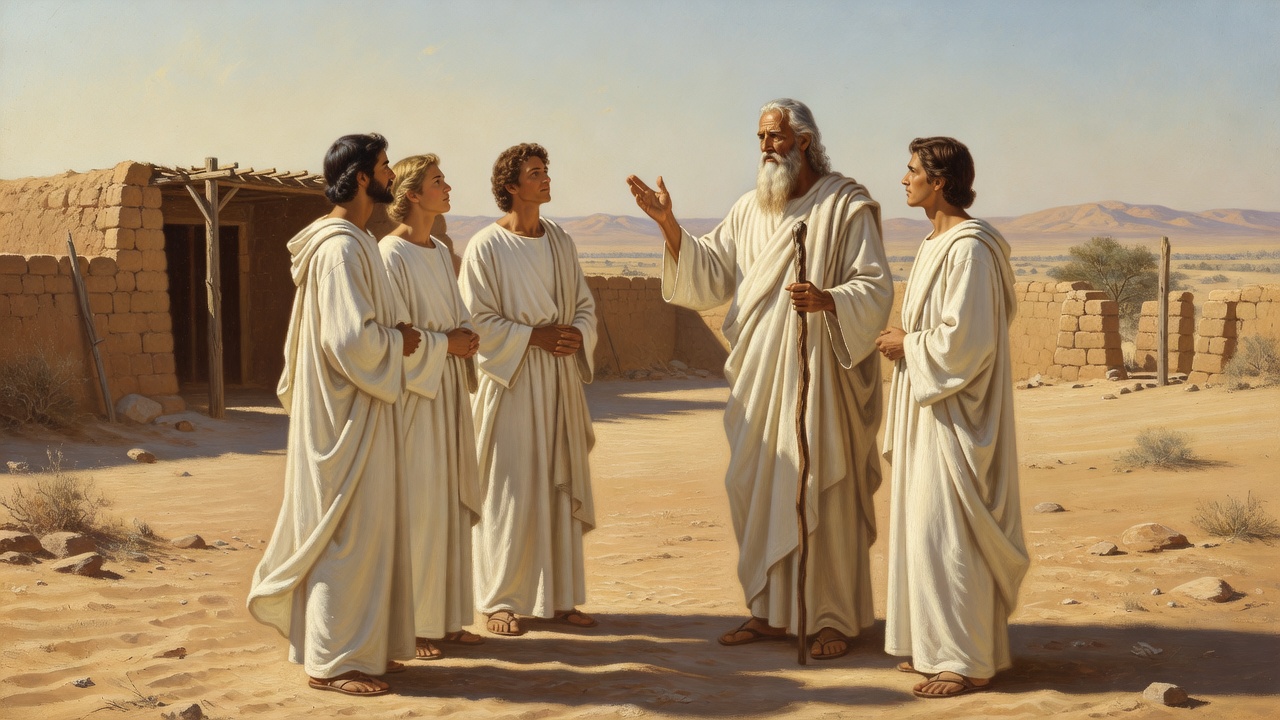
Você sabia?
Santidade e Requisitos para o Sacerdócio
- Os sacerdotes comuns só podiam guardar luto por parentes consanguíneos imediatos — pais, filhos e irmãos solteiros —, enquanto o sumo sacerdote era estritamente proibido de se contaminar por qualquer cadáver, incluindo seus próprios pais, e não podia rasgar suas vestes em sinal de luto.Fontes: o próprio texto bíblico
- Enquanto os sacerdotes comuns eram proibidos de se casar com mulheres divorciadas ou prostitutas, o sumo sacerdote tinha uma exigência ainda mais rigorosa: só podia se casar com uma virgem do seu próprio povo.Fontes: o próprio texto bíblico
- Os descendentes de Arão com defeitos físicos ou lesões eram impedidos de apresentar ofertas queimadas no altar, mas ainda tinham permissão plena para comer das porções de alimentos santos e santíssimos.Fontes: o próprio texto bíblico
Notas escritas com auxílio de IA a partir de fontes abertas (Theographic Bible Metadata, CC BY-SA 4.0; Easton’s Bible Dictionary, domínio público) e revisadas antes de publicar.
Créditos e licença desta tradução
Free Bible Version
The New Testament and Psalms in the Free Bible Version translation in American English
Copyright © 2018 Dr. Jonathan Gallagher
Language: English
Dialect: American
Translation by: Dr. Jonathan Gallagher
This translation is made available to you under the terms of the
Creative Commons Attribution Share-Alike license 4.0.
You have permission to share and redistribute this Bible translation in any format and to make reasonable revisions and adaptations of this translation, provided that:
You include the above copyright and source information.
If you make any changes to the text, you must indicate that you did so in a way that makes it clear that the original licensor is not necessarily endorsing your changes.
If you redistribute this text, you must distribute your contributions under the same license as the original.
Pictures included with Scriptures and other documents on this site are licensed just for use with those Scriptures and documents.
For other uses, please contact the respective copyright owners.
Note that in addition to the rules above, revising and adapting God's Word involves a great responsibility to be true to God's Word. See Revelation 22:18-19.
2026-10-02
Títulos de seção adaptados da Berean Standard Bible (domínio público); não fazem parte do texto bíblico desta tradução.
Fonte: http://ebible.org/engfbv/ · eBible.org