1 Crônicas 9
Free Bible Version · Toque num versículo para ver as referências cruzadas.
The People of Jerusalem
1All of the people of Israel were recorded in the genealogies written down in the book of the kings of Israel.
The people of Judah were taken away to captivity in Babylon because they had been unfaithful.
2The first to return and reclaim their property and live in their towns were some Israelites, priests, Levites, and Temple servants. 3Some from the tribes of Judah, Benjamin, Ephraim, and Manasseh returned to live in Jerusalem. They included:
4Uthai son of Ammihud, son of Omri, son of Imri, son of Bani, a descendant of Perez, son of Judah.
5From the Shilonites: Asaiah (firstborn) and his sons.
6From the Zerahites: Jeuel and relatives totaled 690.
7From the Benjamites: Sallu son of Meshullam, son of Hodaviah, son of Hassenuah; 8Ibneiah son of Jeroham; Elah son of Uzzi, son of Micri; and Meshullam son of Shephatiah, son of Reuel, son of Ibnijah.
9All of them were family heads as recorded in their genealogies, and they totaled 956.
10From the priests: Jedaiah, Jehoiarib, Jakin, 11Azariah son of Hilkiah, son of Meshullam, son of Zadok, son of Meraioth, son of Ahitub. (Azariah was the head official in charge of the house of God.)
12Also Adaiah son of Jeroham, son of Pashhur, son of Malkijah, and Maasai son of Adiel, son of Jahzerah, son of Meshullam, son of Meshillemith, son of Immer. 13The priests, who were family heads, totaled 1,760. They were strong and capable men who served in the house of God.
14From the Levites: Shemaiah, son of Hasshub, son of Azrikam, son of Hashabiah, a descendant of Merari; 15Bakbakkar, Heresh, Galal, and Mattaniah, son of Mica, son of Zicri, son of Asaph; 16Obadiah son of Shemaiah, son of Galal, son of Jeduthun; and Berekiah son of Asa, son of Elkanah, who used to live in the villages of the Netophathites.
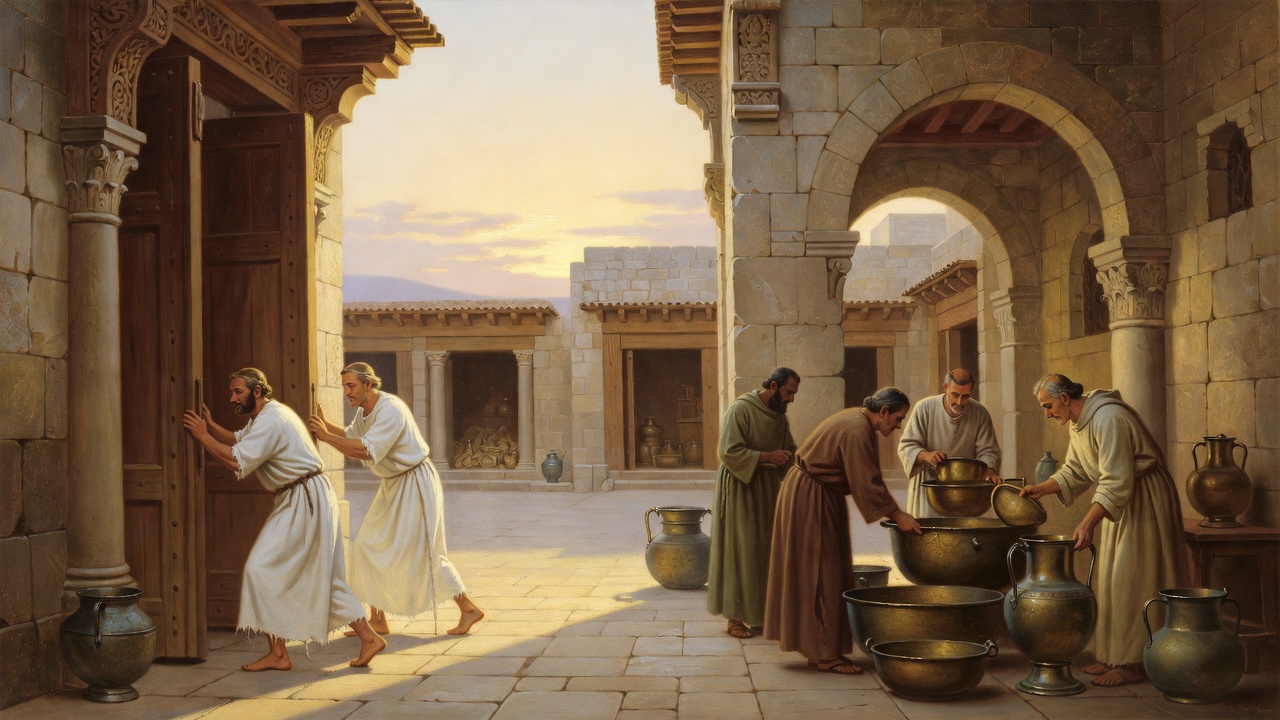
17The gatekeepers of the Temple: Shallum, Akkub, Talmon, Ahiman and their relatives. Shallum was the chief gatekeeper. 18They had the responsibility up until now of looking after the King's Gate on the east side. They were the gatekeepers of the camps of the Levites. 19Shallum was the son of Kore, son of Ebiasaph, son of Korah. He and his relatives, the Korahites, were responsible for guarding the entrances to the sanctuary in the same way their fathers had been responsible for guarding the entrance to the tented house of the Lord. 20Previously Phinehas son of Eleazar had been the leader of the gatekeepers. The Lord was with him. 21Zechariah son of Meshelemiah was the gatekeeper at the entrance to the tent of meeting.
22In total there were 212 chosen to be gatekeepers at the entrances. They recorded their genealogies in their home towns. David and Samuel the prophet had selected their forefathers for their faithfulness. 23They and their descendants were responsible for guarding the entrance to the house of the Lord, also when it was a tent.
24The gatekeepers were placed on four sides: east, west, north, and south. 25Their relatives in their towns came every seven days at certain times to help them. 26The four chief gatekeepers, who were Levites, were given the responsibility of looking after the rooms and treasuries in the house of God. 27They spent the night around the house of God because they had to guard it and they had the key to unlock it in the morning. 28Some of the gatekeepers were responsible for the articles that were used in worship services. They counted what was brought in and what was taken out. 29Others were given the job of looking after the furniture and equipment used in the sanctuary, as well as the special flour, wine, olive oil, incense, and spices. 30(However, some of the priests were in charge of mixing the spices.) 31Mattithiah, a Levite, who was the firstborn son of Shallum the Korahite, was given the responsibility of baking the bread used in offerings. 32Other Kohathites were in charge of preparing the bread set out on the table every Sabbath. 33The musicians, heads of Levite families, lived in the rooms in the Temple and were not required to carry out other duties because they were on duty day and night. 34These were all heads of Levite families, leaders as recorded in their genealogies, and they lived in Jerusalem.
The Descendants of Saul
35Jeiel was the father of Gibeon and he lived in Gibeon. His wife's name was Maacah. 36His firstborn son was Abdon, then Zur, Kish, Baal, Ner, Nadab, 37Gedor, Ahio, Zechariah, and Mikloth. 38Mikloth was the father of Shimeam. They also lived near their relatives in Jerusalem.
39Ner was the father of Kish, Kish was the father of Saul, and Saul was the father of Jonathan, Malki-Shua, Abinadab, and Esh-Baal.
40The son of Jonathan: Merib-Baal, who was the father of Micah.
41The sons of Micah: Pithon, Melech, Tahrea, and Ahaz.
42Ahaz was the father of Jadah, Jadah was the father of Alemeth, Azmaveth, and Zimri, and Zimri was the father of Moza. 43Moza was the father of Binea; Rephaiah was his son, Eleasah his son, and Azel his son.
44Azel had six sons. Their names were: Azrikam, Bokeru, Ishmael, Sheariah, Obadiah, and Hanan. These were the sons of Azel.
Você sabia?
O reassentamento de Jerusalém e a restauração do serviço do templo
- Primeiro Crônicas 9 faz a transição das antigas genealogias tribais para a comunidade que voltou a povoar Jerusalém após o exílio na Babilônia. Esse grupo de retornados incluía descendentes de Judá, Benjamim, Efraim e Manassés, além de sacerdotes, levitas e servidores do templo.Fontes: o próprio texto bíblico · Babylon · Jerusalem
- O texto descreve as funções detalhadas dos porteiros levitas, encarregados de vigiar as entradas do santuário voltadas para os quatro pontos cardeais. Enquanto parentes vindos de aldeias cumpriam turnos de sete dias, líderes designados supervisionavam os tesouros do templo, cuidavam dos utensílios e preparavam especiarias e os pães da proposição.Fontes: o próprio texto bíblico · Shallum
- A seção final repete a linhagem do rei Saul a partir de Gibeão, traçando seus descendentes por meio de seu filho Jônatas. Esse registro genealógico serve como introdução direta à narrativa sobre a morte de Saul no capítulo seguinte.Fontes: o próprio texto bíblico · Gibeon · Kish · Jonathan
Notas escritas com auxílio de IA a partir de fontes abertas (Theographic Bible Metadata, CC BY-SA 4.0; Easton’s Bible Dictionary, domínio público) e revisadas antes de publicar.
Lugares deste capítulo
- Babylon · 32.543, 44.422 · versículo 1
- Jerusalem · 31.777, 35.234 · versículos 3, 34, 38
- Gibeon · Hoje: El Jib · 31.847, 35.183 · versículo 35
Só aparecem lugares com identificação de alta confiança (90% ou mais segundo as fontes acadêmicas reunidas pelo OpenBible). Mapa da época: DARE (Digital Atlas of the Roman Empire), CC BY 4.0; mapa atual: © colaboradores do OpenStreetMap; lugares: OpenBible.info (CC BY 4.0).
Créditos e licença desta tradução
Free Bible Version
The New Testament and Psalms in the Free Bible Version translation in American English
Copyright © 2018 Dr. Jonathan Gallagher
Language: English
Dialect: American
Translation by: Dr. Jonathan Gallagher
This translation is made available to you under the terms of the
Creative Commons Attribution Share-Alike license 4.0.
You have permission to share and redistribute this Bible translation in any format and to make reasonable revisions and adaptations of this translation, provided that:
You include the above copyright and source information.
If you make any changes to the text, you must indicate that you did so in a way that makes it clear that the original licensor is not necessarily endorsing your changes.
If you redistribute this text, you must distribute your contributions under the same license as the original.
Pictures included with Scriptures and other documents on this site are licensed just for use with those Scriptures and documents.
For other uses, please contact the respective copyright owners.
Note that in addition to the rules above, revising and adapting God's Word involves a great responsibility to be true to God's Word. See Revelation 22:18-19.
2026-10-02
Títulos de seção adaptados da Berean Standard Bible (domínio público); não fazem parte do texto bíblico desta tradução.
Fonte: http://ebible.org/engfbv/ · eBible.org