Êxodo 11
Berean Standard Bible · Toque num versículo para ver as referências cruzadas.
The Plague on the Firstborn Foretold
1Then the LORD said to Moses, “I will bring upon Pharaoh and Egypt one more plague. After that, he will allow you to leave this place. And when he lets you go, he will drive you out completely. 2Now announce to the people that men and women alike should ask their neighbors for articles of silver and gold.”
3And the LORD gave the people favor in the sight of the Egyptians. Moreover, Moses himself was highly regarded in Egypt by Pharaoh’s officials and by the people.
4So Moses declared, “This is what the LORD says: ‘About midnight I will go throughout Egypt, 5and every firstborn son in the land of Egypt will die, from the firstborn of Pharaoh who sits on his throne, to the firstborn of the servant girl behind the hand mill, as well as the firstborn of all the cattle. 6Then a great cry will go out over all the land of Egypt. Such an outcry has never been heard before and will never be heard again. 7But among all the Israelites, not even a dog will snarl at man or beast.’
Then you will know that the LORD makes a distinction between Egypt and Israel. 8And all these officials of yours will come and bow before me, saying, ‘Go, you and all the people who follow you!’ After that, I will depart.”
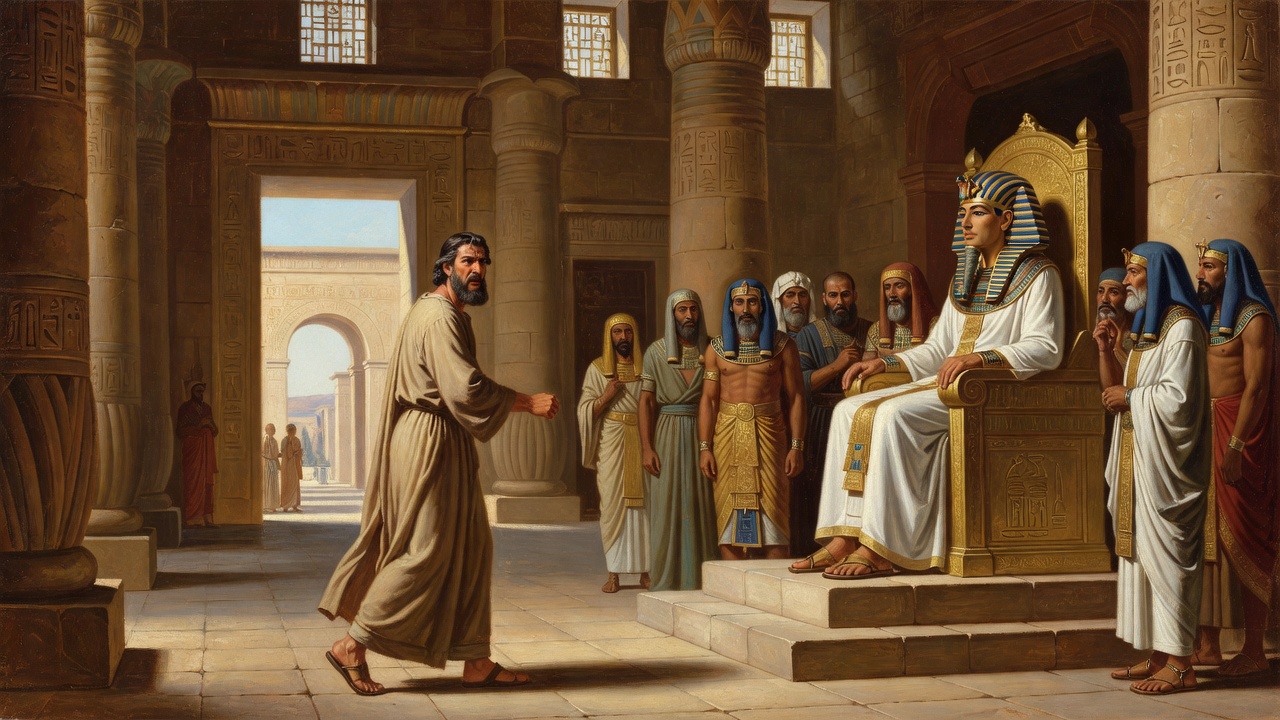
And hot with anger, Moses left Pharaoh’s presence.
9The LORD said to Moses, “Pharaoh will not listen to you, so that My wonders may be multiplied in the land of Egypt.”
10Moses and Aaron did all these wonders before Pharaoh, but the LORD hardened Pharaoh’s heart so that he would not let the Israelites go out of his land.
Você sabia?
Mais uma praga antes do Êxodo
- O Easton's Bible Dictionary (1897) diz que o faraó do Êxodo foi provavelmente Menephtah I, o décimo quarto filho de Rameses II e o mais velho dos filhos que sobreviveram, mas também afirma que ainda é uma questão se ele ou Seti II foi esse rei; alguns favorecem Seti II. O mesmo verbete diz que esse faraó residia em Zoã, onde ocorreram suas entrevistas com Moisés e Arão. Este capítulo termina com Moisés, ardendo de ira, saindo da presença do faraó.Fontes: Pharaoh (of the Exodus) · o próprio texto bíblico
- O Easton's Bible Dictionary (1897) afirma que Jacó e seus filhos desceram ao Egito provavelmente cerca de 350 anos antes do nascimento de Moisés, e que o rei lhes deu o melhor da terra, Gósen, para habitar. Neste capítulo, homens e mulheres de Israel devem pedir aos vizinhos objetos de prata e de ouro, e o relato diz que o SENHOR concedeu ao povo favor diante dos egípcios.Fontes: Moses · o próprio texto bíblico
- Um registro de eventos data o início do Êxodo do Egito em 1490 a.C. Neste capítulo, o SENHOR diz a Moisés que, depois de mais uma praga, o faraó deixará o povo partir e o expulsará por completo.Fontes: Exodus from Egypt · o próprio texto bíblico
Notas escritas com auxílio de IA a partir de fontes abertas (Theographic Bible Metadata, CC BY-SA 4.0; Easton’s Bible Dictionary, domínio público) e revisadas antes de publicar.
Lugares deste capítulo
Só aparecem lugares com identificação de alta confiança (90% ou mais segundo as fontes acadêmicas reunidas pelo OpenBible). Mapa da época: DARE (Digital Atlas of the Roman Empire), CC BY 4.0; mapa atual: © colaboradores do OpenStreetMap; lugares: OpenBible.info (CC BY 4.0).
Créditos e licença desta tradução
Berean Standard Bible
The Holy Bible in English: Berean Standard Bible
Public Domain
Language: English
Contributor: BSB Publishing, LLC
2026-10-02
Fonte: http://ebible.org/engbsb/ · eBible.org