2 Samuel 11
Berean Standard Bible · Toque num versículo para ver as referências cruzadas.
David and Bathsheba
1In the spring, at the time when kings march out to war, David sent out Joab and his servants with the whole army of Israel. They destroyed the Ammonites and besieged Rabbah, but David remained in Jerusalem.
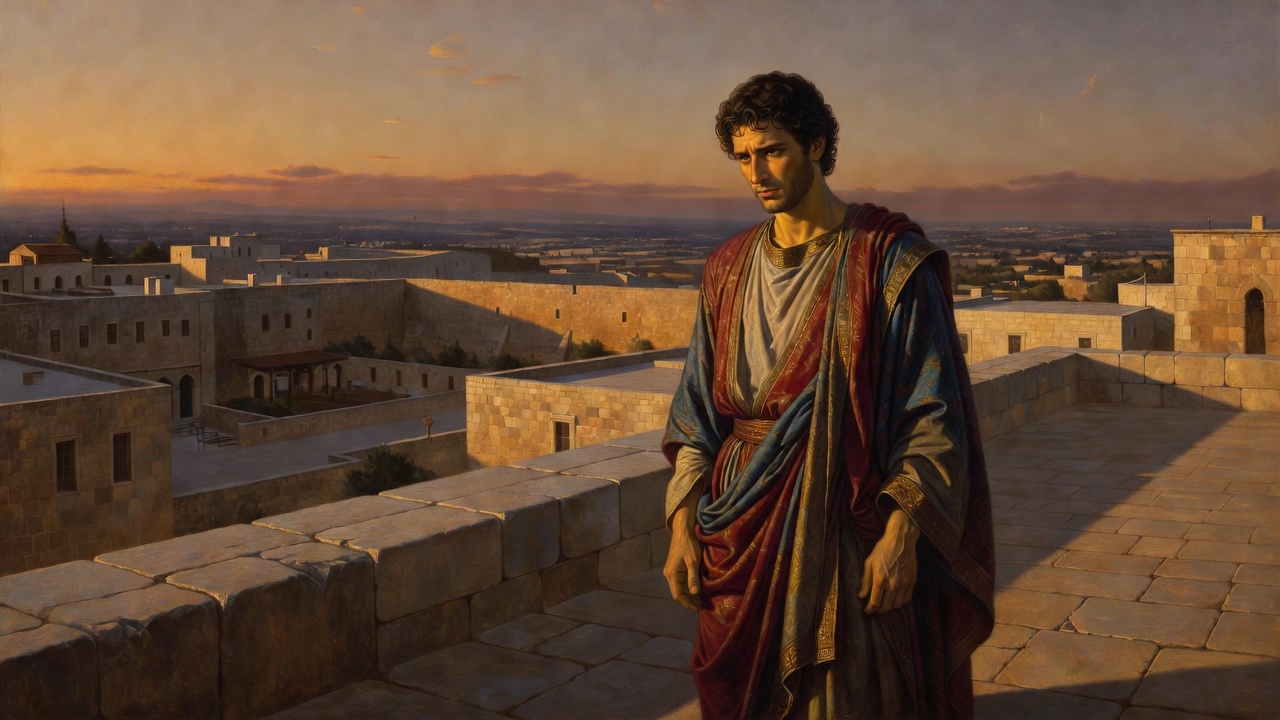
2One evening David got up from his bed and strolled around on the roof of the palace. And from the roof he saw a woman bathing—a very beautiful woman. 3So David sent and inquired about the woman, and he was told, “This is Bathsheba, the daughter of Eliam and the wife of Uriah the Hittite.”
4Then David sent messengers to get her, and when she came to him, he slept with her. (Now she had just purified herself from her uncleanness.) Then she returned home. 5And the woman conceived and sent word to David, saying, “I am pregnant.”
6At this, David sent orders to Joab: “Send me Uriah the Hittite.” So Joab sent him to David.
7When Uriah came to him, David asked how Joab and the troops were doing with the war. 8Then he said to Uriah, “Go down to your house and wash your feet.”
So Uriah left the palace, and a gift from the king followed him. 9But Uriah slept at the door of the palace with all his master’s servants; he did not go down to his house.
10And David was told, “Uriah did not go home.”
“Haven’t you just arrived from a journey?” David asked Uriah. “Why didn’t you go home?”
11Uriah answered, “The ark and Israel and Judah are dwelling in tents, and my master Joab and his soldiers are camped in the open field. How can I go to my house to eat and drink and sleep with my wife? As surely as you live, and as your soul lives, I will not do such a thing!”
12“Stay here one more day,” David said to Uriah, “and tomorrow I will send you back.” So Uriah stayed in Jerusalem that day and the next.
13Then David invited Uriah to eat and drink with him, and he got Uriah drunk. And in the evening Uriah went out to lie down on his cot with his master’s servants, but he did not go home.
David Arranges Uriah’s Death
14The next morning David wrote a letter to Joab and sent it with Uriah. 15In the letter he wrote: “Put Uriah at the front of the fiercest battle; then withdraw from him, so that he may be struck down and killed.”
16So as Joab besieged the city, he assigned Uriah to a place where he saw the strongest enemy soldiers. 17And when the men of the city came out and fought against Joab, some of David’s servants fell, and Uriah the Hittite also died.
18Joab sent to David a full account of the battle 19and instructed the messenger, “When you have finished giving the king all the details of the battle, 20if the king’s anger flares, he may ask you, ‘Why did you get so close to the city to fight? Did you not realize they would shoot from atop the wall? 21Who was the one to strike Abimelech son of Jerubbesheth ? Was it not a woman who dropped an upper millstone on him from the wall, so that he died in Thebez? Why did you get so close to the wall?’
If so, then you are to say, ‘Your servant Uriah the Hittite is dead as well.’”
22So the messenger set out and reported to David all that Joab had sent him to say. 23The messenger said to David, “The men overpowered us and came out against us in the field, but we drove them back to the entrance of the gate. 24Then the archers shot at your servants from the wall, and some of the king’s servants were killed. And your servant Uriah the Hittite is dead as well.”
25Then David told the messenger, “Say this to Joab: ‘Do not let this matter upset you, for the sword devours one as well as another. Strengthen your attack against the city and demolish it.’ Encourage him with these words.”
David Marries Bathsheba
26When Uriah’s wife heard that her husband was dead, she mourned for him. 27And when the time of mourning was over, David had her brought to his house, and she became his wife and bore him a son.
But the thing that David had done was evil in the sight of the LORD.
Você sabia?
Davi, Bate-Seba e Urias
- Urias é identificado como um hitita e pertencia ao grupo dos guerreiros de elite de Davi, os "valentes". Ao ser chamado a Jerusalém vindo do campo de batalha, recusou-se a desfrutar do conforto de sua casa por solidariedade aos seus companheiros e à Arca da Aliança, que estavam acampados em tendas no campo aberto.Fontes: o próprio texto bíblico · Uriah
- O cerco a Rabá, a principal cidade dos amonitas a leste do rio Jordão, serve de pano de fundo para este capítulo. Embora a primavera fosse a época costumeira em que os reis saíam para guerrear, Davi permaneceu em Jerusalém e confiou a campanha militar ao seu comandante Joabe.Fontes: o próprio texto bíblico · Rabbah · Joab
- Ao orientar seu mensageiro sobre as baixas ocorridas perto dos muros da cidade, Joabe citou o precedente militar da morte de Abimeleque em Tebes, onde uma mulher o matou lançando uma pedra de moinho do alto da muralha. O relato bíblico refere-se ao pai de Abimeleque, Gideão, pelo nome de Jerubesete.Fontes: o próprio texto bíblico · Jerubbesheth · Thebez
Notas escritas com auxílio de IA a partir de fontes abertas (Theographic Bible Metadata, CC BY-SA 4.0; Easton’s Bible Dictionary, domínio público) e revisadas antes de publicar.
Lugares deste capítulo
- Ammon · 31.955, 35.934 · versículo 1
- Jerusalem · 31.777, 35.234 · versículos 1, 12, 22
- Rabbah · Hoje: Amman · 31.955, 35.934 · versículo 1
Só aparecem lugares com identificação de alta confiança (90% ou mais segundo as fontes acadêmicas reunidas pelo OpenBible). Mapa da época: DARE (Digital Atlas of the Roman Empire), CC BY 4.0; mapa atual: © colaboradores do OpenStreetMap; lugares: OpenBible.info (CC BY 4.0).
Créditos e licença desta tradução
Berean Standard Bible
The Holy Bible in English: Berean Standard Bible
Public Domain
Language: English
Contributor: BSB Publishing, LLC
2026-10-02
Fonte: http://ebible.org/engbsb/ · eBible.org