1 Samuel 1
Berean Standard Bible · Toque num versículo para ver as referências cruzadas.
Sobre este livro
Sobre 1 Samuel
- O Dicionário Bíblico de Easton (1897) diz que os livros de Samuel foram provavelmente escritos por Samuel, Gade e Natã. Afirma que Samuel escreveu os primeiros vinte e quatro capítulos do primeiro livro, que Gade, companheiro de Davi, continuou a história, e que Natã a concluiu, provavelmente organizando o conjunto na forma em que se encontra hoje.Fontes: Easton: Samuel, Books of
- O Dicionário Bíblico de Easton (1897) diz que o primeiro livro abrange um período de cerca de cem anos e coincide quase com a vida de Samuel. Contém a história de Eli (capítulos 1-4), a de Samuel (capítulos 5-12) e a de Saul e de Davi no exílio (capítulos 13-31), e observa que as lacunas frequentes fazem com que não sejam histórias completas dos reinados sucessivos.Fontes: Easton: Samuel, Books of
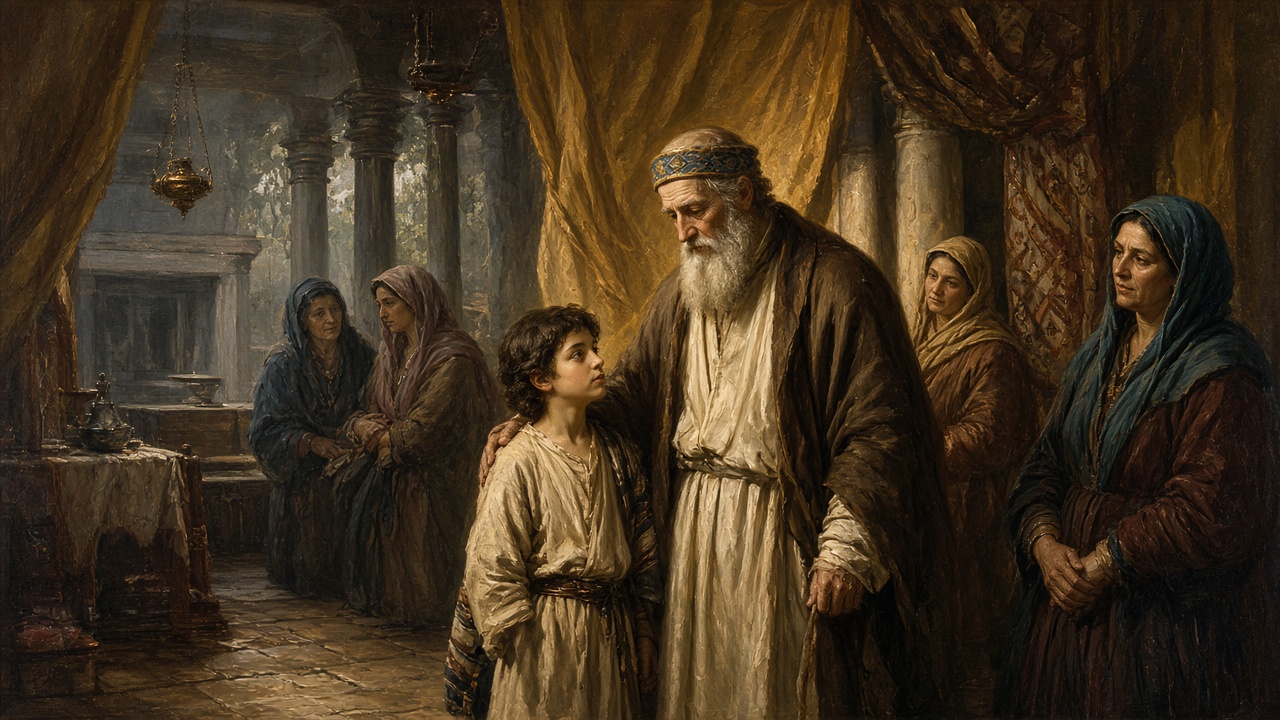
- A narrativa começa com Eli, sumo sacerdote em Siló enquanto a arca estava ali, que também julgou Israel durante quarenta anos. Ana consagrou o filho Samuel em Siló como nazireu perpétuo; ele cresceu sob os cuidados de Eli e depois teve sua casa em Ramá, cidade da região montanhosa de Efraim, e recorria a Gilgal entre os lugares onde administrava a justiça.Fontes: Eli · Samuel · Ramah · Gilgal
- Saul, filho de Quis e da tribo de Benjamim, é descrito como o primeiro rei da nação judaica; Gibeá foi seu lugar de nascimento e continuou sendo sua residência depois que se tornou rei. Davi, oitavo e mais novo filho de Jessé, de Belém, apascentava as ovelhas do pai nas terras altas de Judá, antes do relato de seu exílio longe de Saul.Fontes: Saul · Gibeah · David · Easton: Samuel, Books of
- Os tradutores da Septuaginta consideraram os livros de Samuel e de Reis uma história contínua, dividida em quatro livros a que chamaram Livros do Reino. A Vulgata seguiu essa divisão, mas os denominou Livros dos Reis; assim, os livros hoje chamados Primeiro e Segundo Samuel nas versões protestantes eram ali o Primeiro e o Segundo Livros dos Reis.Fontes: Easton: Samuel, Books of
Notas escritas com auxílio de IA a partir de fontes abertas (Theographic Bible Metadata, CC BY-SA 4.0; Easton’s Bible Dictionary, domínio público) e revisadas antes de publicar.
Elkanah and His Wives
1Now there was a man named Elkanah who was from Ramathaim-zophim in the hill country of Ephraim. He was the son of Jeroham, the son of Elihu, the son of Tohu, the son of Zuph, an Ephraimite. 2He had two wives, one named Hannah and the other Peninnah. And Peninnah had children, but Hannah had none.
3Year after year Elkanah would go up from his city to worship and sacrifice to the LORD of Hosts at Shiloh, where Eli’s two sons, Hophni and Phinehas, were priests to the LORD. 4And whenever the day came for Elkanah to present his sacrifice, he would give portions to his wife Peninnah and to all her sons and daughters. 5But to Hannah he would give a double portion, for he loved her even though the LORD had closed her womb.
6Because the LORD had closed Hannah’s womb, her rival would provoke her and taunt her viciously. 7And this went on year after year. Whenever Hannah went up to the house of the LORD, her rival taunted her until she wept and would not eat.
8“Hannah, why are you crying?” her husband Elkanah asked. “Why won’t you eat? Why is your heart so grieved? Am I not better to you than ten sons?”
Hannah Prays for a Son
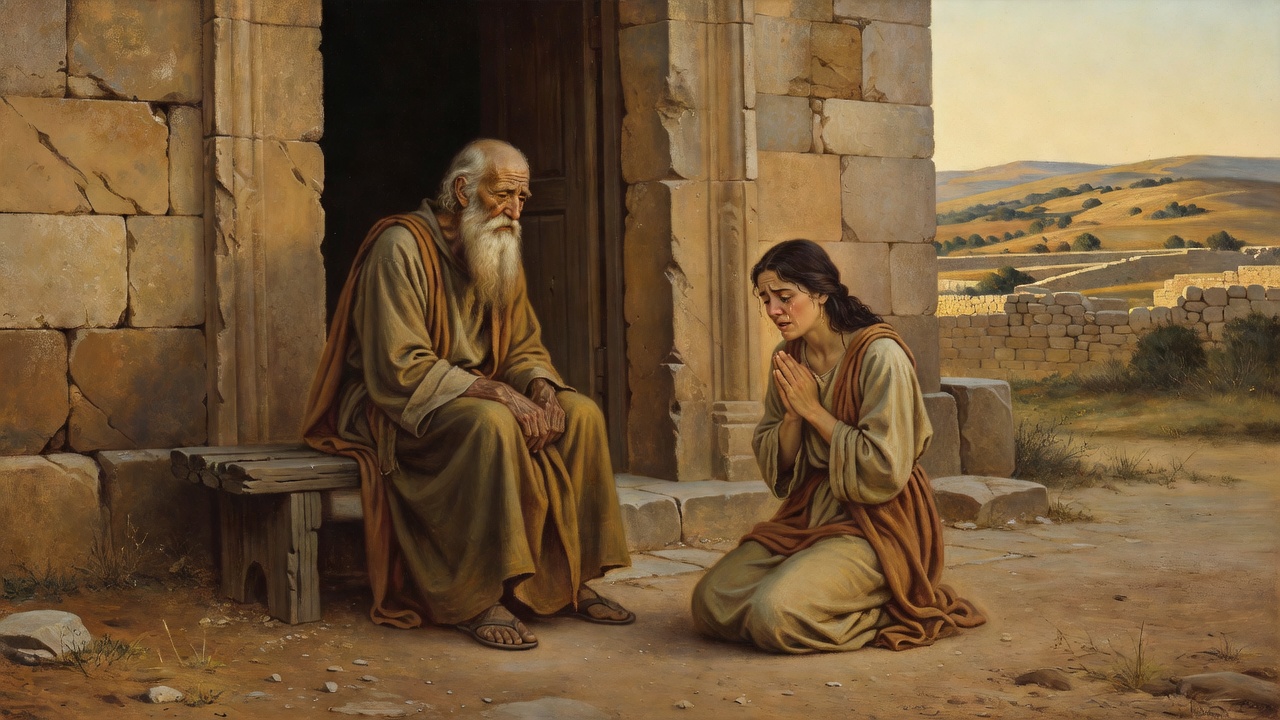
9So after they had finished eating and drinking in Shiloh, Hannah stood up. Now Eli the priest was sitting on a chair by the doorpost of the temple of the LORD.
10In her bitter distress, Hannah prayed to the LORD and wept with many tears. 11And she made a vow, pleading, “O LORD of Hosts, if only You will look upon the affliction of Your maidservant and remember me, not forgetting Your maidservant but giving her a son, then I will dedicate him to the LORD all the days of his life, and no razor shall ever come over his head.”
12As Hannah kept on praying before the LORD, Eli watched her mouth. 13Hannah was praying in her heart, and though her lips were moving, her voice could not be heard.
So Eli thought she was drunk 14and said to her, “How long will you be drunk? Put away your wine!”
15“No, my lord,” Hannah replied. “I am a woman oppressed in spirit. I have not had any wine or strong drink, but I have poured out my soul before the LORD. 16Do not take your servant for a wicked woman; for all this time I have been praying out of the depth of my anguish and grief.”
17“Go in peace,” Eli replied, “and may the God of Israel grant the petition you have asked of Him.”
18“May your maidservant find favor with you,” said Hannah. Then she went on her way, and she began eating again, and her face was no longer downcast.
The Birth of Samuel
19The next morning Elkanah and Hannah got up early to bow in worship before the LORD, and then returned home to Ramah.
And Elkanah had relations with his wife Hannah, and the LORD remembered her. 20So in the course of time, Hannah conceived and gave birth to a son. She named him Samuel, saying, “Because I have asked for him from the LORD.”
21Then Elkanah and all his house went up to make the annual sacrifice to the LORD and to fulfill his vow, 22but Hannah did not go. “After the boy is weaned,” she said to her husband, “I will take him to appear before the LORD and to stay there permanently.”
23“Do what you think is best,” her husband Elkanah replied, “and stay here until you have weaned him. Only may the LORD confirm His word.”
So Hannah stayed and nursed her son until she had weaned him.
24Once she had weaned him, Hannah took the boy with her, along with a three-year-old bull, an ephah of flour, and a skin of wine. Though the boy was still young, she brought him to the house of the LORD at Shiloh. 25And when they had slaughtered the bull, they brought the boy to Eli.
26“Please, my lord,” said Hannah, “as surely as you live, my lord, I am the woman who stood here beside you praying to the LORD. 27I prayed for this boy, and since the LORD has granted me what I asked of Him, 28I now dedicate the boy to the LORD. For as long as he lives, he is dedicated to the LORD.”
So they worshiped the LORD there.
Você sabia?
A oração de Ana e o santuário em Siló
- Siló, situada no território de Efraim, servia como o centro de adoração onde o tabernáculo havia sido estabelecido nos dias de Josué. Israelitas fiéis, como Elcana, faziam viagens anuais até lá para oferecer sacrifícios e adorar perante o santuário.Fontes: Shiloh · Hannah · o próprio texto bíblico
- Elcana vivia em Ramataim-Zofim (também chamada de Ramá), na região montanhosa de Efraim. O distrito estava associado ao seu antepassado Zufe, um levita coatita cuja linhagem familiar havia se estabelecido naquele território.Fontes: Elkanah · Zuph · Ramathaim-zophim · o próprio texto bíblico
- Eli, que observou Ana orando junto à entrada do santuário, era o sumo sacerdote e julgou Israel por quarenta anos. Ele foi o primeiro sumo sacerdote da linhagem de Itamar, o quarto filho de Arão, e seus filhos Hofni e Fineias também atuavam como sacerdotes em Siló.Fontes: Eli · Hannah · o próprio texto bíblico
Notas escritas com auxílio de IA a partir de fontes abertas (Theographic Bible Metadata, CC BY-SA 4.0; Easton’s Bible Dictionary, domínio público) e revisadas antes de publicar.
Lugares deste capítulo
Só aparecem lugares com identificação de alta confiança (90% ou mais segundo as fontes acadêmicas reunidas pelo OpenBible). Mapa da época: DARE (Digital Atlas of the Roman Empire), CC BY 4.0; mapa atual: © colaboradores do OpenStreetMap; lugares: OpenBible.info (CC BY 4.0).
Créditos e licença desta tradução
Berean Standard Bible
The Holy Bible in English: Berean Standard Bible
Public Domain
Language: English
Contributor: BSB Publishing, LLC
2026-10-02
Fonte: http://ebible.org/engbsb/ · eBible.org