Gênesis 10
Barkly Bible Portions · Toque num versículo para ver as referências cruzadas.
The story about Noah's family
1This story is about Shem, Ham and Jay-feth, the sons of Noah. It is a list of the children that were born after the flood.
The tribes that came from Jay-feth
2Jay-feth's sons were named Gomer, Magog, Madai, Javan, Tubal, Me-shek and Tiras. 3Gomer's sons were named Ash-ken-az, Rif-ath and Togar-mah. 4Javan's sons were named Elishah, Tar-shish, Kittim and Rod-anim. 5All of the people that came from Jay-feth had families and they ended up being different tribes. Every tribe had their own language and their own country. Some of these tribes lived in country next to the Mediterranean Sea.
The tribes that came from Ham
6Ham's sons were Cush, Egypt, Put and Canaan.
7Cush's sons were named Seba, Havi-lah, Sab-tah, Rarmah and Sab-teca.
And the sons of Rarmah were named Sheba and Dedan. 8One of Cush's sons was named Nimrod. When Nimrod grew up he was a strong fighter, and with God's help he became a really good hunter. Whenever people talked about good hunters, they said things like, “That man is a really good hunter like Nimrod.”
10Later on, Nimrod was the boss of all the towns called Bab-y-lon, Erech, Accad and Cal-nar All these towns were in a country called Shinah, which is another name for Bab-y-lonia. 11From there Nimrod went to another country called Assyria and he built the towns called Nineva, Re-ho-both Ir, Calah, and a big town called Resen. Resen was between Nineva (Ninevah) and Calah.
A list of Ham's sons
13Ham had a son named Egypt. This is a list of Egypt's sons. Lud, Anam, Lehab, Naf-tuh, Path-rus, Cas-luh and Caf-tor. All these sons had families and their families grew so big they were called tribes. The Filistine nation came from the Cas-luh tribe.
15Ham's other son, Canaan, named his first son Sidon. These are the names of Canaan's other sons, Heth, Jebus, Amor, Girgash, Hiv, Arrk, Sinn, Arvad, Zemar, and Hamath.
All these sons had families and their families grew so big they were called tribes. Later on, the tribes that came from Canaan split up and went to different places. 19The tribes that came from Canaan were called Canaanites. Those tribes lived in country that went as far north as a town called Sidon and as far south as the town of Gaza, and as far east as the towns called Sodom, Gomorrah, Admah, Zeboy-im and Lasha.
20Yes, all these people were part of Ham's family. All the sons had their own tribes, languages and their own country.
The tribes that came from Shem
21Shem was Jay-feth's older brother and Eber's family were part of Shem's family. 22Shem's sons were Elam, Ashur, Ar-faxad, Lud, and Aram.
23Aram's sons were named Uz, Hul, Gether, and Mash.
24Ar-faxad's son was named Shelah, and he had a son named Eber. 25Eber had 2 sons. The first son was Peleg and his younger brother was Joktan. The name Peleg means split up. And Peleg was still alive when all the people split up into different tribes and went all over the world.
26Joktan was the father of Almo-dad, Shelef, Hazarm-aveth, Jerah, Hadoram, Uzal, Diklah, Obal, Abimale, Sheba, Ofir, Havi-lah, and Jobab.
All of these people came from Joktan, and lived in the east hill country that goes from a place called Mesha all the way to another place called Seffar.
31All these people came from Shem. They were all different tribes and had their own country and their own language.
32And so this is a list of all the families and tribes that came from Noah. They split up into their own nations and spread out all over the earth after the big flood.
Você sabia?
As nações depois do dilúvio
- Gênesis 10 segue as famílias dos três filhos de Noé, Sem, Cam e Jafé, e diz que, depois do dilúvio, as nações da terra se espalharam a partir deles, agrupadas por clãs, línguas, terras e nações. A linhagem de Jafé está ligada a povos do leste da Europa e do norte da Ásia: Gômer é geralmente considerado ancestral dos celtas e dos cimérios, que em tempos antigos se estabeleceram ao norte do mar Negro, e Javã tornou-se o nome hebraico que os povos do Oriente usavam para os gregos, sobretudo os da Jônia.Fontes: o próprio texto bíblico · Japheth · Gomer (son of Japheth) · Javan
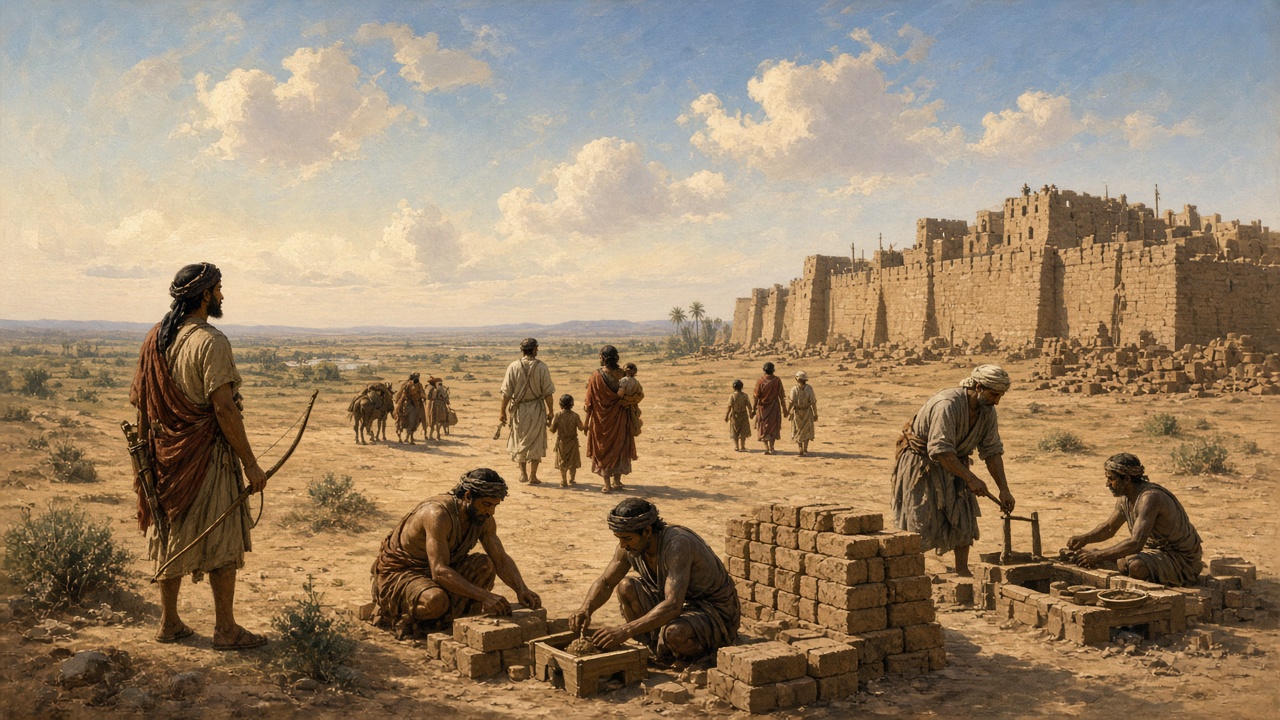
- Cuxe, filho de Cam, foi o pai de Ninrode, lembrado como um poderoso caçador diante do Senhor, cujo reino começou em Babilônia, Ereque, Acade e Calné, na terra de Sinar, provavelmente a Babilônia ou o sul da Mesopotâmia. Daquela terra ele partiu para a Assíria e construiu Nínive, Reobote-Ir, Calá e Resém; o sítio de Calá corresponde provavelmente às ruínas de Nimrud, na margem esquerda do Tigre.Fontes: o próprio texto bíblico · Shinar · Nineveh · Calah
- Mizraim, forma dual de uma palavra hebraica que significa montículo ou fortaleza, pode indicar o Alto e o Baixo Egito e é o nome que os hebreus costumavam dar àquele país; o árabe ainda o chama Muzr. Sem é chamado irmão mais velho de Jafé e antepassado de todos os filhos de Héber, tido como fundador do povo hebreu, enquanto uma tradição árabe lembra Joctã, filho de Héber e Kahtan em árabe, como ancestral de tribos da Arábia central e meridional.Fontes: o próprio texto bíblico · Mizraim · Eber (Heber) · Joktan
Notas escritas com auxílio de IA a partir de fontes abertas (Theographic Bible Metadata, CC BY-SA 4.0; Easton’s Bible Dictionary, domínio público) e revisadas antes de publicar.
Lugares deste capítulo
- Erech · Hoje: Uruk · 31.322, 45.636 · versículo 10
- Shinar · Hoje: Babylonia · 32.543, 44.422 · versículo 10
- Assyria · 36.359, 43.153 · versículo 11
- Calah · Hoje: Nimrud · 36.098, 43.329 · versículos 11, 12
- Nineveh · 36.359, 43.153 · versículos 11, 12
- Canaan · 32.767, 35.333 · versículo 19
- Gaza · Hoje: Tell Harube · 31.504, 34.464 · versículo 19
- Sidon · Hoje: Sandikli archaeological site in Sidon · 33.561, 35.372 · versículo 19
Só aparecem lugares com identificação de alta confiança (90% ou mais segundo as fontes acadêmicas reunidas pelo OpenBible). Mapa da época: DARE (Digital Atlas of the Roman Empire), CC BY 4.0; mapa atual: © colaboradores do OpenStreetMap; lugares: OpenBible.info (CC BY 4.0).
Créditos e licença desta tradução
Barkly Bible Portions
The Holy Bible in the Barkly dialect of English, spoken in Australia
copyright © 2024 Bible Society of Australia
Language: Barkly English (English)
Dialect: Barkly
This translation is made available to you under the terms of the
Creative Commons Attribution-Noncommercial-No Derivatives license 4.0.
You may share and redistribute this Bible translation or extracts from it in any format, provided that:
You include the above copyright and source information.
You do not sell this work for a profit.
You do not change any of the words or punctuation of the Scriptures.
Pictures included with Scriptures and other documents on this site are licensed just for use with those Scriptures and documents.
For other uses, please contact the respective copyright owners.
2026-04-14
Fonte: http://ebible.org/engbarkly/ · eBible.org