Isaías 62
American Standard Version Byzantine Text · Toque num versículo para ver as referências cruzadas.
Zion’s Salvation and New Name
1For Zion’s sake will I not hold my peace, and for Jerusalem’s sake I will not rest, until her righteousness go forth as brightness, and her salvation as a lamp that burneth. 2And the nations shall see thy righteousness, and all kings thy glory, and thou shalt be called by a new name, which the mouth of Jehovah shall name. 3Thou shalt also be a crown of beauty in the hand of Jehovah, and a royal diadem in the hand of thy God. 4Thou shalt no more be termed Forsaken; neither shall thy land anymore be termed Desolate: but thou shalt be called Hephzi-bah, and thy land Beulah; for Jehovah delighteth in thee, and thy land shall be married. 5For as a young man marrieth a virgin, so shall thy sons marry thee; and as the bridegroom rejoiceth over the bride, so shall thy God rejoice over thee.
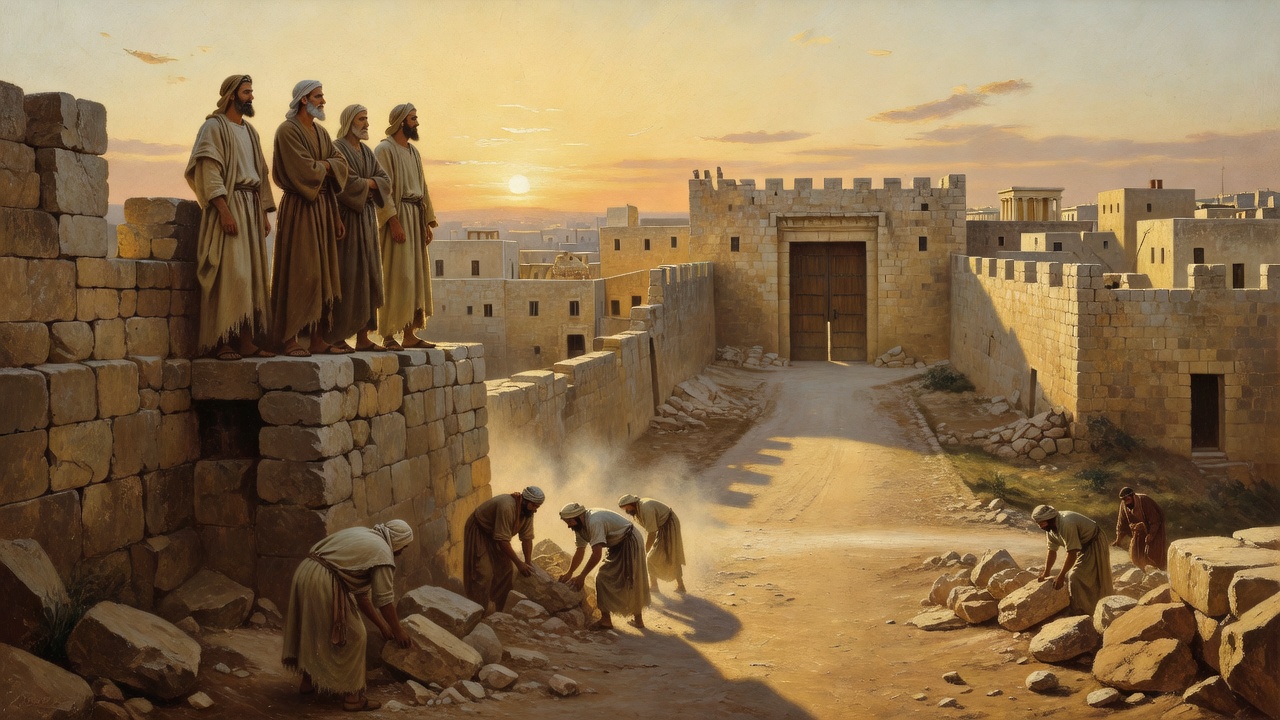
6I have set watchmen upon thy walls, O Jerusalem; they shall never hold their peace day nor night: ye that are Jehovah’s remembrancers, take ye no rest, 7and give him no rest, till he establish, and till he make Jerusalem a praise in the earth. 8Jehovah hath sworn by his right hand, and by the arm of his strength, Surely I will no more give thy grain to be food for thine enemies; and foreigners shall not drink thy new wine, for which thou hast labored: 9but they that have garnered it shall eat it, and praise Jehovah; and they that have gathered it shall drink it in the courts of my sanctuary.
10Go through, go through the gates; prepare ye the way of the people; cast up, cast up the highway; gather out the stones; lift up an ensign for the peoples. 11Behold, Jehovah hath proclaimed unto the end of the earth, Say ye to the daughter of Zion, Behold, thy salvation cometh; behold, his reward is with him, and his recompense before him. 12And they shall call them The holy people, The redeemed of Jehovah: and thou shalt be called Sought out, A city not forsaken.
Você sabia?
A restauração e o novo nome de Jerusalém
- Neste capítulo, Jerusalém e Sião recebem a promessa de novos nomes simbólicos que refletem uma profunda mudança de condição. Em vez de ser chamada de Desamparada ou Desolada, a cidade e sua terra recebem nomes como Hefzibá (meu prazer nela) e Beulá (casada), retratando a restauração por meio da imagem de uma alegre celebração de casamento.Fontes: o próprio texto bíblico · Jerusalem · Zion
- O poema descreve atalaias posicionados continuamente sobre os muros de pedra de Jerusalém, mantendo vigília dia e noite. O papel deles vai além da guarda militar comum, pois são convocados a interceder sem descanso para que o SENHOR estabeleça a cidade montanhosa como louvor em toda a terra.Fontes: o próprio texto bíblico · Jerusalem
- A ordem para sair pelas portas da cidade, retirar as pedras e aterrar uma estrada elevada utiliza a imagem antiga da preparação de uma via processional real para acolher o povo que retorna e sinalizar a salvação às nações vizinhas.Fontes: o próprio texto bíblico
Notas escritas com auxílio de IA a partir de fontes abertas (Theographic Bible Metadata, CC BY-SA 4.0; Easton’s Bible Dictionary, domínio público) e revisadas antes de publicar.
Lugares deste capítulo
- Jerusalem · 31.777, 35.234 · versículos 1, 5, 6, 7, 8, 12
- Zion · Hoje: Jerusalem · 31.777, 35.234 · versículos 1, 11
Só aparecem lugares com identificação de alta confiança (90% ou mais segundo as fontes acadêmicas reunidas pelo OpenBible). Mapa da época: DARE (Digital Atlas of the Roman Empire), CC BY 4.0; mapa atual: © colaboradores do OpenStreetMap; lugares: OpenBible.info (CC BY 4.0).
Créditos e licença desta tradução
American Standard Version Byzantine Text
The Holy Bible with Apocrypha, American Standard Version conformed to the Byzantine Text New Testament
Public Domain
Language: English
Dialect: Archaic American
Changes to the ASV dedicated to the Public Domain by Adam Boyd in 2021. The ASV itself is in the Public Domain due to copyright expiration.
2026-10-02
Títulos de seção adaptados da Berean Standard Bible (domínio público); não fazem parte do texto bíblico desta tradução.
Fonte: http://ebible.org/engasvbt/ · eBible.org