Levítico 1
Wycliffe Bible · Toque num versículo para ver as referências cruzadas.
Sobre este livro
Sobre Levítico
- O Dicionário Bíblico de Easton (1897) apresenta Levítico como o terceiro livro do Pentateuco e como o terceiro livro de Moisés. O nome, usado na Vulgata seguindo a LXX, reflete o assunto principal do livro: o serviço levítico.Fontes: Easton: Leviticus
- Easton afirma que todas as ordenanças do livro foram entregues no espaço de um mês, o primeiro mês do segundo ano depois do Êxodo. No verbete sobre o Sinai, também chamado Horebe, diz que os hebreus chegaram a essa região montanhosa no terceiro mês após o Êxodo e permaneceram acampados cerca de um ano inteiro, e que todo o Levítico registra o que ocorreu ali.Fontes: Easton: Leviticus · Mount Sinai
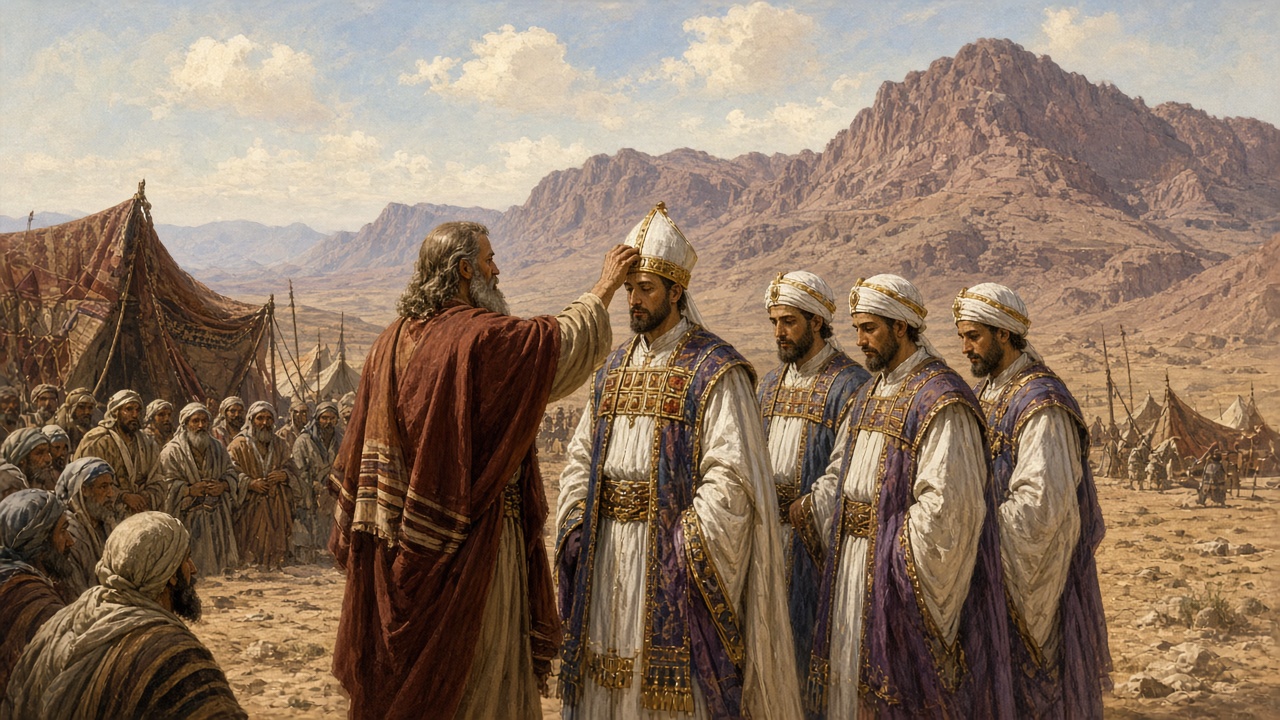
- Os capítulos 1 a 7 trazem leis sobre holocaustos, ofertas de manjares e ofertas de ação de graças, depois sobre ofertas pelo pecado e ofertas pela culpa, e sobre os deveres dos sacerdotes ao oferecer sacrifícios. Os capítulos 8 a 10 relatam a consagração de Arão e de seus filhos, a primeira oferta de Arão por si mesmo e pelo povo, e a morte de Nadabe e Abiú, feridos de morte e sepultados fora do acampamento depois de oferecerem fogo estranho, isto é, fogo comum não tomado do grande altar de bronze. Os capítulos 11 a 16 tratam da pureza e dos sacrifícios e ordenanças para afastar a impureza.Fontes: Easton: Leviticus · Nadab · Abihu
- Easton descreve os capítulos 17 a 20 como leis que marcam a separação entre Israel e os outros povos. Outras leis tratam da pureza pessoal dos sacerdotes e do consumo das coisas sagradas, das ofertas sem defeito e da devida celebração das grandes festas nos capítulos 23 e 25. Seguem-se promessas e advertências sobre a obediência, o livro termina com uma seção sobre votos, e Easton observa que Deus é quem fala diretamente em quase todo o livro.Fontes: Easton: Leviticus
- Nos ritos do capítulo 16, um bode está associado a Azazel, termo que a Authorized Version traduz por scapegoat e que a Revised Version mantém como Azazel. Easton relata que alguns intérpretes judeus o entendem como um lugar no deserto, cerca de doze milhas a leste de Jerusalém, enquanto outros o tomam como um espírito maligno ou até Satanás, e registra também o sentido de raiz: separação.Fontes: Azazel
Notas escritas com auxílio de IA a partir de fontes abertas (Theographic Bible Metadata, CC BY-SA 4.0; Easton’s Bible Dictionary, domínio público) e revisadas antes de publicar.
Laws for Burnt Offerings
1FORSOTHE the Lord clepide Moyses, and spak to him fro the tabernacle of witnessyng, `and seide, 2Speke thou to the sones of Israel, and thou schalt seie to hem, A man of you, that offrith to the Lord a sacrifice of beestis, that is, of oxun and of scheep, and offrith slayn sacrifices, if his offryng is brent sacrifice, 3and of the droue of oxun, he schal offre a male beeste without wem at the dore of the tabernacle of witnessyng, to make the Lord plesid to hym. 4And he schal sette hondis on the heed of the sacrifice, and it schal be acceptable, and profityng in to clensyng of hym. 5And he schal offre a calf bifor the Lord, and the sones of Aaron, preestis, schulen offre the blood ther of, and thei schulen schede bi the cumpas of the auter, which is bifor the dore of the tabernacle. 6And whanne the skyn of the sacrifice is drawun awei, thei schulen kitte the membris in to gobetis; 7and thei schulen put vndur in the auter fier, and thei schulen make an heep of wode bifore; and thei schulen ordeyne aboue 8`the trees tho thingis that ben kit, that is, the heed, and alle thingis that cleuen to the mawe, 9whanne the entrailis and feet ben waischid with watir; and the preest schal brenne tho on the auter, in to brent sacrifice, and swete odour to the Lord. 10That if the offryng is of litle beestis, a brent sacrifice of scheep, ethir of geet, he schal offre a male beeste with out wem, 11and he schal offre at the side of the auter that biholdith to the north, bifore the Lord. Sotheli the sones of Aaron schulen schede the blood therof on the auter `bi cumpas, 12and thei schulen departe the membris, the heed, and alle thingis that cleuen to the mawe, and thei schulen putte on the trees, vndur whiche the fier schal be set; 13sotheli thei schulen waische in watir the entrailis and feet; and the preest schal brenne alle thingis offrid on the auter, in to brent sacrifice, and swettest odour to the Lord. 14Forsothe if the offryng of brent sacrifice to the Lord is of briddis, of turtlis, and of culuer briddis, 15the preest schal offre it at the auter; and whanne the heed is writhun to the necke, and the place of the wounde is brokun, he schal make the blood renne doun on the brenke of the auter. 16Sotheli he schal caste forth the litil bladdir of the throte, and fetheris bisidis the auter, at the eest coost, in the place in which the aischis ben wont to be sched out; 17and he schal breke the wyngis therof, and he schal not kerue, nether he schal departe it with yrun; and he schal brenne it on the auter, whanne fier is set vndur the trees; it is a brent sacrifice, and an offryng of swete odour to the Lord.
Você sabia?
O Holocausto
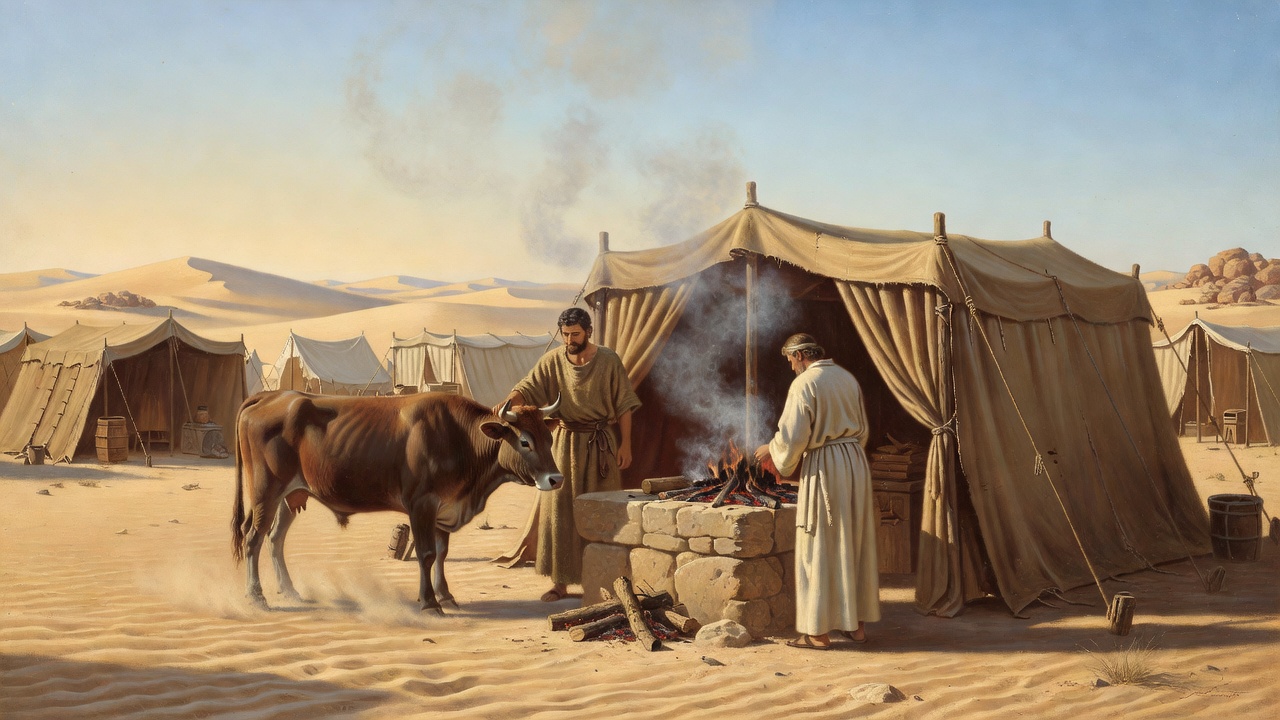
- As instruções para o holocausto previam diferentes condições materiais, permitindo ofertas do gado, do rebanho (ovelhas ou cabras) ou aves (rolinhas ou pombinhos). Para o gado e o rebanho, exigia-se um macho sem defeito.Fontes: o próprio texto bíblico
- O ritual estabelecia uma divisão clara de tarefas entre o adorador e os sacerdotes. O ofertante trazia o animal, colocava a mão sobre sua cabeça para expiação, abatia-o, esfolava-o e lavava suas partes internas, enquanto os filhos de Arão aspergiam o sangue e queimavam toda a oferta sobre o altar.Fontes: o próprio texto bíblico · Aaron
Notas escritas com auxílio de IA a partir de fontes abertas (Theographic Bible Metadata, CC BY-SA 4.0; Easton’s Bible Dictionary, domínio público) e revisadas antes de publicar.
Créditos e licença desta tradução
Wycliffe Bible
This is the Pentateuch and Gospels from The Holy Bible, containing the Old and New Testaments, with the apocryphal books, in the earliest English version made from the latin Vulgate by John Wycliffe and his followers. c.1395
Public Domain
Language: Middle English (English)
Dialect: Middle
Translation by: John Wycliffe
2016-11-08
Títulos de seção adaptados da Berean Standard Bible (domínio público); não fazem parte do texto bíblico desta tradução.
Fonte: http://ebible.org/engWycliffe/ · eBible.org