Gênesis 4
Wycliffe Bible · Toque num versículo para ver as referências cruzadas.
Cain and Abel
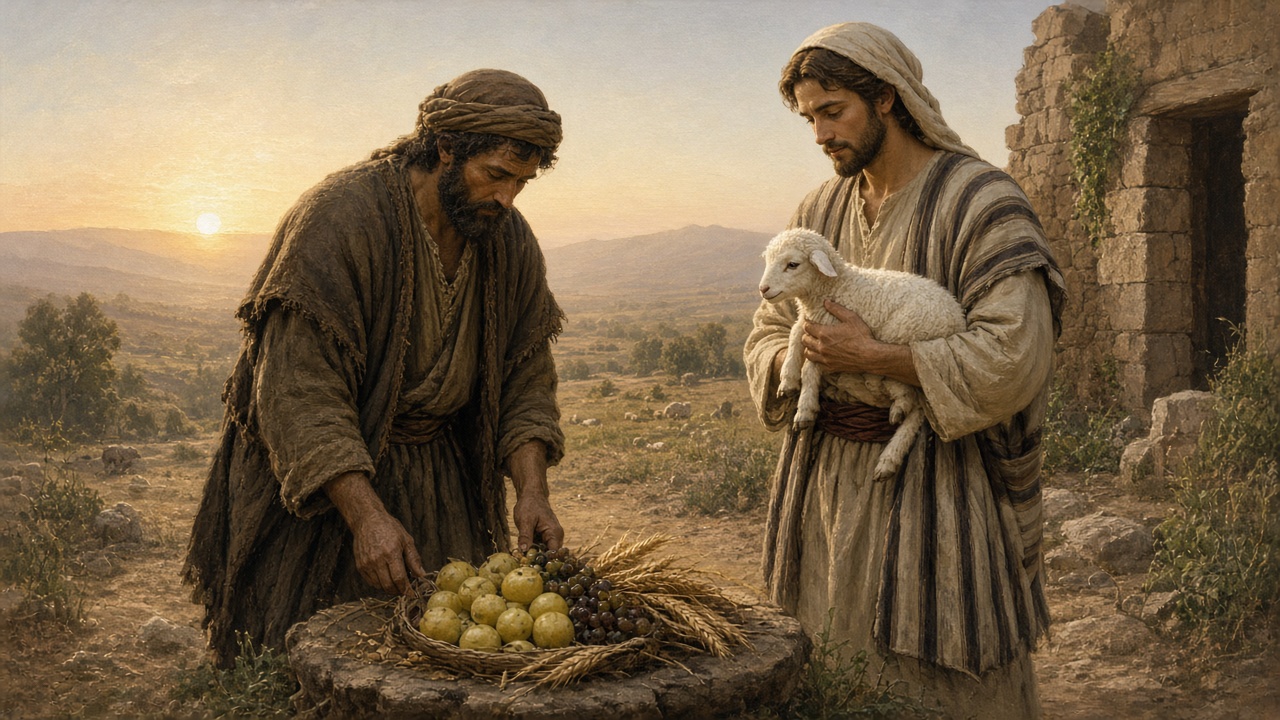
1Forsothe Adam knewe Eue his wijf, which conseyuede, and childide Cayn, and seide, Y haue gete a man bi God. 2And efte sche childide his brother Abel. Forsothe Abel was a kepere of scheep, and Cayn was an erthe tilyere. 3Sotheli it was don after many daies, that Cayn offride yiftis to the Lord of the fruytis of erthe; 4and Abel offride of the first gendrid of his floc, and of the fatnesse of tho. And the Lord bihelde to Abel and to the yiftis of hym; 5sotheli he bihelde not to Cayn and to hise yiftis. And Cayn was wrooth greetli, and his cheer felde doun. 6And the Lord seide to hym, Whi art thou wrooth, and whi felde doun thi face? 7Whether not if thou schalt do wel, thou schalt resseyue; but if thou doist yuele, thi synne schal be present anoon in the yatis? but the desir therof schal be vndur thee, and thou schalt be lord therof. 8And Cayn seide to Abel his brother, Go we out. And whanne thei weren in the feeld, Cayn roos ayens his brother Abel, and killide him. 9And the Lord seide to Cayn, Where is Abel thi brother? Which answerde, Y woot not; whether Y am the kepere of my brothir? 10And God seide to Cayn, What hast thou do? the vois of the blood of thi brother crieth to me fro erthe. 11Now therfor thou schalt be cursid on erthe, that openyde his mouth, and resseyuede of thin hond the blood of thi brothir. 12Whanne thou schalt worche the erthe, it schal not yyue his fruytis to thee; thou schalt be vnstable of dwellyng and fleynge aboute on erthe in alle the daies of thi lijf. 13And Cayn seide to the Lord, My wickidnesse is more than that Y disserue foryyuenesse; lo! 14to dai thou castist me out fro the face of the erthe; and Y schal be hid fro thi face, and Y schal be vnstable of dwellyng and fleynge aboute in erthe; therfore ech man that schal fynde me schal slee me. 15And the Lord seide to hym, It schal not be don so, but ech man that schal slee Cayn shal be punyschid seuenfold. And the Lord settide a signe in Cayn, that ech man that schulde fynde hym schulde not slee hym. 16And Cayn yede out fro the face of the Lord, and dwellide fleynge aboute in erthe, at the eest coost of Eden.
The Descendants of Cain
17Forsothe Cayn knewe his wiif, which conseyuede, and childide Enoth; and Cayn bildide a citee, and clepide the name therof of the name of hise sone Enoth. 18Forsothe Enoth gendride Irad, and Irad gendride Manyael, and Manyael gendride Matusael, and Matusael gendride Lameth; 19that took twei wyues, the name to o wijf was Ada, and the name to the tother was Sella. 20And Ada gendride Jabel, that was the fadir of dwellers in tentis and of shepherdis; 21and the name of his brother was Tubal, he was the fadir of syngeris in harpe and orgun. 22And Sella gendride Tubalcayn, that was an hamerbetere, and smyyt on alle werkis of bras and of yrun; forsothe the sistir of Tubalcayn was Neoma. 23And Lameth seide to his wyues Ada and Sella, Ye wyues of Lameth, here my vois, and herkne my word; for Y haue slayn a man bi my wounde, and a yong wexynge man bi my `violent betyng; 24veniaunce schal be youun seuenfold of Cayn, forsothe of Lameth seuentisithis seuensithis.
Seth and Enosh
25Also yit Adam knewe his wijf, and sche childide a sone, and clepide his name Seth, and seide, God hath put to me another seed for Abel, whom Cayn killide. 26But also a sone was borun to Seth, which sone he clepide Enos; this Enos bigan to clepe inwardli the name of the Lord.
Você sabia?
Caim, Abel e a vida a leste do Éden
- O nome hebraico de Abel significa “sopro” ou “vaidade”. Ele cuidava de ovelhas, enquanto seu irmão Caim cultivava o solo: Abel trouxe as melhores porções dos primogênitos do rebanho, e Caim trouxe fruto do solo. O Dicionário Bíblico de Easton (1897) lê a expressão “no decorrer do tempo” (à margem, “ao fim dos dias”) como provável referência ao sábado.Fontes: Abel · Cain · o próprio texto bíblico
- Depois da morte de Abel, Caim foi morar na terra de Node, a leste do Éden, nome que significa exílio, errância ou inquietação. Ali construiu uma cidade e deu-lhe o nome de seu filho Enoque. O Dicionário Bíblico de Easton observa que essa é a primeira cidade mencionada nas Escrituras.Fontes: Nod · Enoch (son of Cain) · o próprio texto bíblico
- Lameque, quinto na descendência de Caim, casou-se com duas mulheres, Ada e Zilá. O Dicionário Bíblico de Easton chama o discurso dele a elas de único exemplo conservado de poesia antediluviana, às vezes conhecido como “cântico da espada de Lameque”. Os filhos deles se ligam a modos de vida antigos: Jabal, às tendas e ao gado; Jubal, à harpa e à flauta; e Tubalcaim, à forja de bronze e ferro.Fontes: Lamech (descendant of Cain) · Adah (wife of Lamech) · Zillah · o próprio texto bíblico
Notas escritas com auxílio de IA a partir de fontes abertas (Theographic Bible Metadata, CC BY-SA 4.0; Easton’s Bible Dictionary, domínio público) e revisadas antes de publicar.
Créditos e licença desta tradução
Wycliffe Bible
This is the Pentateuch and Gospels from The Holy Bible, containing the Old and New Testaments, with the apocryphal books, in the earliest English version made from the latin Vulgate by John Wycliffe and his followers. c.1395
Public Domain
Language: Middle English (English)
Dialect: Middle
Translation by: John Wycliffe
2016-11-08
Títulos de seção adaptados da Berean Standard Bible (domínio público); não fazem parte do texto bíblico desta tradução.
Fonte: http://ebible.org/engWycliffe/ · eBible.org