Deuteronômio 16
Wycliffe Bible · Toque num versículo para ver as referências cruzadas.
Passover and the Feast of Unleavened Bread
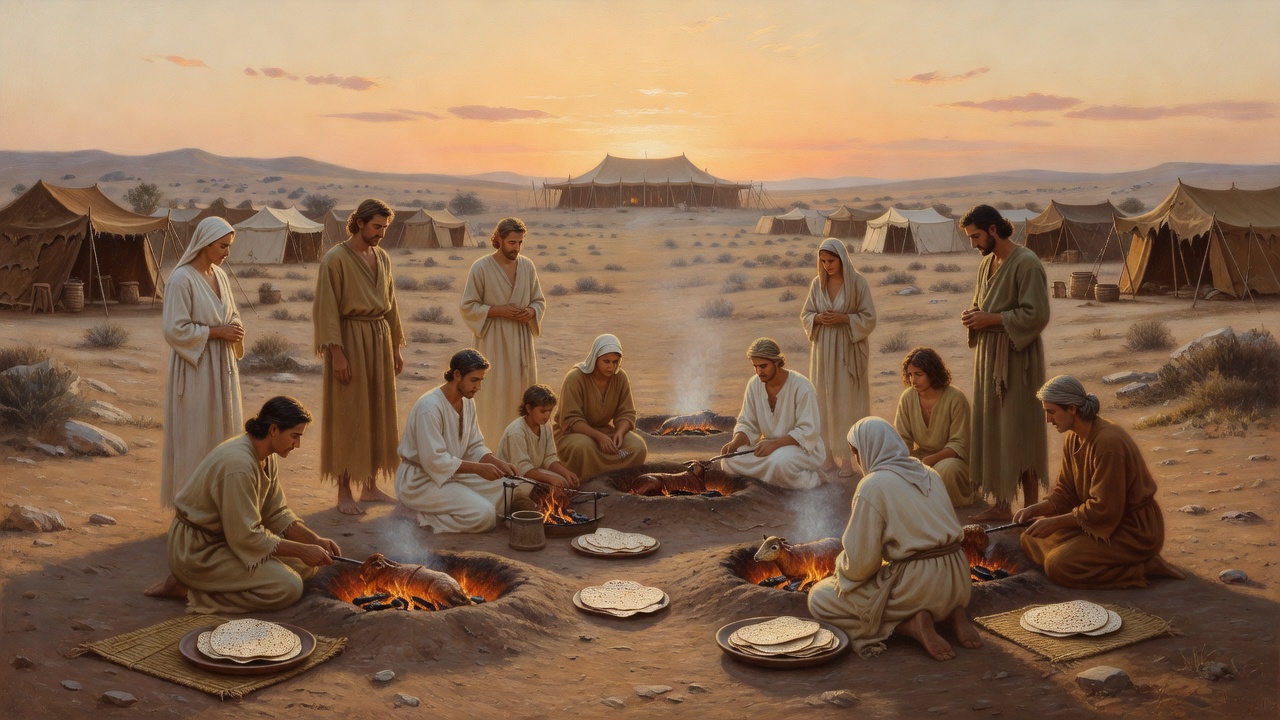
1Kepe thou the monethe of newe fruytis, and of the bigynnyng of somer, that thou make pask to thi Lord God; for in this monethe thi Lord God ledde thee out of Egipt in the nyyt. 2And thou schalt offre pask to thi Lord God, of scheep and of oxun, in the place which thi Lord God chees, that his name dwelle there. 3Thou schalt not ete `ther ynne breed `diyt with sourdouy; in seuene daies thou schalt ete breed of affliccioun, with out sourdouy, for in drede thou yedist out of Egipt, that thou haue mynde of the dai of thi goyng out of Egipt, in alle the daies of thi lijf. 4No thing `diyt with sourdouy schal appere in alle thi termes by seuene daies, and of the fleischis of that that is offrid in the euentid, schal not dwelle in the firste dai in the morewtid. 5Thou schalt not mow offre pask in ech of thi citees whiche thi Lord God schal yyue to thee, 6but in the place which thi Lord God chees, that his name dwelle there; thou schalt offre pask in the euentid, at the goyng doun of the sunne, whanne thou yedist out of Egipt. 7And thou schalt sethe, and ete, in the place which thi Lord God hath chose, and thou schalt rise in the morewtid of the secunde dai, and thou schalt go in to thi tabernaclis. 8Bi sixe daies thou schalt ete therf breed; and in the seuenthe dai, for it is the gaderyng of thi Lord God, thou schalt not do werk.
The Feast of Weeks
9Thou schalt noumbre to thee seuene woukis, fro that dai in which thou settidist a sikil in to the corn; 10and thou schalt halewe the feeste dai of woukis to thi Lord God, a wilful offryng of thyn hond, which thou schalt offre by the blessing of thi Lord God. 11And thou schalt ete bifore thi Lord God, thou, and thi sone, and thi douytir, and thi seruaunt, and thin handmayde, and the dekene which is with ynne thi yatis, and the comelynge, and the fadirles ethir modirles child, and the widue, that dwellen with you, in the place `which thi Lord God chees that his name dwelle there. 12And thou schalt haue mynde for thou were seruaunt in Egipt, and thou schalt kepe and do tho thingis that ben comaundid.
The Feast of Tabernacles
13And thou schalt halewe the solempnytee of tabernaclis bi seuene daies, whanne thou hast gaderid thi fruytis of the cornfloor, and pressour. 14And thou schalt ete in thi feeste dai, thou, and thi sone, and douytir, and thi seruaunt, and handmayde, also the dekene, and comelyng, and the fadirles ether modirles child, and the widewe, that ben with ynne thi yatis, `schulen ete. 15Bi seuene daies thou schalt halewe feestis to thi Lord God, in the place which the Lord chees; and thi Lord God schal blesse thee, in alle thi fruytis, and in al the werk of thin hondis, and thou schalt be in gladnesse. 16In thre tymes bi the yeer al thi male kynde schal appere in the siyt of thi Lord, in the place which he chees, in the solempnyte of therf looues, and in the solempnyte of woukis, and in the solempnyte of tabernaclis. A man schal not appere voide bifor the Lord; 17but ech man schal offre vpe this that he hath, bi the blessyng of his Lord God, which he yaf to `that man.
Judges and Justice
18Thou schalt ordeyne `iugis, and maystris, in alle thi yatis whiche thi Lord God schal yyue to thee, bi ech of thi lynagis, that thei deme the puple bi iust doom, 19and bowe not in `to the tother part for fauour, ethir yifte `ayens equete. Thou schalt not take persoone nether yiftis, for whi yiftis blynden the iyen of wise men, `and chaungen the wordis of iust men. 20Thou schalt pursue iustli that that is iust, that thou lyue and welde the lond which thi Lord God schal yyue to thee.
Forbidden Forms of Worship
21Thou schalt not plaunte a wode, and ech tre bi the auter of thi Lord God; 22nether thou schalt make to thee, and ordeyne an ymage; whiche thingis thi Lord God hatith.
Você sabia?
Festas Fixas e Justiça Reta
- Deuteronômio estabelece três festas anuais de peregrinação: a Festa dos Pães Asmos (Páscoa), a Festa das Semanas e a Festa dos Tabernáculos. Nessas ocasiões, os homens de Israel deviam comparecer diante de Deus não em suas próprias cidades, mas no lugar central escolhido como habitação para o Seu Nome.Fontes: o próprio texto bíblico
- As celebrações da Festa das Semanas e da Festa dos Tabernáculos incluíam expressamente grupos vulneráveis da sociedade, como servos, levitas, estrangeiros, órfãos e viúvas. Essa alegria comunitária estava diretamente ligada à lembrança da libertação da escravidão no Egito.Fontes: o próprio texto bíblico
- Além das assembleias religiosas, o texto ordena a nomeação de juízes e oficiais em todas as cidades. Eles eram proibidos de aceitar suborno ou demonstrar parcialidade, estabelecendo a ordem de seguir estritamente a justiça em toda a terra.Fontes: o próprio texto bíblico
Notas escritas com auxílio de IA a partir de fontes abertas (Theographic Bible Metadata, CC BY-SA 4.0; Easton’s Bible Dictionary, domínio público) e revisadas antes de publicar.
Lugares deste capítulo
Só aparecem lugares com identificação de alta confiança (90% ou mais segundo as fontes acadêmicas reunidas pelo OpenBible). Mapa da época: DARE (Digital Atlas of the Roman Empire), CC BY 4.0; mapa atual: © colaboradores do OpenStreetMap; lugares: OpenBible.info (CC BY 4.0).
Créditos e licença desta tradução
Wycliffe Bible
This is the Pentateuch and Gospels from The Holy Bible, containing the Old and New Testaments, with the apocryphal books, in the earliest English version made from the latin Vulgate by John Wycliffe and his followers. c.1395
Public Domain
Language: Middle English (English)
Dialect: Middle
Translation by: John Wycliffe
2016-11-08
Títulos de seção adaptados da Berean Standard Bible (domínio público); não fazem parte do texto bíblico desta tradução.
Fonte: http://ebible.org/engWycliffe/ · eBible.org