Jó 31
Douay-Rheims 1899 · Toque num versículo para ver as referências cruzadas.
Job’s Final Appeal
1I made a covenant with my eyes, that I would not so much as think upon a virgin. 2For what part should God from above have in me, and what inheritance the Almighty from on high? 3Is not destruction to the wicked, and aversion to them that work iniquity? 4Doth not he consider my ways, and number all my steps? 5If I have walked in vanity, and my foot hath made haste to deceit: 6Let him weigh me in a just balance, and let God know my simplicity. 7If my step hath turned out of the way, and if my heart hath followed my eyes, and if a spot hath cleaved to my hands: 8Then let me sow and let another eat: and let my offspring be rooted out. 9If my heart hath been deceived upon a woman, and if I have laid wait at my friend’s door: 10Let my wife be the harlot of another, and let other men lie with her. 11For this is a heinous crime, and a most grievous iniquity. 12It is a fire that devoureth even to destruction, and rooteth up all things that spring. 13If I have despised to abide judgment with my manservant, or my maidservant, when they had any controversy against me: 14For what shall I do when God shall rise to judge? and when he shall examine, what shall I answer him? 15Did not he that made me in the womb make him also: and did not one and the same form me in the womb? 16If I have denied to the poor what they desired, and have made the eyes of the widow wait: 17If I have eaten my morsel alone, and the fatherless hath not eaten thereof: 18(For from my infancy mercy grew up with me: and it came out with me from my mother’s womb:) 19If I have despised him that was perishing for want of clothing, and the poor man that had no covering: 20If his sides have not blessed me, and if he were not warmed with the fleece of my sheep: 21If I have lifted up my hand against the fatherless, even when I saw myself superior in the gate: 22Let my shoulder fall from its joint, and let my arm with its bones be broken. 23For I have always feared God as waves swelling over me, and his weight I was not able to bear. 24If I have thought gold my strength, and have said to fine gold: My confidence: 25If I have rejoiced over my great riches, and because my hand had gotten much. 26If I beheld the sun when it shined, and the moon going in brightness: 27And my heart in secret hath rejoiced, and I have kissed my hand with my mouth: 28Which is a very great iniquity, and a denial against the most high God. 29If I have been glad at the downfall of him that hated me, and have rejoiced that evil had found him. 30For I have not given my mouth to sin, by wishing a curse to his soul. 31If the men of my tabernacle have not said: Who will give us of his flesh that we may be filled? 32The stranger did not stay without, my door was open to the traveller. 33If as a man I have hid my sin, and have concealed my iniquity in my bosom. 34If I have been afraid at a very great multitude, and the contempt of kinsmen hath terrified me: and I have not rather held my peace, and not gone out of the door. 35Who would grant me a hearer, that the Almighty may hear my desire; and that he himself that judgeth would write a book, 36That I may carry it on my shoulder, and put it about me as a crown? 37At every step of mine I would pronounce it, and offer it as to a prince. 38If my land cry against me, and with it the furrows thereof mourn: 39If I have eaten the fruits thereof without money, and have afflicted the soul of the tillers thereof: 40Let thistles grow up to me instead of wheat, and thorns instead of barley.
Você sabia?
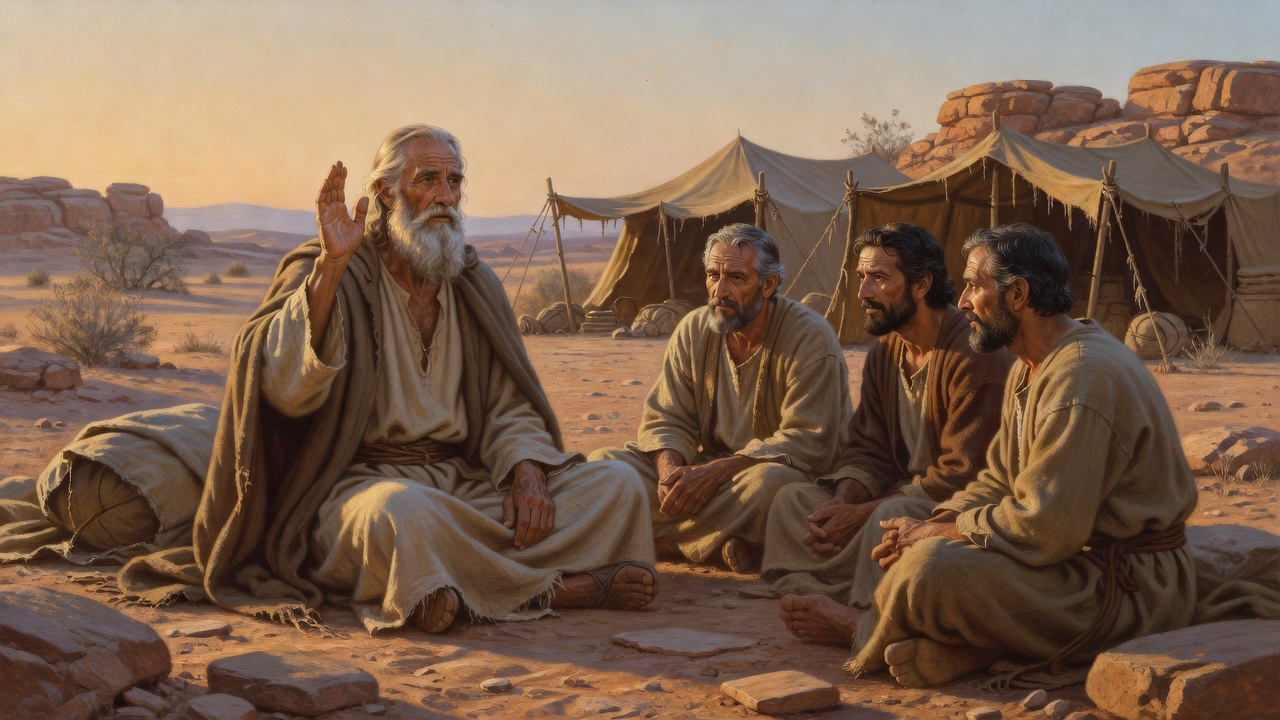
O Juramento Final de Inocência de Jó
- Jó estrutura sua defesa por meio de uma série de maldições condicionais sobre si mesmo, jurando que, se cometeu determinados pecados morais ou sociais, severas punições deveriam atingi-lo. Seu código ético vai além dos atos externos e abrange motivações internas, exigindo justiça até para seus servos, pois senhor e servo foram formados no ventre pelo mesmo Deus.Fontes: o próprio texto bíblico
- Jó rejeita a antiga prática de lançar um beijo com a mão em direção ao sol radiante ou à lua em esplendor. No antigo Oriente Próximo, beijar a mão em honra aos corpos celestes era uma forma comum de adoração astral, a qual Jó considera um pecado que nega o Deus altíssimo.Fontes: o próprio texto bíblico
- O capítulo assinala o encerramento dos discursos de Jó com um apelo jurídico formal. Ele apresenta sua assinatura e pede que o Todo-Poderoso lhe responda, afirmando que carregaria com honra qualquer acusação formal sobre os ombros como uma coroa, aproximando-se de Deus com a dignidade de um príncipe.Fontes: o próprio texto bíblico · Job
Notas escritas com auxílio de IA a partir de fontes abertas (Theographic Bible Metadata, CC BY-SA 4.0; Easton’s Bible Dictionary, domínio público) e revisadas antes de publicar.
Créditos e licença desta tradução
Douay-Rheims 1899
The Holy Bible in English, Douay-Rheims American Edition of 1899, translated from the Latin Vulgate
Public Domain
Language: English
Dialect: archaic American
Translation by: English College, Douai
This Public Domain Bible text is brought to you courtesy of eBible.org.
Help support free Bible access at https://eBible.org/give.php .
2022-11-03
Títulos de seção adaptados da Berean Standard Bible (domínio público); não fazem parte do texto bíblico desta tradução.
Fonte: http://ebible.org/engDRA/ · eBible.org