Isaías 15
Douay-Rheims 1899 · Toque num versículo para ver as referências cruzadas.
The Burden against Moab
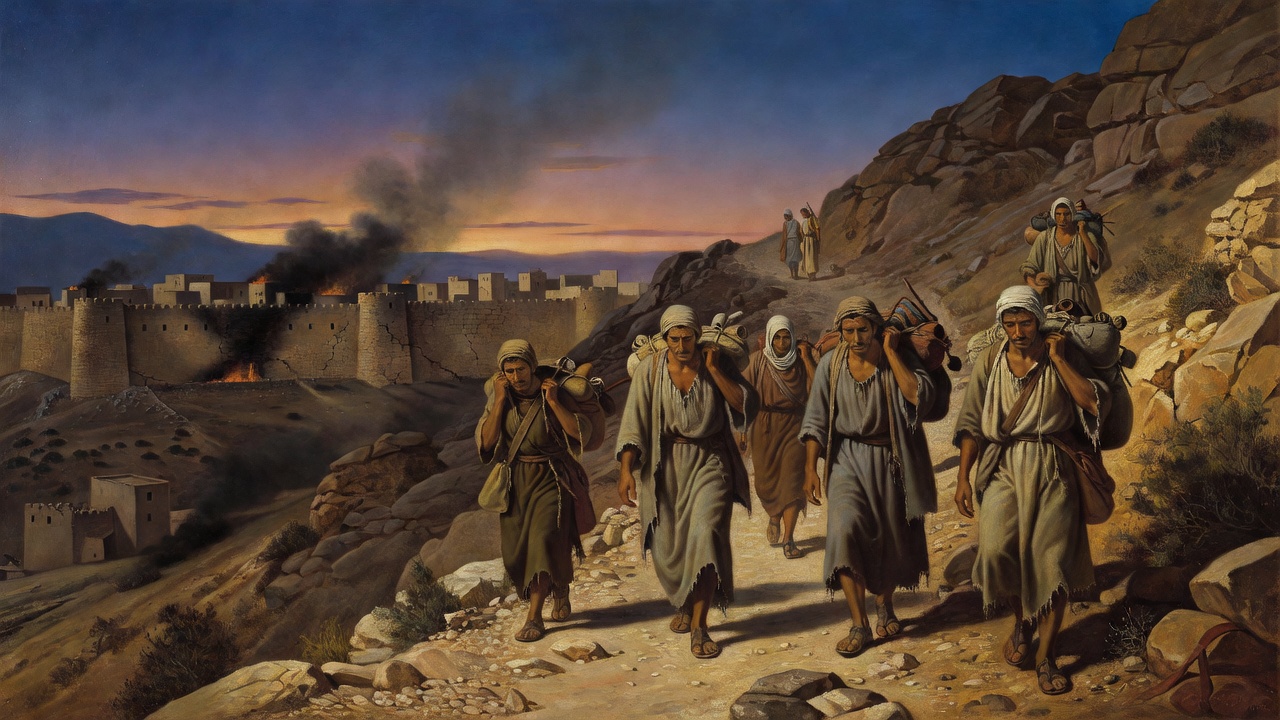
1The burden of Moab. Because in the night Ar of Moab is laid waste, it is silent: because the wall of Moab is destroyed in the night, it is silent. 2The house is gone up, and Dibon to the high places to mourn over Nabo, and over Medaba, Moab hath howled: ton all their heads shall be baldness, and every beard shall be shaven. 3In their streets they are girded with sackcloth: on the tops of their houses, and in their streets all shall howl and come down weeping. 4Hesebon shall cry, and Eleale, their voice is heard even to Jasa. For this shall the well appointed men of Moab howl, his soul shall howl to itself. 5My heart shall cry to Moab, the bars thereof shall flee unto Segor a heifer of three years old: for by the ascent of Luith they shall go up weeping: and in the way of Oronaim they shall lift up a cry of destruction. 6For the waters of Nemrim shall be desolate, for the grass is withered away, the spring is faded, all the greenness is perished. 7According to the greatness of their work, is their visitation also: they shall lead them to the torrent of the willows. 8For the cry is gone round about the border of Moab: the howling thereof unto Gallim, and unto the well of Elim the cry thereof. 9For the waters of Dibon are filled with blood: for I will bring more upon Dibon: the lion upon them that shall flee of Moab, and upon the remnant of the land.
Você sabia?
A Profecia Contra Moabe
- Moabe era um território situado a leste do Mar Morto e do rio Jordão, abrangendo antigos povoados como Ar, Quir e Medeba. Neste capítulo, o profeta lamenta a súbita destruição noturna e o pranto que toma conta dessas cidades e lugares altos moabitas.Fontes: Moab · Medeba · o próprio texto bíblico
- O texto descreve rituais tradicionais de luto praticados na região durante calamidades. Diante da devastação, os moabitas rapam a cabeça, cortam a barba e vestem pano de saco enquanto choram publicamente nas praças e sobre os terraços.Fontes: o próprio texto bíblico
- A cidade de Dibom, situada ao norte do rio Arnom e a leste do Mar Morto, também é chamada de Dimom em Isaías 15:9. O oráculo retrata a gravidade da invasão descrevendo as águas de Dimom cheias de sangue enquanto os fugitivos tentam escapar.Fontes: Dibon · o próprio texto bíblico
Notas escritas com auxílio de IA a partir de fontes abertas (Theographic Bible Metadata, CC BY-SA 4.0; Easton’s Bible Dictionary, domínio público) e revisadas antes de publicar.
Lugares deste capítulo
- Moab · Hoje: Moab 1 · 31.181, 35.701 · versículos 1, 2, 4, 5, 8, 9
- Dibon · Hoje: Tall Dhiban · 31.502, 35.777 · versículo 2
- Medeba · Hoje: Madaba · 31.716, 35.795 · versículo 2
Só aparecem lugares com identificação de alta confiança (90% ou mais segundo as fontes acadêmicas reunidas pelo OpenBible). Mapa da época: DARE (Digital Atlas of the Roman Empire), CC BY 4.0; mapa atual: © colaboradores do OpenStreetMap; lugares: OpenBible.info (CC BY 4.0).
Créditos e licença desta tradução
Douay-Rheims 1899
The Holy Bible in English, Douay-Rheims American Edition of 1899, translated from the Latin Vulgate
Public Domain
Language: English
Dialect: archaic American
Translation by: English College, Douai
This Public Domain Bible text is brought to you courtesy of eBible.org.
Help support free Bible access at https://eBible.org/give.php .
2022-11-03
Títulos de seção adaptados da Berean Standard Bible (domínio público); não fazem parte do texto bíblico desta tradução.
Fonte: http://ebible.org/engDRA/ · eBible.org