Jeremias 47
Darby Translation · Toque num versículo para ver as referências cruzadas.
Judgment on the Philistines
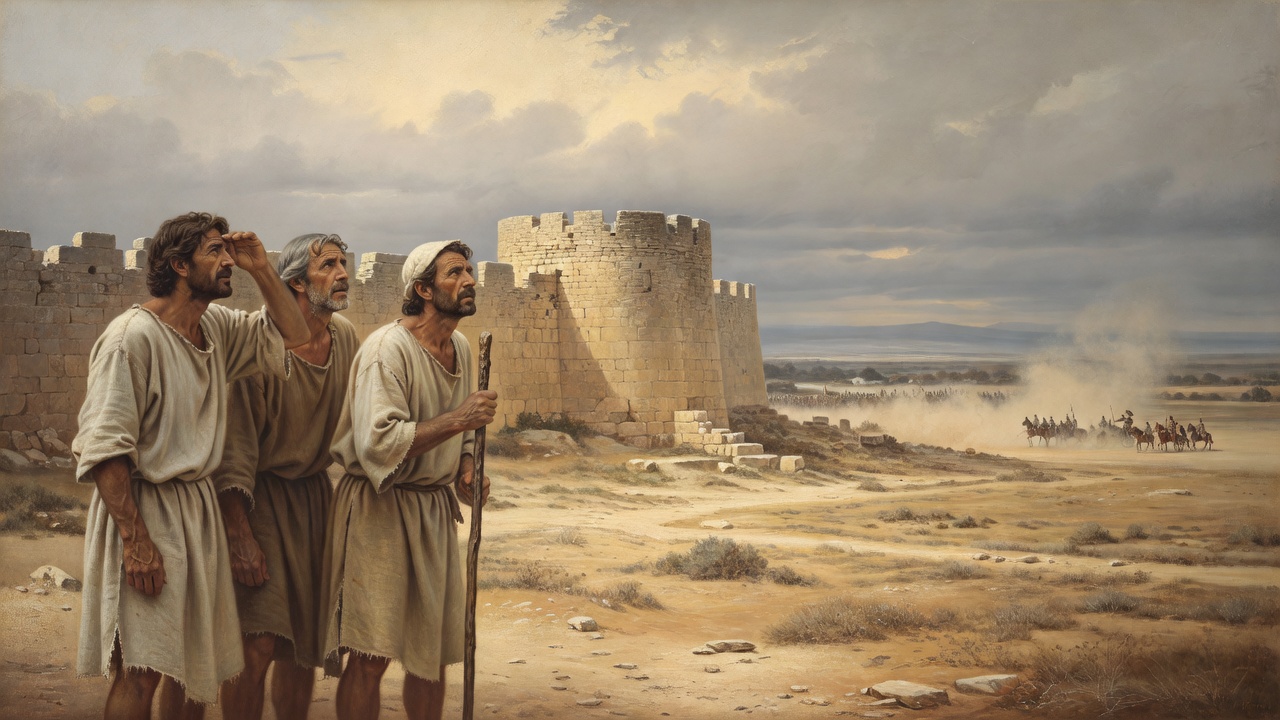
1The word of Jehovah that came to the prophet Jeremiah concerning the Philistines, before Pharaoh smote Gazah. 2Thus saith Jehovah: Behold, waters rise up out of the north, and shall become an overflowing flood, and shall overflow the land, and all that is therein; the city, and them that dwell therein: and the men shall cry, and all the inhabitants of the land shall howl, 3at the noise of the stamping of the hoofs of his steeds, at the rushing of his chariots, at the rumbling of his wheels: fathers shall not look back for [their] children, from feebleness of hands; 4because of the day that cometh to lay waste all the Philistines, to cut off from Tyre and Sidon every helper that remaineth; for Jehovah will lay waste the Philistines, the remnant of the island of Caphtor. 5Baldness is come upon Gazah; Ashkelon is cut off, the remnant of their valley: how long wilt thou cut thyself? 6Alas! sword of Jehovah, how long wilt thou not be quiet? Withdraw into thy scabbard, rest, and be still. 7How shouldest thou be quiet? — For Jehovah hath given it a charge: against Ashkelon, and against the sea shore, there hath he appointed it.
Você sabia?
Julgamento sobre os Filisteus
- Jeremias se refere aos filisteus como o remanescente das costas de Caftor. As tradições bíblicas identificam Caftor como a terra de origem dos filisteus, um lugar amplamente associado por estudiosos a Creta ou a partes da costa do Mediterrâneo oriental.Fontes: o próprio texto bíblico · Caphtor
- O capítulo direciona seus avisos contra Gaza e Ascalom, duas das cinco cidades filisteias proeminentes ao longo da costa mediterrânea. Ambas eram centros antigos conhecidos por sua posição estratégica e rotas comerciais que ligavam o Egito e as regiões vizinhas.Fontes: o próprio texto bíblico · Gaza · Ashkelon
- A profecia observa que a destruição iminente cortaria todos os aliados restantes de Tiro e Sidom. Esses dois grandes portos fenícios ao norte eram centros marítimos cruciais cujos interesses estavam intimamente ligados à região costeira.Fontes: o próprio texto bíblico · Tyre · Sidon
Notas escritas com auxílio de IA a partir de fontes abertas (Theographic Bible Metadata, CC BY-SA 4.0; Easton’s Bible Dictionary, domínio público) e revisadas antes de publicar.
Lugares deste capítulo
- Gaza · Hoje: Tell Harube · 31.504, 34.464 · versículos 1, 5
- Sidon · Hoje: Sandikli archaeological site in Sidon · 33.561, 35.372 · versículo 4
- Tyre · 33.271, 35.196 · versículo 4
- Ashkelon · Hoje: Tel Ashkelon · 31.664, 34.546 · versículos 5, 7
- Great Sea · Hoje: Mediterranean Sea · 31.805, 34.170 · versículo 5
- Philistia · 31.664, 34.546 · versículo 5
Só aparecem lugares com identificação de alta confiança (90% ou mais segundo as fontes acadêmicas reunidas pelo OpenBible). Mapa da época: DARE (Digital Atlas of the Roman Empire), CC BY 4.0; mapa atual: © colaboradores do OpenStreetMap; lugares: OpenBible.info (CC BY 4.0).
Créditos e licença desta tradução
Darby Translation
The Holy Scriptures, a New Translation from the Original Languages by J. N. Darby
Public Domain
Language: English
Dialect: archaic British
Translation by: J. N. Darby
2019-11-15
Títulos de seção adaptados da Berean Standard Bible (domínio público); não fazem parte do texto bíblico desta tradução.
Fonte: http://ebible.org/engDBY/ · eBible.org