Isaías 9
Darby Translation · Toque num versículo para ver as referências cruzadas.
Unto Us a Child Is Born
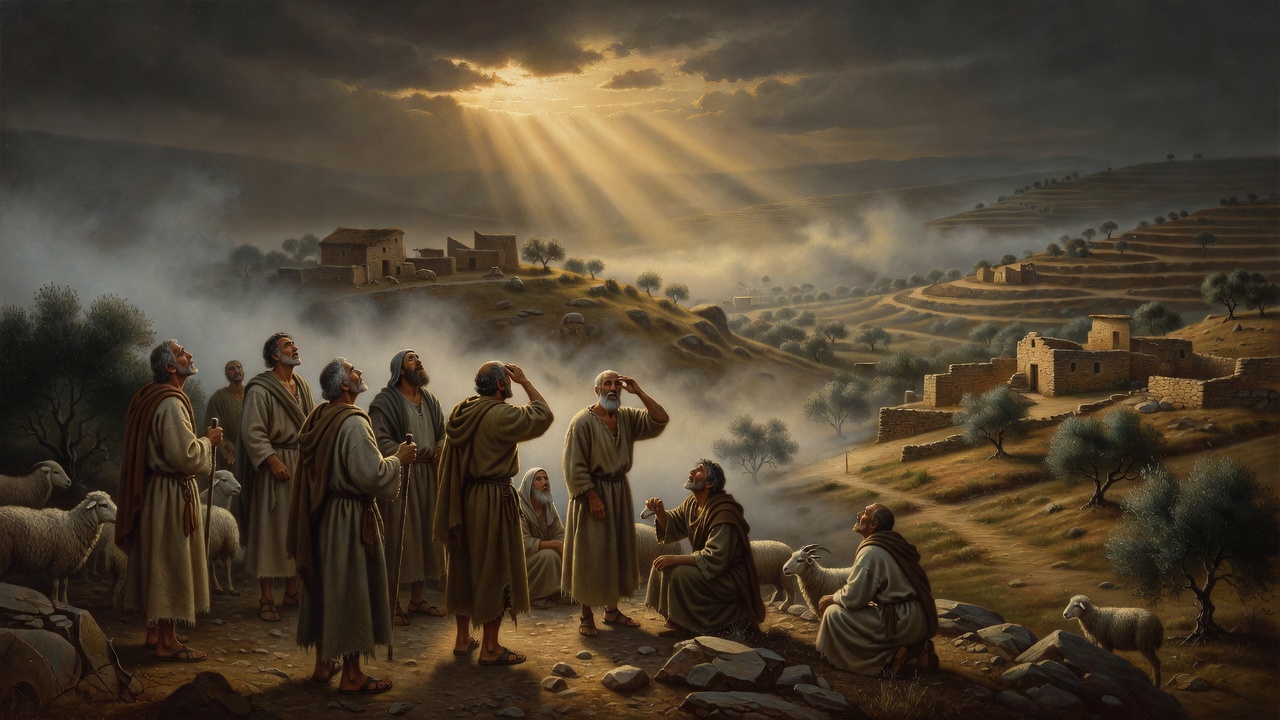
1Nevertheless the darkness shall not be as when the distress was in the [land], at the time he at first lightly, and afterwards heavily, visited the land of Zebulun and the land of Naphtali, — the way of the sea, beyond the Jordan, Galilee of the nations: 2the people that walked in darkness have seen a great light; they that dwelt in the land of the shadow of death, upon them light hath shone. 3Thou hast multiplied the nation, hast increased its joy: they joy before thee like to the joy in harvest; as [men] rejoice when they divide the spoil. 4For thou hast broken the yoke of his burden and the staff of his shoulder, the rod of his oppressor, as in the day of Midian. 5For every boot of him that is shod for the tumult, and the garment rolled in blood, shall be for burning, fuel for fire. 6For unto us a child is born, unto us a son is given; and the government shall be upon his shoulder; and his name is called Wonderful, Counsellor, Mighty God, Father of Eternity, Prince of Peace. 7Of the increase of his government and of peace there shall be no end, upon the throne of David and over his kingdom, to establish it, and to uphold it with judgment and with righteousness, from henceforth even for ever. The zeal of Jehovah of hosts will perform this.
Judgment against Israel’s Pride
8The Lord sent a word unto Jacob, and it lighteth upon Israel. 9And all the people shall know [it], Ephraim and the inhabitant of Samaria, that say in pride and stoutness of heart, 10The bricks are fallen down, but we will build with hewn stones; the sycamore trees are cut down, but we will replace them with cedars. 11And Jehovah will set up the adversaries of Rezin against him, and arm his enemies, 12the Syrians on the east, and the Philistines on the west; and they shall devour Israel with open mouth. For all this his anger is not turned away, and his hand is stretched out still.
Judgment against Israel’s Hypocrisy
13But the people turneth not unto him that smiteth them, and they do not seek Jehovah of hosts. 14And Jehovah will cut off from Israel head and tail, palm-branch and rush, in one day: 15the ancient and honourable, he is the head; and the prophet that teacheth lies, he is the tail. 16For the guides of this people mislead [them]; and they that are guided by them are swallowed up. 17Therefore the Lord will not rejoice in their young men, neither will he have mercy on their fatherless and on their widows; for every one is a hypocrite and an evildoer, and every mouth speaketh folly. For all this his anger is not turned away, and his hand is stretched out still.
Judgment against Israel’s Unrepentance
18For wickedness burneth as a fire: it devoureth briars and thorns, and kindleth in the thickets of the forest, and they go rolling up like a pillar of smoke. 19Through the wrath of Jehovah of hosts is the land burned up, and the people is as fuel for fire: a man spareth not his brother; 20and he snatcheth on the right hand, and is hungry, and eateth on the left hand; and they are not satisfied. They eat every man the flesh of his own arm: 21Manasseh, Ephraim, and Ephraim, Manasseh; [and] they together are against Judah. For all this his anger is not turned away, and his hand is stretched out still.
Você sabia?
Uma grande luz e o julgamento sobre o norte
- Os territórios tribais do norte pertencentes a Zebulom e Naftali ficavam na Galileia, termo derivado de uma palavra que significa circuito. Como habitantes originais permaneceram por muito tempo na região ao lado dos israelitas, ela passou a ser chamada de Galileia das nações ou dos gentios.Fontes: Galilee · o próprio texto bíblico
- A menção ao dia de Midiã evoca a histórica quebra da opressão exercida pelos midianitas, um povo nômade que habitava as regiões desérticas ao norte da península arábica.Fontes: Midian · o próprio texto bíblico
- A advertência profética se dirige ao reino do norte por meio de sua capital Samaria — edificada pelo rei Onri no topo de uma montanha isolada nos montes de Israel — e de sua tribo líder Efraim, descrevendo severas disputas civis entre tribos irmãs como Manassés e Efraim.Fontes: Samaria · Ephraim · Manasseh (son of Joseph) · o próprio texto bíblico
Notas escritas com auxílio de IA a partir de fontes abertas (Theographic Bible Metadata, CC BY-SA 4.0; Easton’s Bible Dictionary, domínio público) e revisadas antes de publicar.
Lugares deste capítulo
- Galilee · 32.760, 35.527 · versículo 1
- Jordan · Hoje: Jordan River · 31.761, 35.558 · versículo 1
- Midian · 28.495, 35.012 · versículo 4
- Samaria · 32.276, 35.195 · versículo 9
- Philistia · 31.664, 34.546 · versículo 12
- Syria · Hoje: Aram · 33.511, 36.306 · versículo 12
Só aparecem lugares com identificação de alta confiança (90% ou mais segundo as fontes acadêmicas reunidas pelo OpenBible). Mapa da época: DARE (Digital Atlas of the Roman Empire), CC BY 4.0; mapa atual: © colaboradores do OpenStreetMap; lugares: OpenBible.info (CC BY 4.0).
Créditos e licença desta tradução
Darby Translation
The Holy Scriptures, a New Translation from the Original Languages by J. N. Darby
Public Domain
Language: English
Dialect: archaic British
Translation by: J. N. Darby
2019-11-15
Títulos de seção adaptados da Berean Standard Bible (domínio público); não fazem parte do texto bíblico desta tradução.
Fonte: http://ebible.org/engDBY/ · eBible.org