Isaías 42
Darby Translation · Toque num versículo para ver as referências cruzadas.
Here Is My Servant
1Behold my servant whom I uphold, mine elect [in whom] my soul delighteth! I will put my Spirit upon him; he shall bring forth judgment to the nations. 2He shall not cry, nor lift up, nor cause his voice to be heard in the street. 3A bruised reed shall he not break, and smoking flax shall he not quench: he shall bring forth judgment according to truth. 4He shall not faint nor be in haste, till he have set justice in the earth: and the isles shall wait for his law. 5Thus saith God, Jehovah, he that created the heavens and stretched them out, he that spread forth the earth and its productions, he that giveth breath unto the people upon it, and spirit to them that walk therein: 6I, Jehovah, have called thee in righteousness, and will take hold of thy hand; and I will preserve thee, and give thee for a covenant of the people, for a light of the nations, 7to open the blind eyes, to bring forth the prisoner from the prison, them that sit in darkness out of the house of restraint. 8I am Jehovah, that is my name; and my glory will I not give to another, neither my praise to graven images. 9Behold, the former things are come to pass, and new things do I declare: before they spring forth will I cause you to hear them.
A New Song of Praise
10Sing unto Jehovah a new song, his praise from the end of the earth, ye that go down to the sea, and all that is therein, the isles and their inhabitants. 11Let the wilderness and the cities thereof lift up [their voice], the villages that Kedar doth inhabit; let the inhabitants of the rock sing, let them shout from the top of the mountains: 12let them give glory unto Jehovah, and declare his praise in the islands. 13Jehovah will go forth as a mighty man, he will stir up jealousy like a man of war: he will cry, yea, he will shout; he will shew himself mighty against his enemies. 14Long time have I holden my peace; I have been still, I have restrained myself: I will cry like a woman that travaileth; I will blow and pant at once. 15I will lay waste mountains and hills, and dry up all their herbs; and I will make the rivers islands, and I will dry up the pools. 16And I will bring the blind by a way that they know not, in paths that they know not will I lead them; I will make darkness light before them, and crooked things straight. These things will I do unto them, and not forsake them. 17They shall be turned back, they shall be covered with shame, that confide in graven images, that say to the molten images, Ye are our gods.
Israel Is Deaf and Blind
18— Hear, ye deaf; and look, ye blind, that ye may see. 19Who is blind, but my servant? and deaf, as my messenger whom I sent? Who is blind as he in whom I have trusted, and blind as Jehovah's servant, 20— seeing many things, and thou observest not? With opened ears, he heareth not. 21Jehovah had delight [in him] for his righteousness' sake: he hath magnified the law, and made it honourable. 22But this is a people robbed and spoiled; they are all of them snared in holes, and hidden in prison-houses; they are become a prey, and none delivereth, — a spoil, and none saith, Restore. 23Who among you will give ear to this, [who] will hearken and hear what is to come? 24Who gave Jacob for a spoil, and Israel to the robbers? Did not Jehovah, he against whom we have sinned? And they would not walk in his ways, neither did they hearken unto his law. 25And he hath poured upon him the fury of his anger, and the strength of battle: and it set him on fire round about, yet he knew not; and it burned him, yet he took it not to heart.
Você sabia?
O Servo do SENHOR e o Cântico Universal de Louvor
- Isaías 42 apresenta o Servo escolhido de Deus, designado para trazer justiça suavemente às nações e ser luz para os prisioneiros sem quebrar a cana trilhada. Mais adiante no mesmo capítulo, Israel também é chamado de servo, embora retratado como cego, surdo e saqueado por desobedecer à lei de Deus.Fontes: o próprio texto bíblico
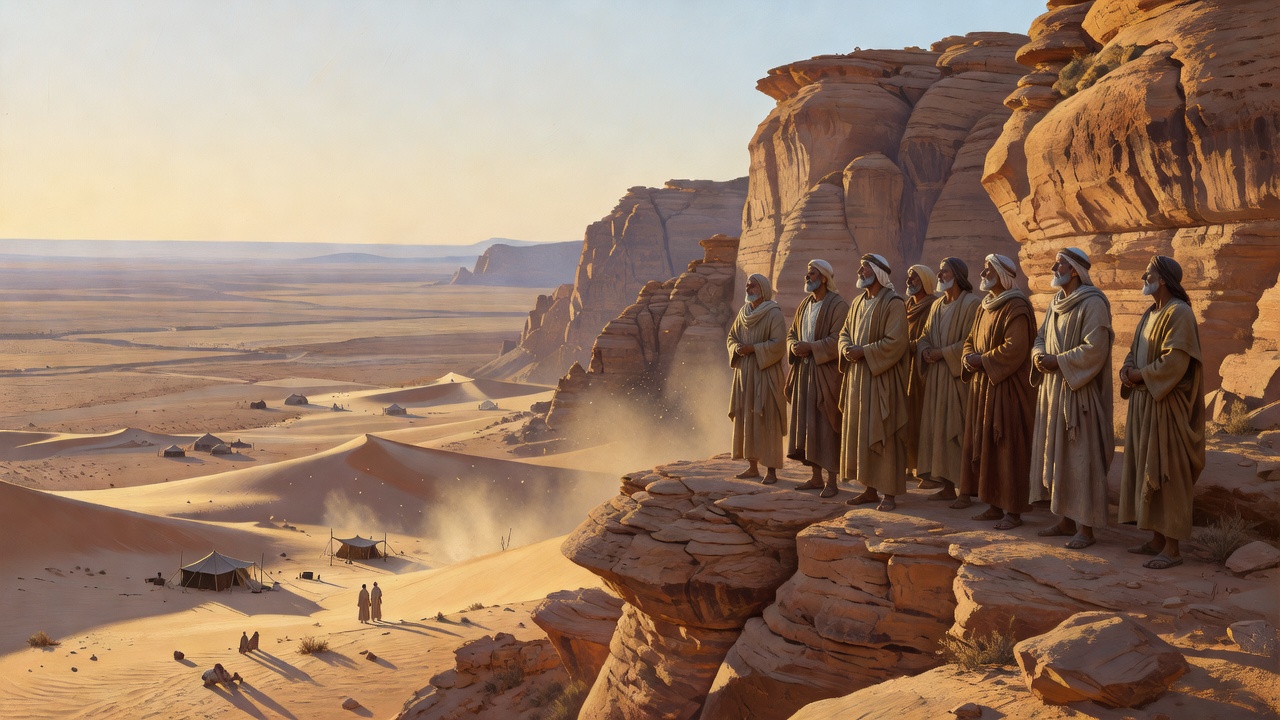
- O chamado profético ao louvor alcança regiões desérticas remotas, mencionando expressamente os povoados de Quedar e as escarpas de Selá. Quedar refere-se às tribos árabes nômades que viviam em tendas pretas no noroeste da Arábia, enquanto Selá, que significa rocha, era uma fortaleza em Edom, mais tarde conhecida como Petra.Fontes: o próprio texto bíblico · Kedar · Sela
Notas escritas com auxílio de IA a partir de fontes abertas (Theographic Bible Metadata, CC BY-SA 4.0; Easton’s Bible Dictionary, domínio público) e revisadas antes de publicar.
Lugares deste capítulo
- Kedar · 29.811, 39.868 · versículo 11
Só aparecem lugares com identificação de alta confiança (90% ou mais segundo as fontes acadêmicas reunidas pelo OpenBible). Mapa da época: DARE (Digital Atlas of the Roman Empire), CC BY 4.0; mapa atual: © colaboradores do OpenStreetMap; lugares: OpenBible.info (CC BY 4.0).
Créditos e licença desta tradução
Darby Translation
The Holy Scriptures, a New Translation from the Original Languages by J. N. Darby
Public Domain
Language: English
Dialect: archaic British
Translation by: J. N. Darby
2019-11-15
Títulos de seção adaptados da Berean Standard Bible (domínio público); não fazem parte do texto bíblico desta tradução.
Fonte: http://ebible.org/engDBY/ · eBible.org