Deuteronômio 16
Darby Translation · Toque num versículo para ver as referências cruzadas.
Passover and the Feast of Unleavened Bread
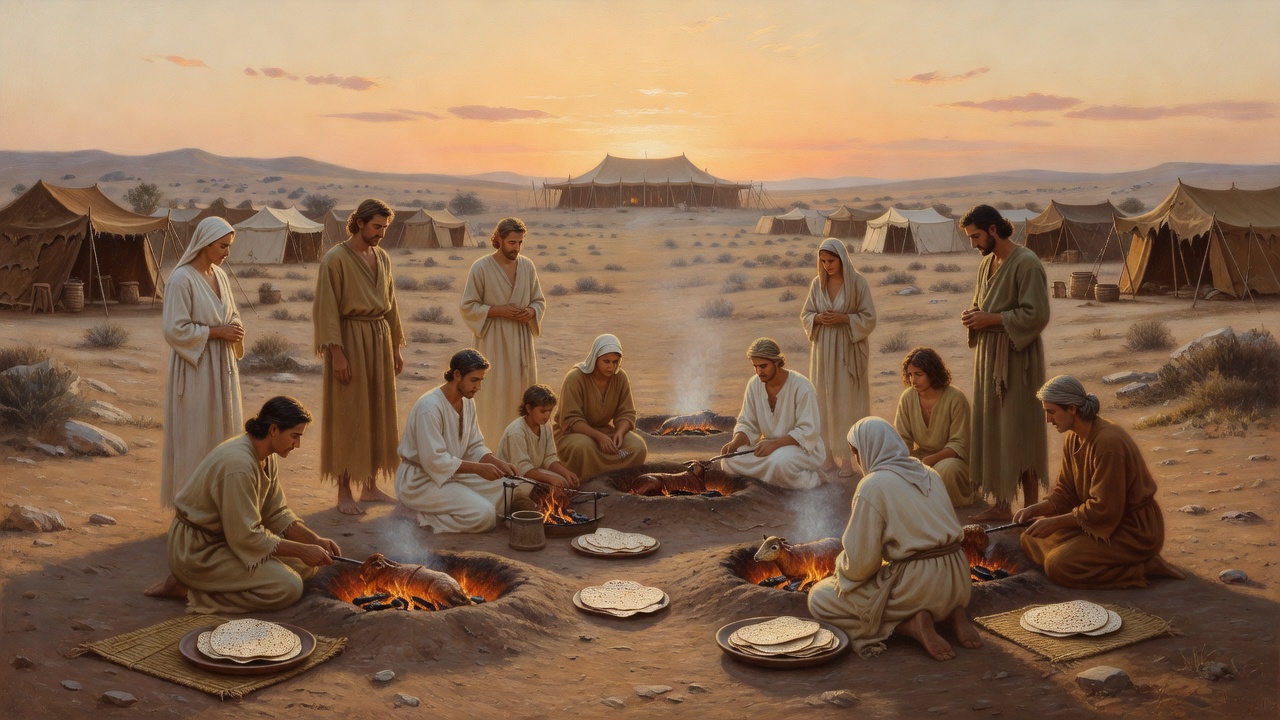
1Keep the month of Abib, and celebrate the passover to Jehovah thy God; for in the month of Abib Jehovah thy God brought thee forth out of Egypt by night. 2And thou shalt sacrifice the passover to Jehovah thy God, of the flock and of the herd, in the place which Jehovah will choose to cause his name to dwell there. 3Thou shalt eat no leavened bread along with it; seven days shalt thou eat unleavened bread with it, bread of affliction; for thou camest forth out of the land of Egypt in haste, — that thou mayest remember the day when thou camest forth out of the land of Egypt, all the days of thy life. 4And there shall be no leaven seen with thee in all thy borders seven days; neither shall any of the flesh, which thou sacrificedst at even on the first day, be left over night until the morning. — 5Thou mayest not sacrifice the passover in one of thy gates, which Jehovah thy God giveth thee; 6but at the place that Jehovah thy God will choose, to cause his name to dwell in, there thou shalt sacrifice the passover at even, at the going down of the sun, at the time that thou camest forth out of Egypt. 7And thou shalt cook and eat it at the place which Jehovah thy God will choose; and in the morning shalt thou turn and go unto thy tents. 8Six days thou shalt eat unleavened bread, and on the seventh day is a solemn assembly to Jehovah thy God; thou shalt do no work.
The Feast of Weeks
9Seven weeks shalt thou count: from the beginning of putting the sickle into the corn shalt thou begin to count seven weeks. 10And thou shalt hold the feast of weeks to Jehovah thy God with a tribute of a voluntary-offering of thy hand, which thou shalt give, according as Jehovah thy God hath blessed thee; 11and thou shalt rejoice before Jehovah thy God, thou, and thy son, and thy daughter, and thy bondman, and thy handmaid, and the Levite that is in thy gates, and the stranger, and the fatherless, and the widow that are in thy midst in the place that Jehovah thy God will choose to cause his name to dwell there. 12And thou shalt remember that thou wast a bondman in Egypt, and thou shalt keep and do these statutes.
The Feast of Tabernacles
13The feast of tabernacles shalt thou hold seven days, when thou hast gathered in [the produce] of thy floor and of thy winepress. 14And thou shalt rejoice in thy feast, thou, and thy son, and thy daughter, and thy bondman, and thy handmaid, and the Levite, and the stranger, and the fatherless, and the widow, that are in thy gates. 15Seven days shalt thou hold a feast to Jehovah thy God in the place which Jehovah will choose; for Jehovah thy God will bless thee in all thy produce, and in all the work of thy hands, and thou shalt be wholly joyful. 16Three times in the year shall all thy males appear before Jehovah thy God in the place which he will choose, at the feast of unleavened bread, and at the feast of weeks, and at the feast of tabernacles; and they shall not appear before Jehovah empty: 17each [shall give] according to that which is in his power to give, according to the blessing of Jehovah thy God which he hath given thee.
Judges and Justice
18Judges and officers shalt thou make thee in all thy gates, which Jehovah thy God giveth thee, throughout thy tribes, that they may judge the people with just judgment. 19Thou shalt not wrest judgment; thou shalt not respect persons, neither take a bribe; for the bribe blindeth the eyes of the wise, and perverteth the words of the righteous. 20Perfect justice shalt thou follow, that thou mayest live, and possess the land that Jehovah thy God giveth thee.
Forbidden Forms of Worship
21Thou shalt not plant thyself an Asherah of any wood near unto the altar of Jehovah thy God, which thou shalt make thee. 22Neither shalt thou set thee up a statue, which Jehovah thy God hateth.
Você sabia?
Festas Fixas e Justiça Reta
- Deuteronômio estabelece três festas anuais de peregrinação: a Festa dos Pães Asmos (Páscoa), a Festa das Semanas e a Festa dos Tabernáculos. Nessas ocasiões, os homens de Israel deviam comparecer diante de Deus não em suas próprias cidades, mas no lugar central escolhido como habitação para o Seu Nome.Fontes: o próprio texto bíblico
- As celebrações da Festa das Semanas e da Festa dos Tabernáculos incluíam expressamente grupos vulneráveis da sociedade, como servos, levitas, estrangeiros, órfãos e viúvas. Essa alegria comunitária estava diretamente ligada à lembrança da libertação da escravidão no Egito.Fontes: o próprio texto bíblico
- Além das assembleias religiosas, o texto ordena a nomeação de juízes e oficiais em todas as cidades. Eles eram proibidos de aceitar suborno ou demonstrar parcialidade, estabelecendo a ordem de seguir estritamente a justiça em toda a terra.Fontes: o próprio texto bíblico
Notas escritas com auxílio de IA a partir de fontes abertas (Theographic Bible Metadata, CC BY-SA 4.0; Easton’s Bible Dictionary, domínio público) e revisadas antes de publicar.
Lugares deste capítulo
Só aparecem lugares com identificação de alta confiança (90% ou mais segundo as fontes acadêmicas reunidas pelo OpenBible). Mapa da época: DARE (Digital Atlas of the Roman Empire), CC BY 4.0; mapa atual: © colaboradores do OpenStreetMap; lugares: OpenBible.info (CC BY 4.0).
Créditos e licença desta tradução
Darby Translation
The Holy Scriptures, a New Translation from the Original Languages by J. N. Darby
Public Domain
Language: English
Dialect: archaic British
Translation by: J. N. Darby
2019-11-15
Títulos de seção adaptados da Berean Standard Bible (domínio público); não fazem parte do texto bíblico desta tradução.
Fonte: http://ebible.org/engDBY/ · eBible.org