Eclesiastes 7
Bible in Basic English · Toque num versículo para ver as referências cruzadas.
The Value of Wisdom
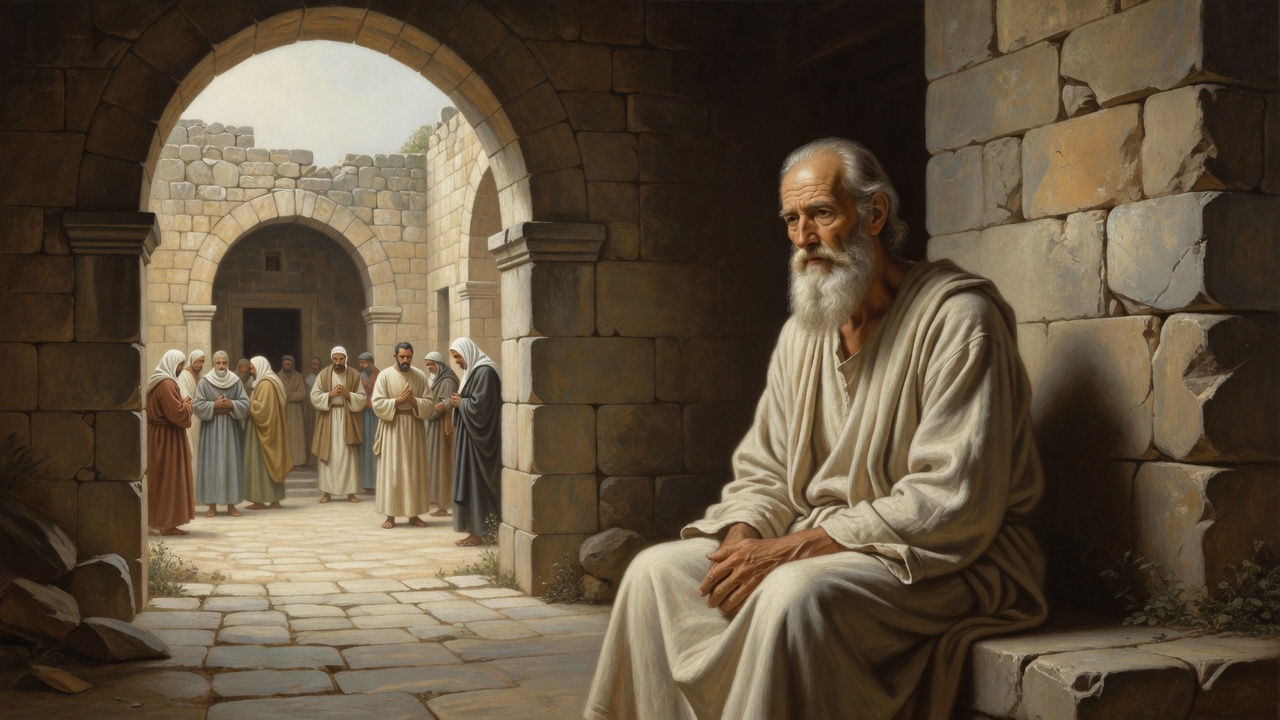
1A good name is better than oil of great price, and the day of death than the day of birth. 2It is better to go to the house of weeping, than to go to the house of feasting; because that is the end of every man, and the living will take it to their hearts. 3Sorrow is better than joy; when the face is sad the mind gets better. 4The hearts of the wise are in the house of weeping; but the hearts of the foolish are in the house of joy. 5It is better to take note of the protest of the wise, than for a man to give ear to the song of the foolish. 6Like the cracking of thorns under a pot, so is the laugh of a foolish man; and this again is to no purpose. 7The wise are troubled by the ways of the cruel, and the giving of money is the destruction of the heart. 8The end of a thing is better than its start, and a gentle spirit is better than pride. 9Be not quick to let your spirit be angry; because wrath is in the heart of the foolish. 10Say not, Why were the days which have gone by better than these? Such a question comes not from wisdom. 11Wisdom together with a heritage is good, and a profit to those who see the sun. 12Wisdom keeps a man from danger even as money does; but the value of knowledge is that wisdom gives life to its owner. 13Give thought to the work of God. Who will make straight what he has made bent? 14In the day of wealth have joy, but in the day of evil take thought: God has put the one against the other, so that man may not be certain what will be after him.
The Limits of Human Wisdom
15These two have I seen in my life which is to no purpose: a good man coming to his end in his righteousness, and an evil man whose days are long in his evil-doing. 16Be not given overmuch to righteousness and be not over-wise. Why let destruction come on you? 17Be not evil overmuch, and be not foolish. Why come to your end before your time? 18It is good to take this in your hand and not to keep your hand from that; he who has the fear of God will be free of the two. 19Wisdom makes a wise man stronger than ten rulers in a town. 20There is no man on earth of such righteousness that he does good and is free from sin all his days. 21Do not give ear to all the words which men say, for fear of hearing the curses of your servant. 22Your heart has knowledge how frequently others have been cursed by you. 23All this I have put to the test by wisdom; I said, I will be wise, but it was far from me. 24Far off is true existence, and very deep; who may have knowledge of it? 25I gave my mind to knowledge and to searching for wisdom and the reason of things, and to the discovery that sin is foolish, and that to be foolish is to be without one's senses. 26And I saw a thing more bitter than death, even the woman whose heart is full of tricks and nets, and whose hands are as bands. He with whom God is pleased will get free from her, but the sinner will be taken by her. 27Look! this I have seen, said the Preacher, taking one thing after another to get the true account, 28For which my soul is still searching, but I have it not; one man among a thousand have I seen; but a woman among all these I have not seen. 29This only have I seen, that God made men upright, but they have been searching out all sorts of inventions.
Você sabia?
Sabedoria, mortalidade e os limites do entendimento
- Eclesiastes 7 começa com uma série de provérbios comparativos afirmando que momentos de reflexão sóbria, como visitar uma casa de luto ou enfrentar a tristeza, oferecem maior compreensão da vida do que o riso superficial e as festas.Fontes: o próprio texto bíblico
- O Mestre reflete sobre a realidade da experiência humana, observando que Deus determinou tanto os dias de prosperidade quanto os de adversidade para que as pessoas não possam prever o futuro, e que por vezes o justo perece enquanto o ímpio tem vida longa.Fontes: o próprio texto bíblico
- O capítulo destaca o limite universal da bondade humana, observando que não há ninguém na terra que faça o bem e nunca peque, e concluindo que, embora Deus tenha feito a humanidade reta, as pessoas buscaram muitos esquemas complexos.Fontes: o próprio texto bíblico
Notas escritas com auxílio de IA a partir de fontes abertas (Theographic Bible Metadata, CC BY-SA 4.0; Easton’s Bible Dictionary, domínio público) e revisadas antes de publicar.
Créditos e licença desta tradução
Bible in Basic English
The Bible in Basic English
Public Domain
Language: English
Dialect: simple British
Translation by: Samuel Henry Hooke
The Bible In Basic English was printed in 1965 by Cambridge Press in England. Published without any copyright notice and distributed in America, this work fell immediately and irretrievably into the Public Domain in the United States according to the UCC convention of that time. A call to Cambridge prior to placing this work in etext resulted in an admission of this fact.
2020-04-17
Títulos de seção adaptados da Berean Standard Bible (domínio público); não fazem parte do texto bíblico desta tradução.
Fonte: http://ebible.org/engBBE/ · eBible.org