Levítico 21
World English Bible Classic · Toque num versículo para ver as referências cruzadas.
Holiness Required of Priests
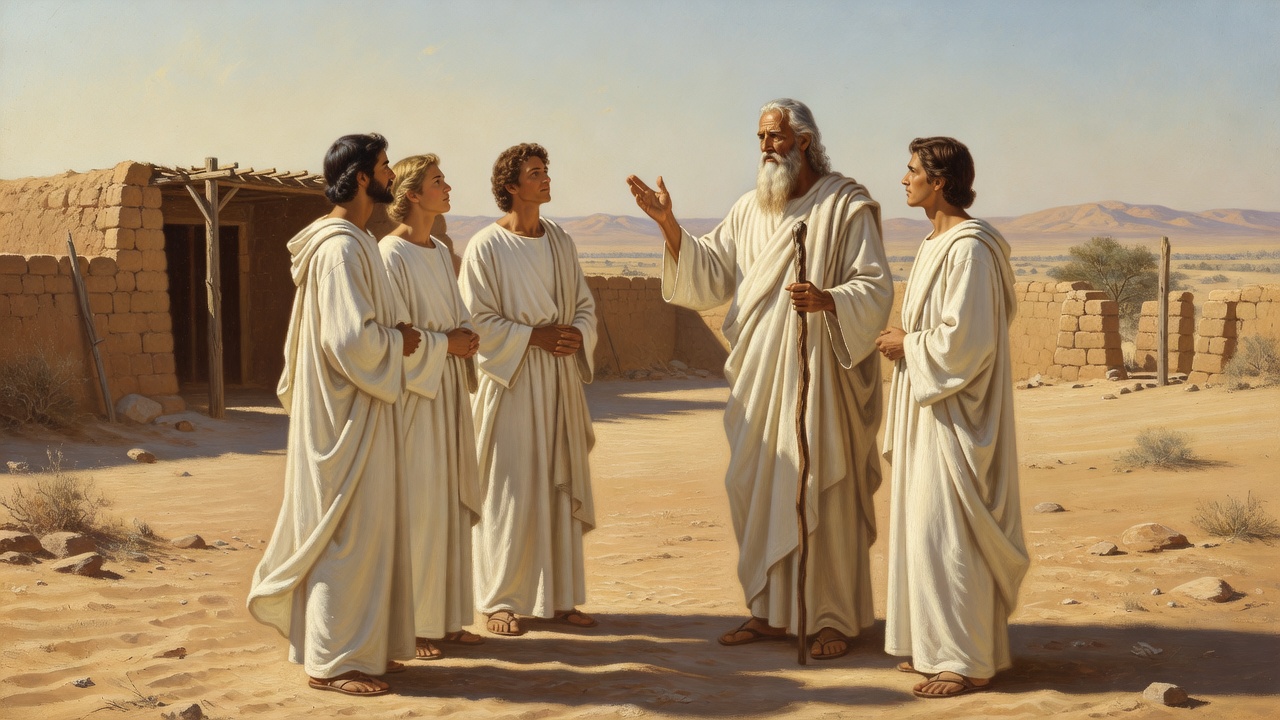
1Yahweh said to Moses, “Speak to the priests, the sons of Aaron, and say to them, ‘A priest shall not defile himself for the dead among his people, 2except for his relatives that are near to him: for his mother, for his father, for his son, for his daughter, for his brother, 3and for his virgin sister who is near to him, who has had no husband; for her he may defile himself. 4He shall not defile himself, being a chief man among his people, to profane himself.
5“‘They shall not shave their heads or shave off the corners of their beards or make any cuttings in their flesh. 6They shall be holy to their God, and not profane the name of their God, for they offer the offerings of Yahweh made by fire, the bread of their God. Therefore they shall be holy.
7“‘They shall not marry a woman who is a prostitute, or profane. A priest shall not marry a woman divorced from her husband; for he is holy to his God. 8Therefore you shall sanctify him, for he offers the bread of your God. He shall be holy to you, for I Yahweh, who sanctify you, am holy.
9“‘The daughter of any priest, if she profanes herself by playing the prostitute, she profanes her father. She shall be burned with fire.
10“‘He who is the high priest among his brothers, upon whose head the anointing oil is poured, and who is consecrated to put on the garments, shall not let the hair of his head hang loose, or tear his clothes. 11He must not go in to any dead body, or defile himself for his father or for his mother. 12He shall not go out of the sanctuary, nor profane the sanctuary of his God; for the crown of the anointing oil of his God is upon him. I am Yahweh.
13“‘He shall take a wife in her virginity. 14He shall not marry a widow, or one divorced, or a woman who has been defiled, or a prostitute. He shall take a virgin of his own people as a wife. 15He shall not profane his offspring among his people, for I am Yahweh who sanctifies him.’”
Restrictions against Those with Blemishes
16Yahweh spoke to Moses, saying, 17“Say to Aaron, ‘None of your offspring throughout their generations who has a defect may approach to offer the bread of his God. 18For whatever man he is that has a defect, he shall not draw near: a blind man, or a lame, or he who has a flat nose, or any deformity, 19or a man who has an injured foot, or an injured hand, 20or hunchbacked, or a dwarf, or one who has a defect in his eye, or an itching disease, or scabs, or who has damaged testicles. 21No man of the offspring of Aaron the priest who has a defect shall come near to offer the offerings of Yahweh made by fire. Since he has a defect, he shall not come near to offer the bread of his God. 22He shall eat the bread of his God, both of the most holy, and of the holy. 23He shall not come near to the veil, nor come near to the altar, because he has a defect; that he may not profane my sanctuaries, for I am Yahweh who sanctifies them.’”
24So Moses spoke to Aaron, and to his sons, and to all the children of Israel.
Você sabia?
Santidade e Requisitos para o Sacerdócio
- Os sacerdotes comuns só podiam guardar luto por parentes consanguíneos imediatos — pais, filhos e irmãos solteiros —, enquanto o sumo sacerdote era estritamente proibido de se contaminar por qualquer cadáver, incluindo seus próprios pais, e não podia rasgar suas vestes em sinal de luto.Fontes: o próprio texto bíblico
- Enquanto os sacerdotes comuns eram proibidos de se casar com mulheres divorciadas ou prostitutas, o sumo sacerdote tinha uma exigência ainda mais rigorosa: só podia se casar com uma virgem do seu próprio povo.Fontes: o próprio texto bíblico
- Os descendentes de Arão com defeitos físicos ou lesões eram impedidos de apresentar ofertas queimadas no altar, mas ainda tinham permissão plena para comer das porções de alimentos santos e santíssimos.Fontes: o próprio texto bíblico
Notas escritas com auxílio de IA a partir de fontes abertas (Theographic Bible Metadata, CC BY-SA 4.0; Easton’s Bible Dictionary, domínio público) e revisadas antes de publicar.
Créditos e licença desta tradução
The World English Bible
The World English Bible is in the Public Domain. That means that it is not copyrighted. However, "World English Bible" is a Trademark of eBible.org.
You may copy, publish, proclaim, distribute, redistribute, sell, give away, quote, memorize, read publicly, broadcast, transmit, share, back up, post on the Internet, print, reproduce, preach, teach from, and use
the World English Bible as much as you want, and others may also do so. All we ask is that if you CHANGE the actual text of the World English Bible in any way, you not call the result the World English Bible any more.
This is to avoid confusion, not to limit your freedom. The Holy Bible is God's Word. It belongs to God. He gave it to us freely, and we who have worked on this translation freely give it to you by dedicating it to the
Public Domain.
Donations to help with the expenses of this project and thus help others have free access to the Word of God may be made to us, but are not required. Please see
https://MLJohnson.org/partner/ if you are interested in helping to fund this work.
This is the 2020 stable text edition of the World English Bible. The main editing/updating work is done on all books. Although we may
choose to consider corrections of obvious typos or problems in the text, we are done with style updates and modernization of the language used in this
Bible translation, preferring to leave the text stable.
New updates, if any, will be posted on https://eBible.org/web/ and at https://WorldEnglish.Bible .
Títulos de seção adaptados da Berean Standard Bible (domínio público); não fazem parte do texto bíblico desta tradução.
Fonte: http://ebible.org/eng-web/ · eBible.org