Jó 2
LXX2012: Septuagint in British/International English 2012 · Toque num versículo para ver as referências cruzadas.
Job Loses His Health
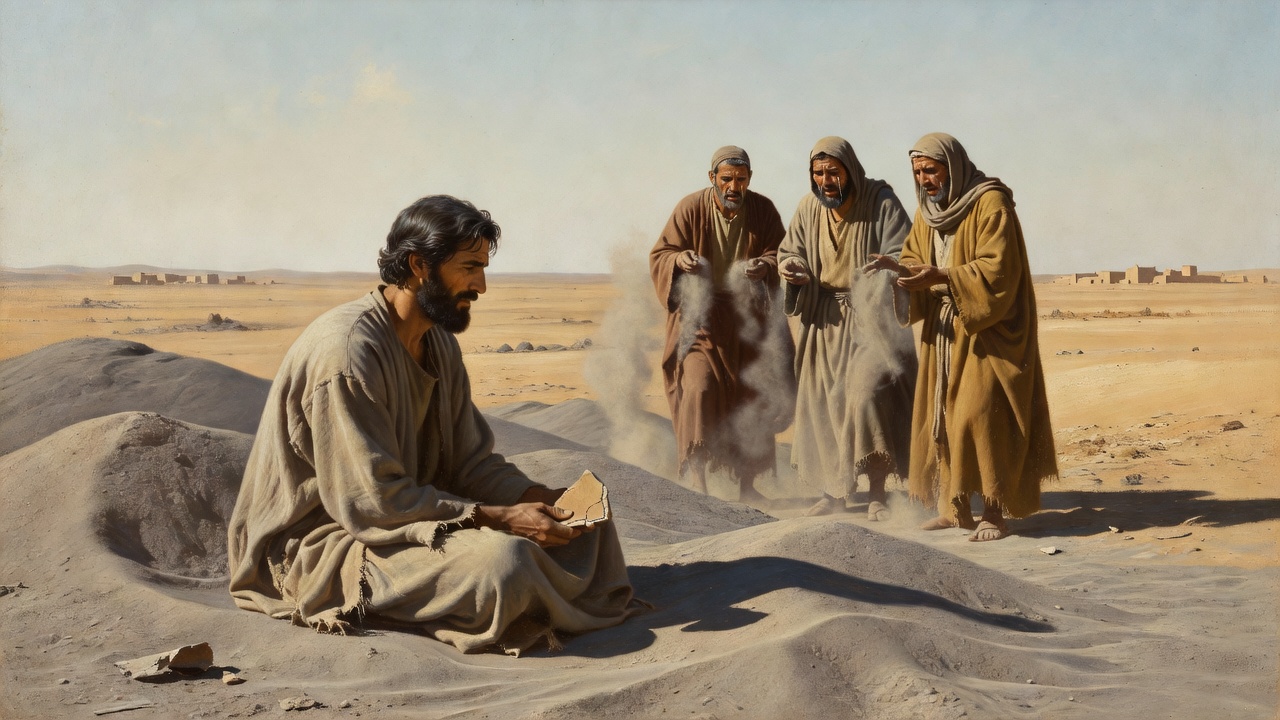
1And it came to pass on a certain day, that the angels of God came to stand before the Lord, and the devil came amongst them to stand before the Lord. 2And the Lord, said to the devil, Whence come you? Then the devil said before the Lord, I am come from going through the world, and walking about the whole earth. 3And the Lord said to the devil, Have you then observed my servant Job, that there is none of men upon the earth like him, a harmless, true, blameless, godly man, abstaining from all evil? and he yet cleaves to innocence, whereas you have told me to destroy his substance without cause? 4And the devil answered and said to the Lord, Skin for skin, all that a man has will he give as a ransom for his life. 5Nay, but put forth your hand, and touch his bones and his flesh: verily he will bless you to your face. 6And the Lord said to the devil, Behold, I deliver him up to you; only save his life. 7So the devil went out from the Lord, and struck Job with sore boils from his feet to his head. 8And he took a potsherd to scrape away the discharge, and sat upon a dung-heap outside the city. 9And when much time had passed, his wife said to him, How long will you hold out, saying, Behold, I wait yet a little while, expecting the hope of my deliverance? for, behold, your memorial is abolished from the earth, even your sons and daughters, the pangs and pains of my womb which I bore in vain with sorrows; and you yourself sit down to spend the nights in the open air amongst the corruption of worms, and I am a wanderer and a servant from place to place and house to house, waiting for the setting of the sun, that I may rest from my labours and my pangs which now beset me: but say some word against the Lord, and die. 10But he looked on her, and said to her, You have spoken like one of the foolish women. If we have received good things of the hand of the Lord, shall we not endure evil things? In all these things that happened to him, Job sinned not at all with his lips before God.
Job’s Three Friends
11Now his three friends having heard of all the evil that was come upon him, came to him each from his own country: Eliphaz the king of the Thaemans, Baldad sovereign of the Saucheans, Sophar king of he Minaeans: and they came to him with one accord, to comfort and to visit him. 12And when they saw him from a distance they did not know him; and they cried with a loud voice, and wept, and tore every one his garment, and sprinkled dust upon their heads, 13and they sat down beside him seven days and seven nights, and no one of them spoke; for they saw that his affliction was dreadful and very great.
Você sabia?
A Aflição de Jó e a Chegada de Seus Amigos
- No texto hebraico de Jó, o termo traduzido como Satanás aparece com o artigo definido como o adversário ou acusador. Nesse segundo conselho celestial, o adversário argumenta que, embora Jó tenha suportado a perda de seus bens e família, ferir sua própria carne e ossos o faria abandonar sua integridade.Fontes: Satan · o próprio texto bíblico
- Os companheiros de Jó — Elifaz, o temanita, Bildade, o suíta, e Zofar, o naamatita — vieram de regiões distantes associadas à Arábia. A origem de Bildade é ligada a Suá, filho de Abraão com Quetura, enquanto a antiga tradução grega Septuaginta conecta Zofar aos mineus do sul da Arábia.Fontes: Bildad · Zophar · o próprio texto bíblico
- Ao verem o sofrimento extremo de Jó, seus três amigos rasgaram seus mantos, lançaram pó ao ar sobre suas cabeças e sentaram-se com ele no chão em total silêncio por sete dias e sete noites. Essa vigília compartilhada refletia costumes antigos de profundo luto quando a dor era intensa demais para palavras.Fontes: o próprio texto bíblico
Notas escritas com auxílio de IA a partir de fontes abertas (Theographic Bible Metadata, CC BY-SA 4.0; Easton’s Bible Dictionary, domínio público) e revisadas antes de publicar.
Créditos e licença desta tradução
LXX2012: Septuagint in British/International English 2012
The Septuagint with Apocrypha, translated from Greek to English by Sir Lancelot C. L. Brenton and published in 1885, with some language updates (British/International English)
Public Domain
Language: English
Dialect (if applicable): British
Language in English: English
Translation by: Sir Lancelot Charles Lee Breton
LXX2012: Septuagint in English 2012, British/International English Edition
This is a translation of the Old Testament and Apocrypha/Deuterocanon from Hebrew to Greek to 19th Century British English, with some updates of spelling and word usage to contemporary British/International English. The original English translation was done by Sir Lancelot Charles Lee Brenton and published by Samuel Bagster & Sons, Ltd., in London in 1851. It has entered the Public Domain due to the passage of sufficient time. In the process of scanning and typing the text, the original poetry and prose formatting, as well as peripheral material like introductions and notes, have been omitted.
This edition of the Septuagint has some language updates. Brenton's word order and punctuation has been mostly retained, meaning that quotation marks are not used, and sentences within quotes may not start with capital letters, as was standard usage in 1851. Names transliterated from Greek to those transliterated from Hebrew in the common English Bibles often differ. These language updates are dedicated to the Public Domain by the author of those edits, Michael Paul Johnson. Therefore this edition may be freely copied, published, etc.
Before considering making changes to the text of this work, I recommend that you consult with God, because this is really His Book.
If you find errors in the text, please report them so that we can correct them.
Donations to help with the expenses of operating this web site and thus help others have free access to the Word of God may be made to us, but are not required. Please see http://MLJohnson.org/partner/ for more about that.
Títulos de seção adaptados da Berean Standard Bible (domínio público); não fazem parte do texto bíblico desta tradução.
Fonte: http://ebible.org/eng-uk-lxx2012/ · eBible.org