Jó 19
LXX2012: Septuagint in British/International English 2012 · Toque num versículo para ver as referências cruzadas.
Job: My Redeemer Lives
1Then Job answered and said, 2How long will you⌃ vex my soul, and destroy me with words? only know that the Lord has dealt with me thus. 3You⌃ speak against me; you⌃ do not feel for me, but bear hard upon me. 4Yes verily, I have erred in truth, (but the error abides with myself) in having spoken words which it was not right to speak; and my words err, and are unreasonable. 5But alas! for you⌃ magnify yourselves against me, and insult me with reproach. 6Know then that it is the Lord that has troubled me, and has raised his bulwark against me. 7Behold, I laugh at reproach; I will not speak: or I will cry out, but there is nowhere judgement. 8I am fenced round about, and can by no means escape: he has set darkness before my face. 9And he has stripped me of my glory, and has taken the crown from my head. 10He has torn me around about, and I am gone: and he has cut off my hope like a tree. 11And he has dreadfully handled me in anger, and has counted me for an enemy. 12His troops also came upon me with one accord, liars in wait compassed my ways. 13My brethren have stood aloof from me; they have recognised strangers rather than me: and my friends have become pitiless. 14My nearest of kin have not acknowledged me, and they that knew my name, have forgotten me. 15As for my household, and my maidservants, I was a stranger before them. 16I called my servant, and he listened not; and my mouth entreated him. 17And I implored my wife, and earnestly entreated the sons of my concubines. 18But they rejected me for ever; whenever I rise up, they speak against me. 19They that saw me abhorred me: the very persons whom I had loved, rose up against me. 20My flesh is corrupt under my skin, and my bones are held in my teeth. 21Pity me, pity me, O friends; for it is the hand of the Lord that has touched me. 22Therefore do you⌃ persecute me as also the Lord does, and are not satisfied with my flesh? 23For oh that my words were written, and that they were recorded in a book forever, 24with an iron pen and lead, or graven in the rocks! 25For I know that he is eternal who is about to deliver me, 26and to raise up upon the earth my skin that endures these sufferings: for these things have been accomplished to me of the Lord; 27which I am conscious of in myself, which my eye has seen, and not another, but all have been fulfilled to me in my bosom. 28But if you⌃ shall also say, What shall we say before him, and so find the root of the matter in him? 29Do you⌃ also beware of deceit: for wrath will come upon transgressors; and then shall they know where their substance is.
Você sabia?
Isolamento e esperança em um Redentor
- Jó expressou o desejo de que suas palavras fossem preservadas para sempre, mencionando métodos antigos de registro, como a escrita em um livro, a gravação com estilete de ferro em chumbo e a escultura direta em rocha.Fontes: o próprio texto bíblico
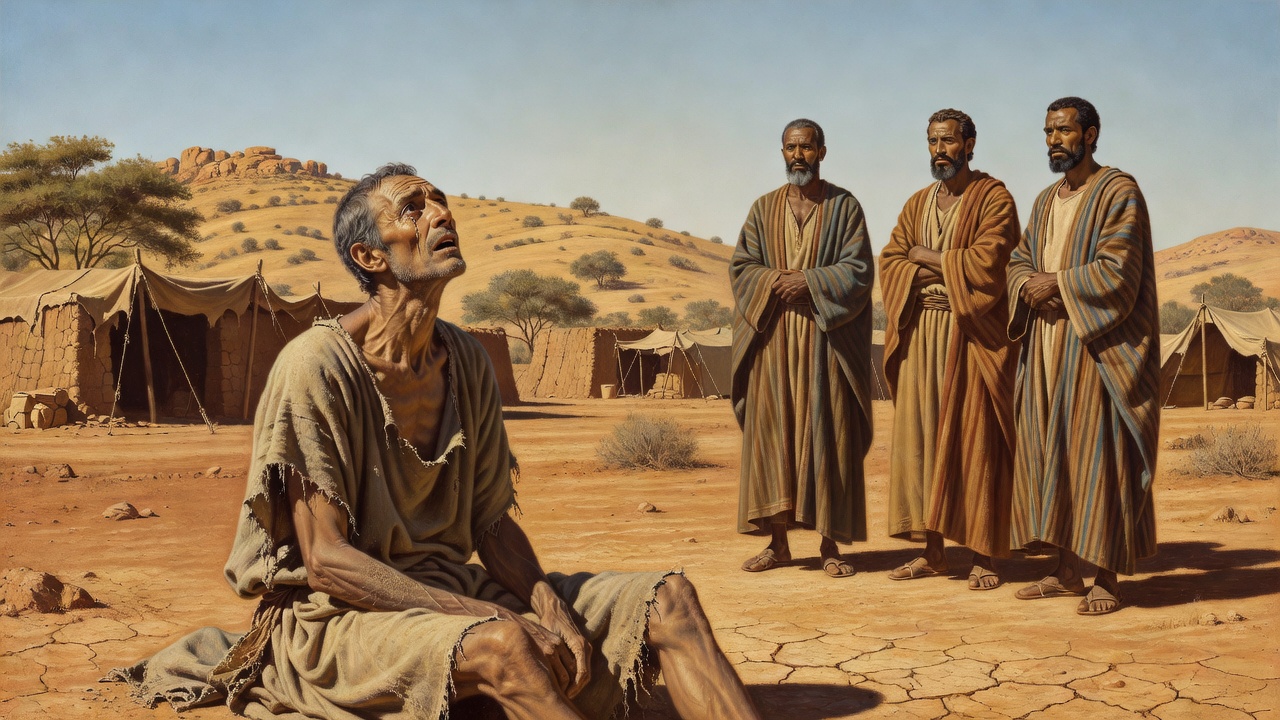
- Em seu lamento, Jó descreve uma rejeição social absoluta: sua esposa acha seu hálito repugnante, seus servos ignoram seus chamados, crianças zombam dele e seus amigos mais íntimos o desprezam.Fontes: o próprio texto bíblico
- Apesar do definhamento físico e do abandono, Jó expressa a firme certeza de que o seu Redentor vive e que por fim se levantará sobre a terra, onde o próprio Jó contemplará a Deus com seus próprios olhos.Fontes: o próprio texto bíblico
Notas escritas com auxílio de IA a partir de fontes abertas (Theographic Bible Metadata, CC BY-SA 4.0; Easton’s Bible Dictionary, domínio público) e revisadas antes de publicar.
Créditos e licença desta tradução
LXX2012: Septuagint in British/International English 2012
The Septuagint with Apocrypha, translated from Greek to English by Sir Lancelot C. L. Brenton and published in 1885, with some language updates (British/International English)
Public Domain
Language: English
Dialect (if applicable): British
Language in English: English
Translation by: Sir Lancelot Charles Lee Breton
LXX2012: Septuagint in English 2012, British/International English Edition
This is a translation of the Old Testament and Apocrypha/Deuterocanon from Hebrew to Greek to 19th Century British English, with some updates of spelling and word usage to contemporary British/International English. The original English translation was done by Sir Lancelot Charles Lee Brenton and published by Samuel Bagster & Sons, Ltd., in London in 1851. It has entered the Public Domain due to the passage of sufficient time. In the process of scanning and typing the text, the original poetry and prose formatting, as well as peripheral material like introductions and notes, have been omitted.
This edition of the Septuagint has some language updates. Brenton's word order and punctuation has been mostly retained, meaning that quotation marks are not used, and sentences within quotes may not start with capital letters, as was standard usage in 1851. Names transliterated from Greek to those transliterated from Hebrew in the common English Bibles often differ. These language updates are dedicated to the Public Domain by the author of those edits, Michael Paul Johnson. Therefore this edition may be freely copied, published, etc.
Before considering making changes to the text of this work, I recommend that you consult with God, because this is really His Book.
If you find errors in the text, please report them so that we can correct them.
Donations to help with the expenses of operating this web site and thus help others have free access to the Word of God may be made to us, but are not required. Please see http://MLJohnson.org/partner/ for more about that.
Títulos de seção adaptados da Berean Standard Bible (domínio público); não fazem parte do texto bíblico desta tradução.
Fonte: http://ebible.org/eng-uk-lxx2012/ · eBible.org