Jeremias 8
LXX2012: Septuagint in British/International English 2012 · Toque num versículo para ver as referências cruzadas.
Judah’s Sin and Punishment
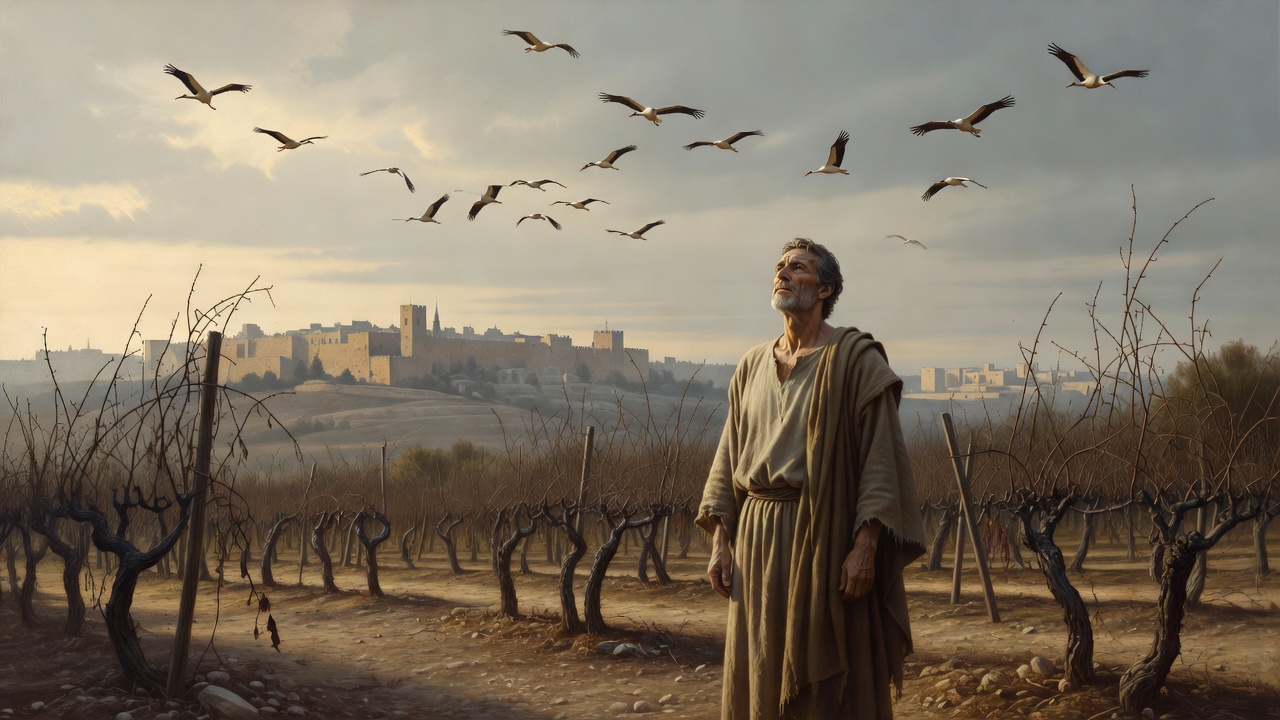
1At that time, says the Lord, they shall bring out the bones of the kings of Juda, and the bones of his princes, and the bones of the priests, and the bones of the prophets, and the bones of the inhabitants of Jerusalem, out of their graves; 2and they shall spread them out to the sun, and the moon, and to all the stars, and to all the host of heaven, which they have loved, and which they have served, and after which they have walked, and to which they have held, and which they have worshipped; they shall not be mourned for, neither shall they be buried; but they shall be for an example on the face of the earth, 3because they chose death rather than life, even to all the remnant that are left of that family, in every place whither I shall drive them out. 4For thus says the Lord, Shall not he that falls arise? or he that turns away, shall he not turn back again? 5Therefore has this my people turned away with a shameless revolting, and strengthened themselves in their willfulness, and refused to return? 6Listen, I pray you, and hear: will they not speak thus, There is no man that repents of his wickedness, saying, What have I done? the runner has failed from his course, as a tired horse in his neighing. 7Yes, the stork in the heaven knows her time, also the turtle-dove and wild swallow; the sparrows observe the times of their coming in; but this my people knows not the judgements of the Lord. 8How will you⌃ say, We are wise, and the law of the Lord is with us? In vain have the scribes used a false pen. 9The wise men are ashamed, and alarmed, and taken; because they have rejected the word of the Lord; what wisdom is there in them? 10Therefore will I give their wives to others, and their fields to new inheritors; and they shall gather their fruits, says the Lord. 13There are no grapes on the vines, and there are no figs on the fig-trees, and the leaves have fallen off.
The People Respond
14Why do we sit still? assemble yourselves, and let us enter into the strong cities, and let us be cast out there: for God has cast us out, and made us drink water of gall, because we have sinned before him. 15We assembled for peace, but there was no prosperity; for a time of healing, but behold anxiety. 16We shall hear the neighing of his swift horses out of Dan: the whole land quaked at the sound of the neighing of his horses; and he shall come, and devour the land and the fullness of it; the city, and them that dwell in it. 17For, behold, I send forth against you deadly serpents, which can’t be charmed, and they shall bite you
Jeremiah Weeps for His People
18mortally with the pain of your distressed heart. 19Behold, there is a sound of the cry of the daughter of my people from a land afar off: Is not the Lord in Sion? is there not a king there? because they have provoked me with their graven images, and with strange vanities. 20The summer is gone, the harvest is past, and we are not saved. 21For the breach of the daughter of my people I have been saddened: in my perplexity pangs have seized upon me as of a woman in travail. 22And is there no balm in Galaad, or is there no physician there? why has not the healing of the daughter of my people taken place?
Você sabia?
Juízo, engano e o bálsamo de Gileade
- Jeremias contrasta o instinto natural de aves migratórias, como a cegonha, a rola, o andorinhão e o tordo, com a conduta do povo de Jerusalém. Enquanto as aves conhecem instintivamente suas épocas determinadas e o tempo de migração, o povo teimosamente se recusa a retornar para Deus.Fontes: o próprio texto bíblico · Jerusalem
- O aviso de que o resfolegar dos cavalos de guerra inimigos é ouvido desde Dã aponta para uma invasão vinda do extremo norte. Dã ficava no extremo setentrional da terra, indicando que o exército invasor destruidor já avançava sobre o território.Fontes: o próprio texto bíblico · Dan
- O lamento do profeta, 'Não há bálsamo em Gileade?', evoca Gileade, uma região montanhosa situada a leste do rio Jordão. Jeremias recorre à imagem de médicos e remédios dessa região para lamentar o colapso moral e físico de seu povo que permaneceu sem cura.Fontes: o próprio texto bíblico · Gilead
Notas escritas com auxílio de IA a partir de fontes abertas (Theographic Bible Metadata, CC BY-SA 4.0; Easton’s Bible Dictionary, domínio público) e revisadas antes de publicar.
Lugares deste capítulo
- Jerusalem · 31.777, 35.234 · versículos 1, 5
- Dan · Hoje: Tel Dan · 33.249, 35.652 · versículo 16
- Zion · Hoje: Jerusalem · 31.777, 35.234 · versículo 19
- Gilead · Hoje: Gilead 1 · 32.187, 35.692 · versículo 22
Só aparecem lugares com identificação de alta confiança (90% ou mais segundo as fontes acadêmicas reunidas pelo OpenBible). Mapa da época: DARE (Digital Atlas of the Roman Empire), CC BY 4.0; mapa atual: © colaboradores do OpenStreetMap; lugares: OpenBible.info (CC BY 4.0).
Créditos e licença desta tradução
LXX2012: Septuagint in British/International English 2012
The Septuagint with Apocrypha, translated from Greek to English by Sir Lancelot C. L. Brenton and published in 1885, with some language updates (British/International English)
Public Domain
Language: English
Dialect (if applicable): British
Language in English: English
Translation by: Sir Lancelot Charles Lee Breton
LXX2012: Septuagint in English 2012, British/International English Edition
This is a translation of the Old Testament and Apocrypha/Deuterocanon from Hebrew to Greek to 19th Century British English, with some updates of spelling and word usage to contemporary British/International English. The original English translation was done by Sir Lancelot Charles Lee Brenton and published by Samuel Bagster & Sons, Ltd., in London in 1851. It has entered the Public Domain due to the passage of sufficient time. In the process of scanning and typing the text, the original poetry and prose formatting, as well as peripheral material like introductions and notes, have been omitted.
This edition of the Septuagint has some language updates. Brenton's word order and punctuation has been mostly retained, meaning that quotation marks are not used, and sentences within quotes may not start with capital letters, as was standard usage in 1851. Names transliterated from Greek to those transliterated from Hebrew in the common English Bibles often differ. These language updates are dedicated to the Public Domain by the author of those edits, Michael Paul Johnson. Therefore this edition may be freely copied, published, etc.
Before considering making changes to the text of this work, I recommend that you consult with God, because this is really His Book.
If you find errors in the text, please report them so that we can correct them.
Donations to help with the expenses of operating this web site and thus help others have free access to the Word of God may be made to us, but are not required. Please see http://MLJohnson.org/partner/ for more about that.
Títulos de seção adaptados da Berean Standard Bible (domínio público); não fazem parte do texto bíblico desta tradução.
Fonte: http://ebible.org/eng-uk-lxx2012/ · eBible.org