Isaías 50
LXX2012: Septuagint in British/International English 2012 · Toque num versículo para ver as referências cruzadas.
Israel’s Sin
1Thus says the Lord, Of what kind is your mother's bill of divorcement, by which I put her away? or to which debtor have I sold you? Behold, you⌃ are sold for your sins, and for your iniquities have I put your mother away. 2Why did I come, and there was no man? why did I call, and there was none to listen? Is not my hand strong to redeem? or can I not deliver? behold, by my rebuke I will dry up the sea, and make rivers a wilderness; and their fish shall be dried up because there is no water, and shall die for thirst. 3I will clothe the sky with darkness, and will make its covering as sackcloth.
The Servant’s Obedience
4The Lord even God gives me the tongue of instruction, to know when it is fit to speak a word: he has appointed for me early, he has given me an ear to hear: 5and the instruction of the Lord, even the Lord, opens my ears, and I do not disobey, nor dispute. 6I gave my back to scourges, and my cheeks to blows; and I turned not away my face from the shame of spitting: 7but the Lord God became my helper; therefore I was not ashamed, but I set my face as a solid rock; and I know that I shall never be ashamed, 8for he that has justified me draws near; who is he that pleads with me? let him stand up against me at the same time: yes, who is he that pleads with me? let him draw near to me. 9Behold, the Lord, the Lord, will help me; who will hurt me? behold, all you⌃ shall wax old as a garment, and a moth shall devour you. 10Who is amongst you that fears the Lord? let him listen to the voice of his servant: you⌃ that walk in darkness, and have no light, trust in the name of the Lord, and stay upon God. 11Behold, you⌃ all kindle a fire, and feed a flame: walk in the light of your fire, and in the flame which you⌃ have kindled. This has happened to you for my sake; you⌃ shall lie down in sorrow.
Você sabia?
O Servo Obediente e a Vindicação Divina
- Nos costumes jurídicos do antigo Oriente Próximo, o marido emitia uma certidão de divórcio para formalizar a separação, e devedores empobrecidos podiam entregar seus filhos à servidão. Em Isaías 50:1, Deus utiliza essas metáforas legais para demonstrar que Israel não foi abandonado por causa de uma dívida divina ou cancelamento definitivo da aliança, mas sim por causa de suas próprias transgressões.Fontes: o próprio texto bíblico
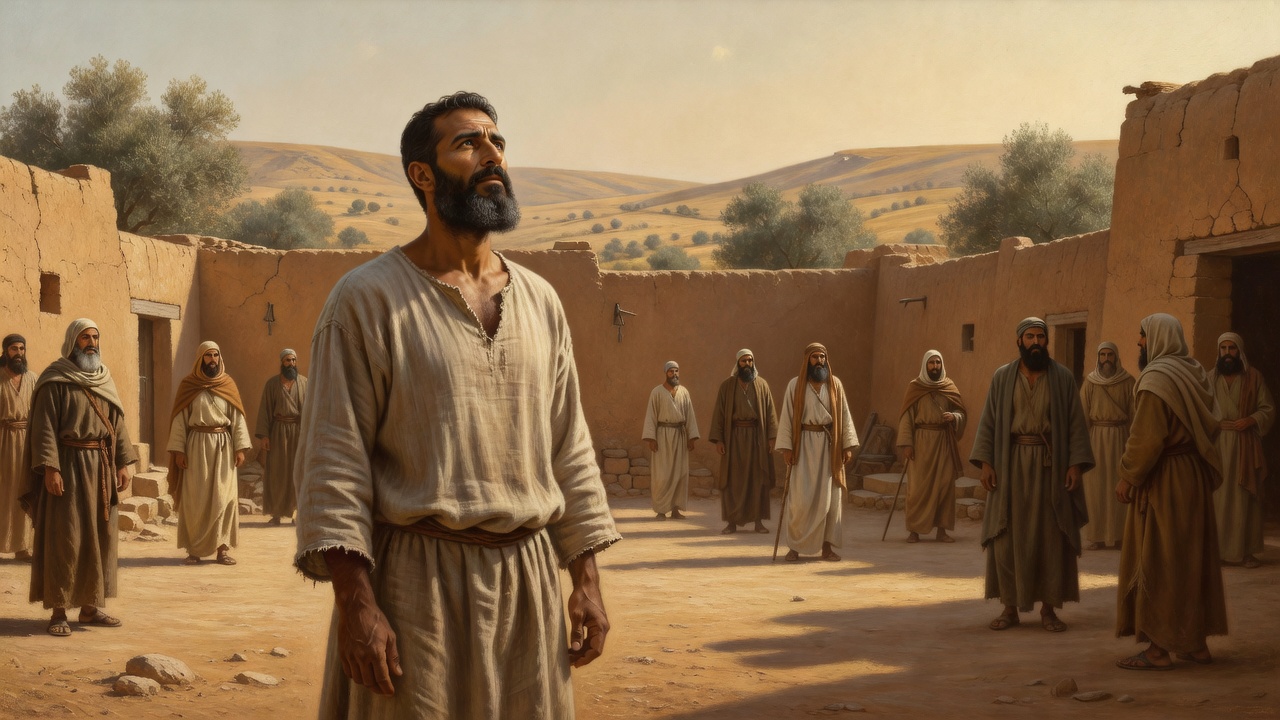
- O interlocutor em Isaías 50:4–7 retrata a postura de um discípulo atento que suporta voluntariamente maus-tratos físicos, incluindo açoites, o arrancamento da barba e cusparadas. Pôr o rosto 'como um seixo' ou pederneira é uma expressão que denota determinação inabalável e confiança incondicional em Deus perante a vergonha pública e a hostilidade.Fontes: o próprio texto bíblico
Notas escritas com auxílio de IA a partir de fontes abertas (Theographic Bible Metadata, CC BY-SA 4.0; Easton’s Bible Dictionary, domínio público) e revisadas antes de publicar.
Créditos e licença desta tradução
LXX2012: Septuagint in British/International English 2012
The Septuagint with Apocrypha, translated from Greek to English by Sir Lancelot C. L. Brenton and published in 1885, with some language updates (British/International English)
Public Domain
Language: English
Dialect (if applicable): British
Language in English: English
Translation by: Sir Lancelot Charles Lee Breton
LXX2012: Septuagint in English 2012, British/International English Edition
This is a translation of the Old Testament and Apocrypha/Deuterocanon from Hebrew to Greek to 19th Century British English, with some updates of spelling and word usage to contemporary British/International English. The original English translation was done by Sir Lancelot Charles Lee Brenton and published by Samuel Bagster & Sons, Ltd., in London in 1851. It has entered the Public Domain due to the passage of sufficient time. In the process of scanning and typing the text, the original poetry and prose formatting, as well as peripheral material like introductions and notes, have been omitted.
This edition of the Septuagint has some language updates. Brenton's word order and punctuation has been mostly retained, meaning that quotation marks are not used, and sentences within quotes may not start with capital letters, as was standard usage in 1851. Names transliterated from Greek to those transliterated from Hebrew in the common English Bibles often differ. These language updates are dedicated to the Public Domain by the author of those edits, Michael Paul Johnson. Therefore this edition may be freely copied, published, etc.
Before considering making changes to the text of this work, I recommend that you consult with God, because this is really His Book.
If you find errors in the text, please report them so that we can correct them.
Donations to help with the expenses of operating this web site and thus help others have free access to the Word of God may be made to us, but are not required. Please see http://MLJohnson.org/partner/ for more about that.
Títulos de seção adaptados da Berean Standard Bible (domínio público); não fazem parte do texto bíblico desta tradução.
Fonte: http://ebible.org/eng-uk-lxx2012/ · eBible.org