Isaías 46
LXX2012: Septuagint in British/International English 2012 · Toque num versículo para ver as referências cruzadas.
Babylon’s Idols
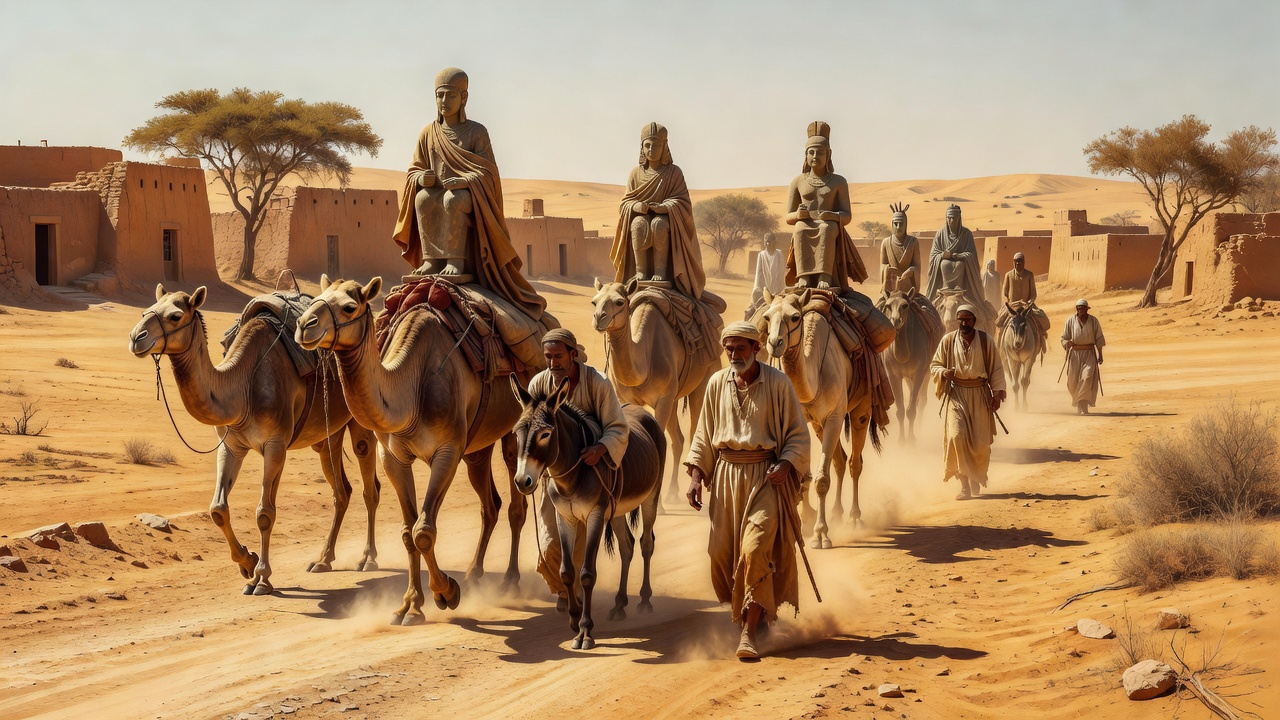
1Bel has fallen, Nabo is broken to pieces, their graven images are gone to the wild beasts and the cattle: you⌃ take them packed up as a burden to the weary, exhausted, hungry, and at the same time helpless man; 2who will not be able to save themselves from war, but they themselves are led away captive. 3Hear me, O house of Jacob, and all the remnant of Israel, who are borne by me from the womb, and taught by me from infancy, even to old age: 4I am he; and until you⌃ shall have grown old, I am he: I bear you, I have made, and I will relieve, I will take up and save you. 5To whom have you⌃ compared me? see, consider, you⌃ that go astray. 6They that furnish gold out of a purse, and silver by weight, will weigh it in a scale, and they hire a goldsmith and make idols, and bow down, and worship them. 7They bear it upon the shoulder, and go; and if they put it upon its place, it remains, it can’t move: and whoever shall cry to it, it can’t hear; it can’t save him from trouble. 8Remember you⌃ these things, and groan: repent, you⌃ that have gone astray, return in your heart; 9and remember the former things that were of old: for I am God, and there is none other beside me, 10telling beforehand the latter events before they come to pass, and they are accomplished together: and I said, all my counsel shall stand, and I will do all things that I have planned: 11calling a bird from the east, and from a land afar off, for the things which I have planned: I have spoken, and brought him; I have created and made him; I have brought him, and prospered his way. 12Listen to me, you⌃ senseless ones, that are far from righteousness: 13I have brought near my righteousness, and I will not be slow with the salvation that is from me: I have given salvation in Sion to Israel for glory.
Você sabia?
O Deus que carrega o Seu povo
- Isaías 46 contrasta os deuses babilônicos Bel e Nebo com o Deus de Israel. Enquanto os ídolos fabricados são descritos como um fardo pesado que precisa ser carregado sobre animais exaustos até o cativeiro, Deus declara que Ele mesmo carrega e sustenta a casa de Jacó desde o nascimento até a velhice.Fontes: o próprio texto bíblico
- O capítulo ilustra a inutilidade dos ídolos ao destacar sua origem humana: as pessoas despejam ouro e pesam prata para contratar um ourives que molde um deus. Uma vez carregada nos ombros e fixada em seu lugar, a estátua permanece imóvel, incapaz de se mover, responder a clamores ou salvar alguém da aflição.Fontes: o próprio texto bíblico
- A profecia termina com Deus prometendo conceder salvação a Sião. Sião era a colina sudeste de Jerusalém que Davi conquistou e transformou na Cidade de Davi, frequentemente mencionada em textos proféticos como ponto central para Israel.Fontes: o próprio texto bíblico · Zion
Notas escritas com auxílio de IA a partir de fontes abertas (Theographic Bible Metadata, CC BY-SA 4.0; Easton’s Bible Dictionary, domínio público) e revisadas antes de publicar.
Lugares deste capítulo
Só aparecem lugares com identificação de alta confiança (90% ou mais segundo as fontes acadêmicas reunidas pelo OpenBible). Mapa da época: DARE (Digital Atlas of the Roman Empire), CC BY 4.0; mapa atual: © colaboradores do OpenStreetMap; lugares: OpenBible.info (CC BY 4.0).
Créditos e licença desta tradução
LXX2012: Septuagint in British/International English 2012
The Septuagint with Apocrypha, translated from Greek to English by Sir Lancelot C. L. Brenton and published in 1885, with some language updates (British/International English)
Public Domain
Language: English
Dialect (if applicable): British
Language in English: English
Translation by: Sir Lancelot Charles Lee Breton
LXX2012: Septuagint in English 2012, British/International English Edition
This is a translation of the Old Testament and Apocrypha/Deuterocanon from Hebrew to Greek to 19th Century British English, with some updates of spelling and word usage to contemporary British/International English. The original English translation was done by Sir Lancelot Charles Lee Brenton and published by Samuel Bagster & Sons, Ltd., in London in 1851. It has entered the Public Domain due to the passage of sufficient time. In the process of scanning and typing the text, the original poetry and prose formatting, as well as peripheral material like introductions and notes, have been omitted.
This edition of the Septuagint has some language updates. Brenton's word order and punctuation has been mostly retained, meaning that quotation marks are not used, and sentences within quotes may not start with capital letters, as was standard usage in 1851. Names transliterated from Greek to those transliterated from Hebrew in the common English Bibles often differ. These language updates are dedicated to the Public Domain by the author of those edits, Michael Paul Johnson. Therefore this edition may be freely copied, published, etc.
Before considering making changes to the text of this work, I recommend that you consult with God, because this is really His Book.
If you find errors in the text, please report them so that we can correct them.
Donations to help with the expenses of operating this web site and thus help others have free access to the Word of God may be made to us, but are not required. Please see http://MLJohnson.org/partner/ for more about that.
Títulos de seção adaptados da Berean Standard Bible (domínio público); não fazem parte do texto bíblico desta tradução.
Fonte: http://ebible.org/eng-uk-lxx2012/ · eBible.org