Isaías 42
LXX2012: Septuagint in British/International English 2012 · Toque num versículo para ver as referências cruzadas.
Here Is My Servant
1Jacob is my servant, I will help him: Israel is my chosen, my soul has accepted him; I have put my Spirit upon him; he shall bring forth judgement to the Gentiles. 2He shall not cry, nor lift up his voice, nor shall his voice be heard without. 3A bruised reed shall he not break, and smoking flax shall he not quench; but he shall bring forth judgement to truth. 4He shall shine out, and shall not be discouraged, until he have set judgement on the earth: and in his name shall the Gentiles trust. 5Thus says the Lord God, who made the heaven, and established it; who settled the earth, and the things in it, and gives breath to the people on it, and spirit to them that tread on it: 6I the Lord God have called you in righteousness, and will hold your hand, and will strengthen you: and I have given you for the covenant of a race, for a light of the Gentiles: 7to open the eyes of the blind, to bring the bound and them that sit in darkness out of bonds and the prison-house. 8I am the Lord God: that is my name: I will not give my glory to another, nor my praises to graven images. 9Behold, the ancient things have come to pass, and so will the new things which I tell you: yes, before I tell them they are made known to you.
A New Song of Praise
10Sing a new hymn to the Lord: you⌃ who are his dominion, glorify his name from the end of the earth: you⌃ that go down to the sea, and sail upon it; the islands, and they that dwell in them. 11Rejoice, you wilderness, and the villages thereof, the hamlets, and the dwellers in Kedar: the inhabitants of the rock shall rejoice, they shall shout from the top of the mountains. 12They shall give glory to God, and shall proclaim his praises in the islands. 13The Lord God of hosts shall go forth, and crush the war: he shall stir up jealousy, and shall shout mightily against his enemies. 14I have been silent: shall I also always be silent and forbear: I have endured like a travailing woman: I will now amaze and wither at once. 15I will make desolate mountains and hills, and will dry up all their grass; and I will make the rivers islands, and dry up the pools. 16And I will bring the blind by a way that they knew not, and I will cause them to tread paths which they have not known: I will turn darkness into light for them, and crooked things into straight. These things will I do, and will not forsake them. 17But they are turned back: be you⌃ utterly ashamed that trust in graven images, who say to the molten images, You⌃ are our gods.
Israel Is Deaf and Blind
18Hear, you⌃ deaf, and look up, you⌃ blind, to see. 19And who is blind, but my servants? and deaf, but they that rule over them? yes, the servants of God have been made blind. 20You⌃ have often seen, and have not taken heed; your ears have been opened, and you⌃ have not heard. 21The Lord God has taken counsel that he might be justified, and might magnify his praise. 22And I saw, and the people were spoiled and plundered: for there is a snare in the secret chambers everywhere, and in the houses also, where they have hidden them: they became a spoil, and there was no one that delivered the prey, and there was none who said, Restore. 23Who is there amongst you that will give ear to these things? listen you⌃ to the things which are coming to pass. 24For what did he give to Jacob up to spoil, and Israel to them that plundered him? Did not God do it against whom they sinned? and they would not walk in his ways, nor listen to his law. 25So he brought upon them the fury of his wrath; and the war, and those that burnt round about them, prevailed against them; yet no one of them knew it, neither did they lay it to heart.
Você sabia?
O Servo do SENHOR e o Cântico Universal de Louvor
- Isaías 42 apresenta o Servo escolhido de Deus, designado para trazer justiça suavemente às nações e ser luz para os prisioneiros sem quebrar a cana trilhada. Mais adiante no mesmo capítulo, Israel também é chamado de servo, embora retratado como cego, surdo e saqueado por desobedecer à lei de Deus.Fontes: o próprio texto bíblico
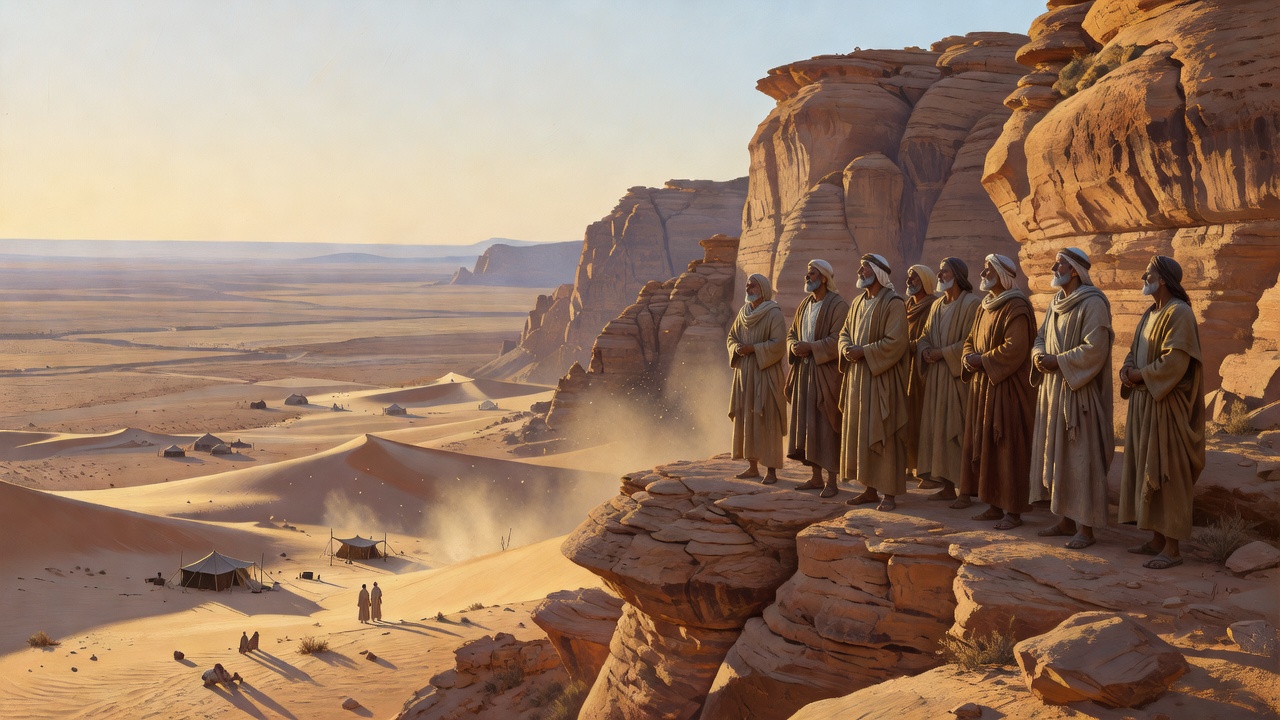
- O chamado profético ao louvor alcança regiões desérticas remotas, mencionando expressamente os povoados de Quedar e as escarpas de Selá. Quedar refere-se às tribos árabes nômades que viviam em tendas pretas no noroeste da Arábia, enquanto Selá, que significa rocha, era uma fortaleza em Edom, mais tarde conhecida como Petra.Fontes: o próprio texto bíblico · Kedar · Sela
Notas escritas com auxílio de IA a partir de fontes abertas (Theographic Bible Metadata, CC BY-SA 4.0; Easton’s Bible Dictionary, domínio público) e revisadas antes de publicar.
Lugares deste capítulo
- Kedar · 29.811, 39.868 · versículo 11
Só aparecem lugares com identificação de alta confiança (90% ou mais segundo as fontes acadêmicas reunidas pelo OpenBible). Mapa da época: DARE (Digital Atlas of the Roman Empire), CC BY 4.0; mapa atual: © colaboradores do OpenStreetMap; lugares: OpenBible.info (CC BY 4.0).
Créditos e licença desta tradução
LXX2012: Septuagint in British/International English 2012
The Septuagint with Apocrypha, translated from Greek to English by Sir Lancelot C. L. Brenton and published in 1885, with some language updates (British/International English)
Public Domain
Language: English
Dialect (if applicable): British
Language in English: English
Translation by: Sir Lancelot Charles Lee Breton
LXX2012: Septuagint in English 2012, British/International English Edition
This is a translation of the Old Testament and Apocrypha/Deuterocanon from Hebrew to Greek to 19th Century British English, with some updates of spelling and word usage to contemporary British/International English. The original English translation was done by Sir Lancelot Charles Lee Brenton and published by Samuel Bagster & Sons, Ltd., in London in 1851. It has entered the Public Domain due to the passage of sufficient time. In the process of scanning and typing the text, the original poetry and prose formatting, as well as peripheral material like introductions and notes, have been omitted.
This edition of the Septuagint has some language updates. Brenton's word order and punctuation has been mostly retained, meaning that quotation marks are not used, and sentences within quotes may not start with capital letters, as was standard usage in 1851. Names transliterated from Greek to those transliterated from Hebrew in the common English Bibles often differ. These language updates are dedicated to the Public Domain by the author of those edits, Michael Paul Johnson. Therefore this edition may be freely copied, published, etc.
Before considering making changes to the text of this work, I recommend that you consult with God, because this is really His Book.
If you find errors in the text, please report them so that we can correct them.
Donations to help with the expenses of operating this web site and thus help others have free access to the Word of God may be made to us, but are not required. Please see http://MLJohnson.org/partner/ for more about that.
Títulos de seção adaptados da Berean Standard Bible (domínio público); não fazem parte do texto bíblico desta tradução.
Fonte: http://ebible.org/eng-uk-lxx2012/ · eBible.org