Isaías 9
Revised Version with Apocrypha (1895) · Toque num versículo para ver as referências cruzadas.
Unto Us a Child Is Born
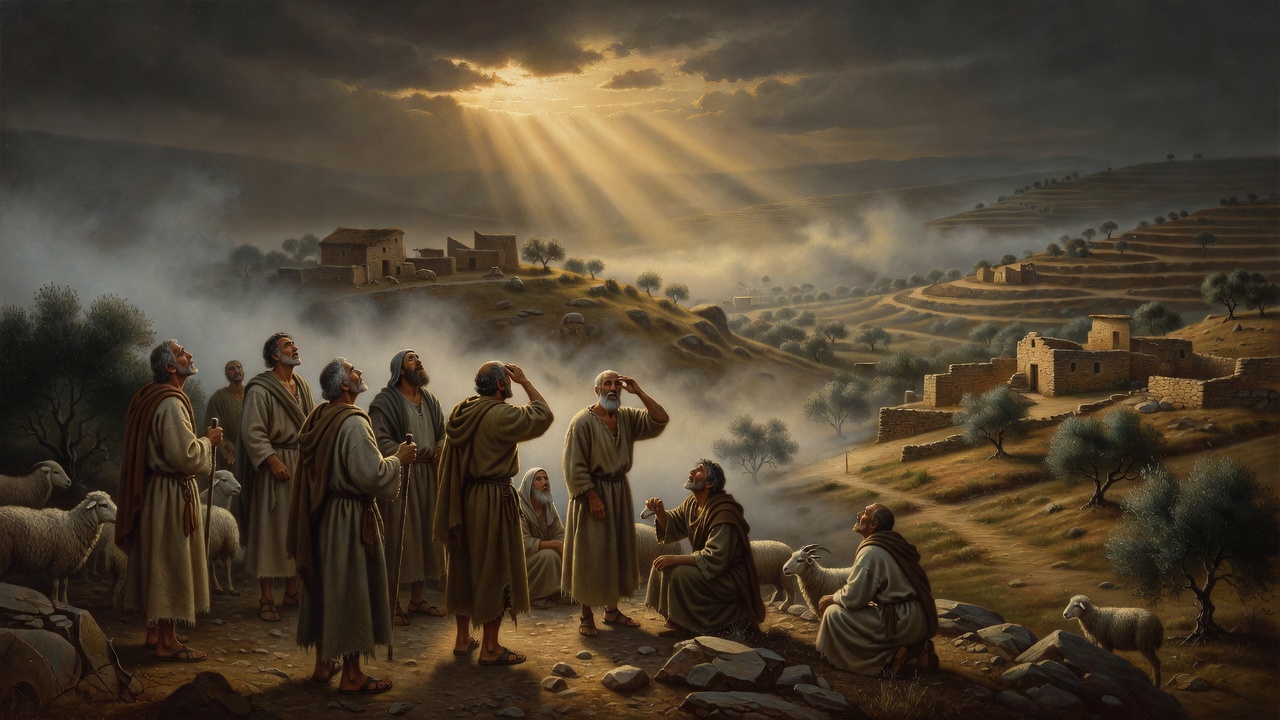
1But there shall be no gloom to her that was in anguish. In the former time he brought into contempt the land of Zebulun and the land of Naphtali, but in the latter time hath he made it glorious, by the way of the sea, beyond Jordan, Galilee of the nations. 2The people that walked in darkness have seen a great light: they that dwelt in the land of the shadow of death, upon them hath the light shined. 3Thou hast multiplied the nation, thou hast increased their joy: they joy before thee according to the joy in harvest, as men rejoice when they divide the spoil. 4For the yoke of his burden, and the staff of his shoulder, the rod of his oppressor, thou hast broken as in the day of Midian. 5For all the armour of the armed man in the tumult, and the garments rolled in blood, shall even be for burning, for fuel of fire. 6For unto us a child is born, unto us a son is given; and the government shall be upon his shoulder: and his name shall be called Wonderful, Counsellor, Mighty God, Everlasting Father, Prince of Peace. 7Of the increase of his government and of peace there shall be no end, upon the throne of David, and upon his kingdom, to establish it, and to uphold it with judgment and with righteousness from henceforth even for ever. The zeal of the LORD of hosts shall perform this.
Judgment against Israel’s Pride
8The Lord sent a word into Jacob, and it hath lighted upon Israel. 9And all the people shall know, even Ephraim and the inhabitant of Samaria, that say in pride and in stoutness of heart, 10The bricks are fallen, but we will build with hewn stone: the sycomores are cut down, but we will change them into cedars. 11Therefore the LORD shall set up on high against him the adversaries of Rezin, and shall stir up his enemies; 12the Syrians before, and the Philistines behind, and they shall devour Israel with open mouth. For all this his anger is not turned away, but his hand is stretched out still.
Judgment against Israel’s Hypocrisy
13Yet the people hath not turned unto him that smote them, neither have they sought the LORD of hosts. 14Therefore the LORD will cut off from Israel head and tail, palm-branch and rush, in one day. 15The ancient and the honourable man, he is the head; and the prophet that teacheth lies, he is the tail. 16For they that lead this people cause them to err; and they that are led of them are destroyed. 17Therefore the Lord shall not rejoice over their young men, neither shall he have compassion on their fatherless and widows: for every one is profane and an evil-doer, and every mouth speaketh folly. For all this his anger is not turned away, but his hand is stretched out still.
Judgment against Israel’s Unrepentance
18For wickedness burneth as the fire; it devoureth the briers and thorns: yea, it kindleth in the thickets of the forest, and they roll upward in thick clouds of smoke. 19Through the wrath of the LORD of hosts is the land burnt up: the people also are as the fuel of fire; no man spareth his brother. 20And one shall snatch on the right hand, and be hungry; and he shall eat on the left hand, and they shall not be satisfied: they shall eat every man the flesh of his own arm: 21Manasseh, Ephraim; and Ephraim, Manasseh: and they together shall be against Judah. For all this his anger is not turned away, but his hand is stretched out still.
Você sabia?
Uma grande luz e o julgamento sobre o norte
- Os territórios tribais do norte pertencentes a Zebulom e Naftali ficavam na Galileia, termo derivado de uma palavra que significa circuito. Como habitantes originais permaneceram por muito tempo na região ao lado dos israelitas, ela passou a ser chamada de Galileia das nações ou dos gentios.Fontes: Galilee · o próprio texto bíblico
- A menção ao dia de Midiã evoca a histórica quebra da opressão exercida pelos midianitas, um povo nômade que habitava as regiões desérticas ao norte da península arábica.Fontes: Midian · o próprio texto bíblico
- A advertência profética se dirige ao reino do norte por meio de sua capital Samaria — edificada pelo rei Onri no topo de uma montanha isolada nos montes de Israel — e de sua tribo líder Efraim, descrevendo severas disputas civis entre tribos irmãs como Manassés e Efraim.Fontes: Samaria · Ephraim · Manasseh (son of Joseph) · o próprio texto bíblico
Notas escritas com auxílio de IA a partir de fontes abertas (Theographic Bible Metadata, CC BY-SA 4.0; Easton’s Bible Dictionary, domínio público) e revisadas antes de publicar.
Lugares deste capítulo
- Galilee · 32.760, 35.527 · versículo 1
- Jordan · Hoje: Jordan River · 31.761, 35.558 · versículo 1
- Midian · 28.495, 35.012 · versículo 4
- Samaria · 32.276, 35.195 · versículo 9
- Philistia · 31.664, 34.546 · versículo 12
- Syria · Hoje: Aram · 33.511, 36.306 · versículo 12
Só aparecem lugares com identificação de alta confiança (90% ou mais segundo as fontes acadêmicas reunidas pelo OpenBible). Mapa da época: DARE (Digital Atlas of the Roman Empire), CC BY 4.0; mapa atual: © colaboradores do OpenStreetMap; lugares: OpenBible.info (CC BY 4.0).
Créditos e licença desta tradução
Revised Version with Apocrypha (1895)
The Revised Version of the Holy Bible (1895) with Apocrypha
Public Domain
Language: English
Dialect: archaic British
This work is in the Public Domain. You may copy and use it freely.
2026-10-02
Títulos de seção adaptados da Berean Standard Bible (domínio público); não fazem parte do texto bíblico desta tradução.
Fonte: http://ebible.org/eng-rv/ · eBible.org