Eclesiastes 5
Revised Version with Apocrypha (1895) · Toque num versículo para ver as referências cruzadas.
Approaching God with Awe
1Keep thy foot when thou goest to the house of God; for to draw nigh to hear is better than to give the sacrifice of fools: for they know not that they do evil. 2Be not rash with thy month, and let not thine heart be hasty to utter any thing before God; for God is in heaven, and thou upon earth: therefore let thy words be few. 3For a dream cometh with a multitude of business; and a fool’s voice with a multitude of words. 4When thou vowest a vow unto God, defer not to pay it; for he hath no pleasure in fools: pay that which thou vowest. 5Better is it that thou shouldest not vow, than that thou shouldest vow and not pay. 6Suffer not thy mouth to cause thy flesh to sin; neither say thou before the angel, that it was an error: wherefore should God be angry at thy voice, and destroy the work of thine hands? 7For thus it cometh to pass through the multitude of dreams and vanities and many words: but fear thou God.
The Futility of Wealth
8If thou seest the oppression of the poor, and the violent taking away of judgment and justice in a province, marvel not at the matter: for one higher than the high regardeth; and there be higher than they. 9Moreover the profit of the earth is for all: the king himself is served by the field. 10He that loveth silver shall not be satisfied with silver; nor he that loveth abundance with increase: this also is vanity. 11When goods increase, they are increased that eat them: and what advantage is there to the owner thereof, saving the beholding of them with his eyes? 12The sleep of a labouring man is sweet, whether he eat little or much: but the fulness of the rich will not suffer him to sleep. 13There is a grievous evil, which I have seen under the sun, namely, riches kept by the owner thereof to his hurt: 14and those riches perish by evil adventure; and if he hath begotten a son, there is nothing in his hand. 15As he came forth of his mother’s womb, naked shall he go again as he came, and shall take nothing for his labour, which he may carry away in his hand. 16And this also is a grievous evil, that in all points as he came, so shall he go: and what profit hath he that he laboureth for the wind? 17All his days also he eateth in darkness, and he is sore vexed and hath sickness and wrath. 18Behold, that which I have seen to be good and to be comely is for one to eat and to drink, and to enjoy good in all his labour, wherein he laboureth under the sun, all the days of his life which God hath given him: for this is his portion. 19Every man also to whom God hath given riches and wealth, and hath given him power to eat thereof, and to take his portion, and to rejoice in his labour; this is the gift of God. 20For he shall not much remember the days of his life; because God answereth him in the joy of his heart.
Você sabia?
Reverência, justiça e os limites da riqueza
- O autor adverte contra o falar precipitado no culto, lembrando aos adoradores que Deus está nos céus enquanto os mortais estão na terra. Os votos feitos a Deus eram considerados compromissos sérios; o texto adverte que adiar ou deixar de cumprir um voto é insensatez, sendo melhor não votar do que votar e não cumprir.Fontes: o próprio texto bíblico
- Ao abordar a injustiça e a opressão dos pobres em uma província, o autor aponta para a burocracia governamental em camadas, onde cada oficial é vigiado por uma autoridade superior. Apesar dessa hierarquia administrativa, todos os níveis, inclusive o rei, dependem, em última análise, dos frutos da terra.Fontes: o próprio texto bíblico
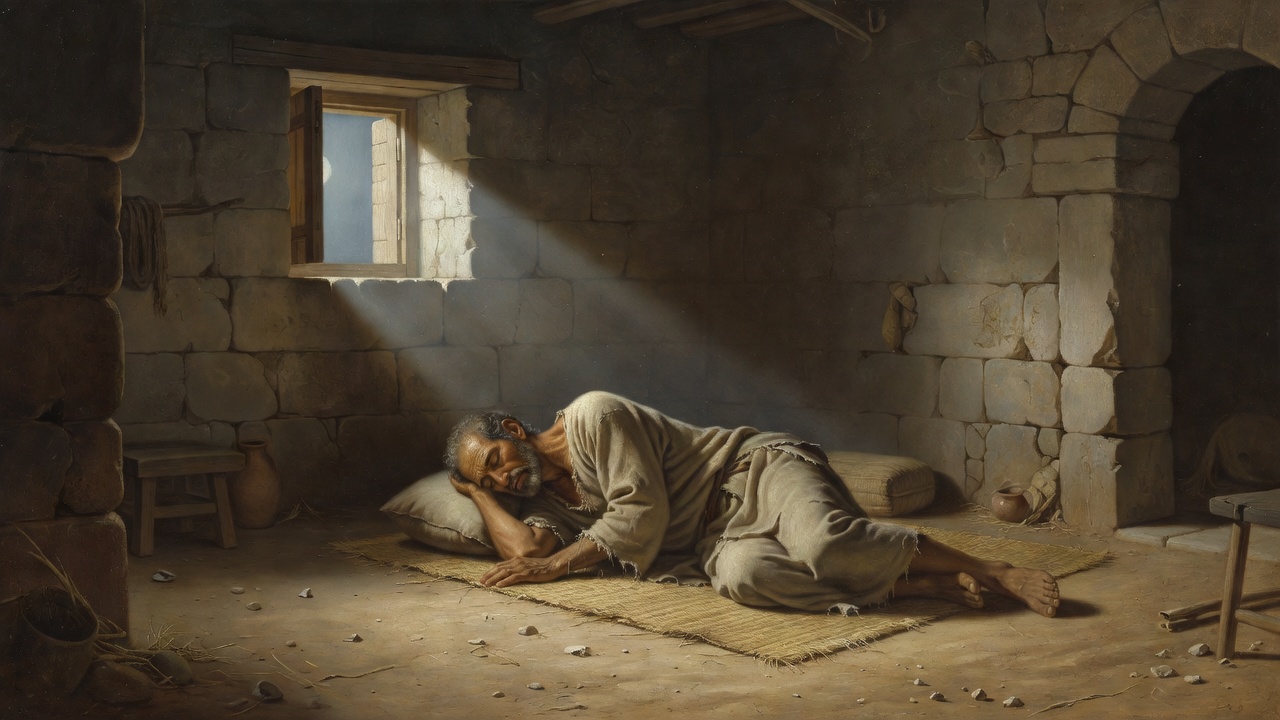
- O capítulo contrasta a insônia inquieta dos ricos com o sono doce de um trabalhador comum, observando que a busca por riquezas não traz satisfação duradoura. O verdadeiro contentamento surge quando a pessoa aceita sua porção e desfruta de comida, bebida e trabalho honesto como dádivas de Deus.Fontes: o próprio texto bíblico
Notas escritas com auxílio de IA a partir de fontes abertas (Theographic Bible Metadata, CC BY-SA 4.0; Easton’s Bible Dictionary, domínio público) e revisadas antes de publicar.
Créditos e licença desta tradução
Revised Version with Apocrypha (1895)
The Revised Version of the Holy Bible (1895) with Apocrypha
Public Domain
Language: English
Dialect: archaic British
This work is in the Public Domain. You may copy and use it freely.
2026-10-02
Títulos de seção adaptados da Berean Standard Bible (domínio público); não fazem parte do texto bíblico desta tradução.
Fonte: http://ebible.org/eng-rv/ · eBible.org