Salmos 130
LXX2012: Septuagint in American English 2012 · Toque num versículo para ver as referências cruzadas.
(131) A Song of Degrees.
Out of the Depths
1O Lord, my heart is not exalted, neither have my eyes been haughtily raised: neither have I exercised myself in great matters, nor in things too wonderful for me.
2I shall have sinned if I have not been humble, but have exulted my soul: according to the relation of a weaned child to his mother, so will you recompense my soul.
3Let Israel hope in the Lord, from henceforth and for ever.
Você sabia?
Um Clamor das Profundezas e Esperança de Redenção
- O Salmo 130 é identificado em seu cabeçalho inicial como um cântico de peregrinação, começando com um apelo pessoal das profundezas, no qual quem ora reconhece que ninguém poderia subsistir se o SENHOR guardasse registro das iniquidades.Fontes: o próprio texto bíblico
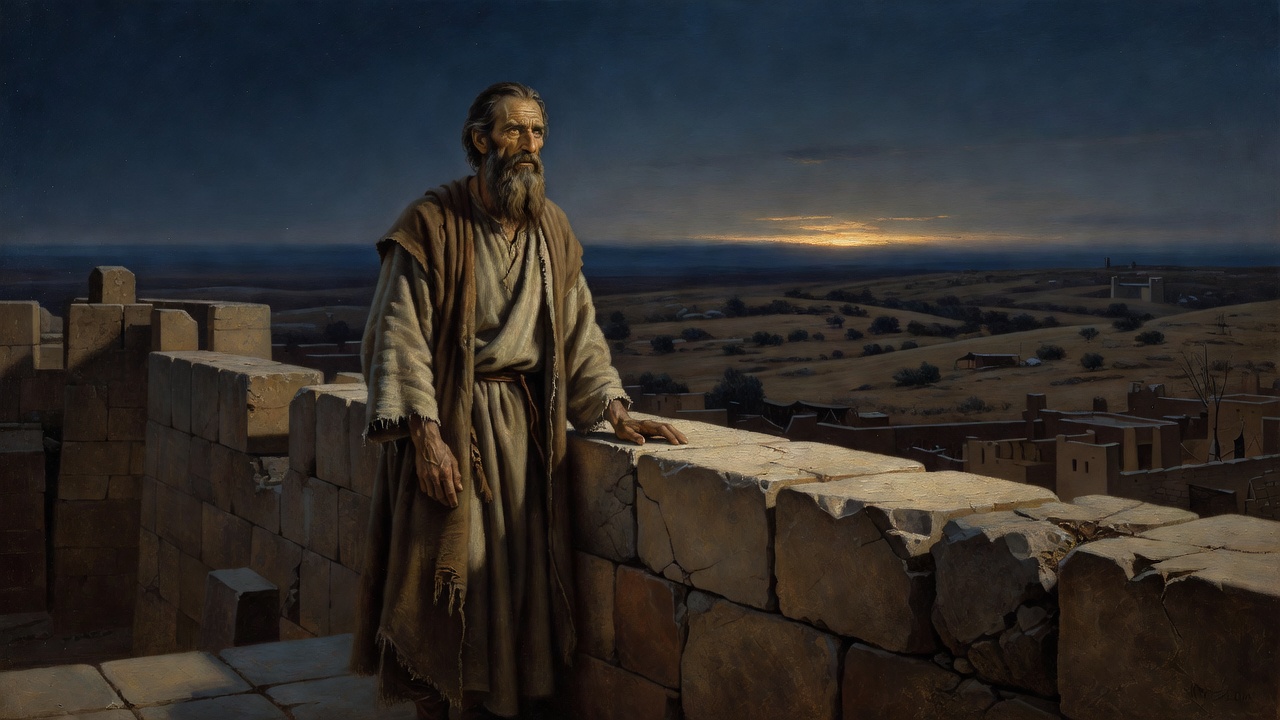
- O salmo usa a imagem marcante dos guardas noturnos que aguardam ansiosamente a luz da manhã para descrever a profunda expectativa pelo Senhor, antes de estender essa esperança a todo o Israel para uma redenção completa do pecado.Fontes: o próprio texto bíblico
Notas escritas com auxílio de IA a partir de fontes abertas (Theographic Bible Metadata, CC BY-SA 4.0; Easton’s Bible Dictionary, domínio público) e revisadas antes de publicar.
Lugares deste capítulo
- Jerusalem · 31.777, 35.234 · versículo 1
Só aparecem lugares com identificação de alta confiança (90% ou mais segundo as fontes acadêmicas reunidas pelo OpenBible). Mapa da época: DARE (Digital Atlas of the Roman Empire), CC BY 4.0; mapa atual: © colaboradores do OpenStreetMap; lugares: OpenBible.info (CC BY 4.0).
Créditos e licença desta tradução
LXX2012: Septuagint in American English 2012
The Septuagint with Apocrypha, translated from Greek to English by Sir Lancelot C. L. Brenton and published in 1885, with some language updates (American English)
Public Domain
Language: English
Dialect (if applicable): American
Language in English: English
Translation by:
Sir Lancelot Charles Lee Brenton
Michael Paul Johnson
LXX2012: Septuagint in English 2012
This is a translation of the Old Testament and Apocrypha/Deuterocanon from Hebrew to Greek to 19th Century British English, with some updates of spelling and word usage to contemporary American English. The original English translation was done by Sir Lancelot Charles Lee Brenton and published by Samuel Bagster & Sons, Ltd., in London in 1851. It has entered the Public Domain due to the passage of sufficient time. In the process of scanning and typing the text, the original poetry and prose formatting, as well as peripheral material like introductions and notes, have been omitted.
This edition of the Septuagint has some language updates. Brenton's word order and punctuation has been mostly retained, meaning that quotation marks are not used, and sentences within quotes may not start with capital letters, as was standard usage in 1851. Names transliterated from Greek to those transliterated from Hebrew in the common English Bibles often differ. These language updates are dedicated to the Public Domain by the author of those edits, Michael Paul Johnson. Therefore this edition may be freely copied, published, etc.
Before considering making changes to the text of this work, I recommend that you consult with God, because this is really His Book.
If you find errors in the text, please report them so that we can correct them.
Donations to help with the expenses of operating this web site and thus help others have free access to the Word of God may be made to us, but are not required. Please see http://MLJohnson.org/partner/ for more about that.
Títulos de seção adaptados da Berean Standard Bible (domínio público); não fazem parte do texto bíblico desta tradução.
Fonte: http://ebible.org/eng-lxx2012/ · eBible.org