Levítico 1
LXX2012: Septuagint in American English 2012 · Toque num versículo para ver as referências cruzadas.
Sobre este livro
Sobre Levítico
- O Dicionário Bíblico de Easton (1897) apresenta Levítico como o terceiro livro do Pentateuco e como o terceiro livro de Moisés. O nome, usado na Vulgata seguindo a LXX, reflete o assunto principal do livro: o serviço levítico.Fontes: Easton: Leviticus
- Easton afirma que todas as ordenanças do livro foram entregues no espaço de um mês, o primeiro mês do segundo ano depois do Êxodo. No verbete sobre o Sinai, também chamado Horebe, diz que os hebreus chegaram a essa região montanhosa no terceiro mês após o Êxodo e permaneceram acampados cerca de um ano inteiro, e que todo o Levítico registra o que ocorreu ali.Fontes: Easton: Leviticus · Mount Sinai
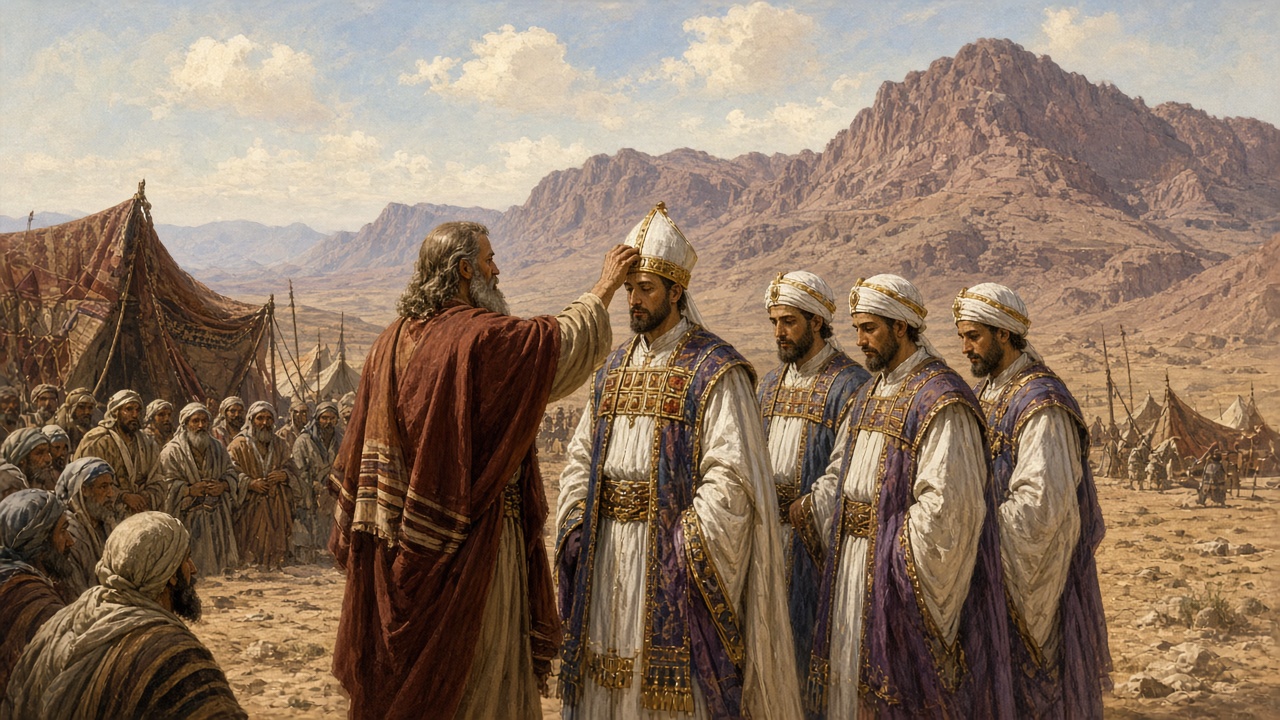
- Os capítulos 1 a 7 trazem leis sobre holocaustos, ofertas de manjares e ofertas de ação de graças, depois sobre ofertas pelo pecado e ofertas pela culpa, e sobre os deveres dos sacerdotes ao oferecer sacrifícios. Os capítulos 8 a 10 relatam a consagração de Arão e de seus filhos, a primeira oferta de Arão por si mesmo e pelo povo, e a morte de Nadabe e Abiú, feridos de morte e sepultados fora do acampamento depois de oferecerem fogo estranho, isto é, fogo comum não tomado do grande altar de bronze. Os capítulos 11 a 16 tratam da pureza e dos sacrifícios e ordenanças para afastar a impureza.Fontes: Easton: Leviticus · Nadab · Abihu
- Easton descreve os capítulos 17 a 20 como leis que marcam a separação entre Israel e os outros povos. Outras leis tratam da pureza pessoal dos sacerdotes e do consumo das coisas sagradas, das ofertas sem defeito e da devida celebração das grandes festas nos capítulos 23 e 25. Seguem-se promessas e advertências sobre a obediência, o livro termina com uma seção sobre votos, e Easton observa que Deus é quem fala diretamente em quase todo o livro.Fontes: Easton: Leviticus
- Nos ritos do capítulo 16, um bode está associado a Azazel, termo que a Authorized Version traduz por scapegoat e que a Revised Version mantém como Azazel. Easton relata que alguns intérpretes judeus o entendem como um lugar no deserto, cerca de doze milhas a leste de Jerusalém, enquanto outros o tomam como um espírito maligno ou até Satanás, e registra também o sentido de raiz: separação.Fontes: Azazel
Notas escritas com auxílio de IA a partir de fontes abertas (Theographic Bible Metadata, CC BY-SA 4.0; Easton’s Bible Dictionary, domínio público) e revisadas antes de publicar.
Laws for Burnt Offerings
1And the Lord called Moses again and spoke to him out of the tabernacle of witness, saying, Speak to the children of Israel, and you shall say to them, 2If any man of you shall bring gifts to the Lord, you⌃ shall bring your gifts of the cattle and of the oxen and of the sheep. 3If his gift be a whole burnt offering, he shall bring an unblemished male of the herd to the door of the tabernacle of witness, he shall bring it as acceptable before the Lord. 4And he shall lay his hand on the head of the burnt offering as a thing acceptable for him, to make atonement for him. 5And they shall kill the calf before the Lord; and the sons of Aaron the priests shall bring the blood, and they shall pour the blood round about on the altar, which is at the doors of the tabernacle of witness. 6And having flayed the whole burnt offering, they shall divide it by its limbs. 7And the sons of Aaron the priests shall put fire on the altar, and shall pile wood on the fire. 8And the sons of Aaron the priests shall pile up the divided parts, and the head, and the fat on the wood on the fire, the wood which is on the altar. 9And the entrails and the feet they shall wash in water, and the priests shall put all on the altar: it is a burnt offering, a sacrifice, a smell of sweet savor to the Lord. 10And if his gift be of the sheep to the Lord, or of the lambs, or of the kids for whole burnt offerings, he shall bring it a male without blemish. 11And he shall lay his hand on its head; and they shall kill it by the side of the altar, toward the north before the Lord, and the sons of Aaron the priests shall pour its blood on the altar round about. 12And they shall divide it by its limbs, and its head and its fat, and the priests shall pile them up on the wood which is on the fire, on the altar. 13And they shall wash the entrails and the feet with water, and the priest shall bring all the parts and put them on the altar: it is a burnt offering, a sacrifice, a smell of sweet savor to the Lord. 14And if he bring his gift, a burnt offering to the Lord, of birds, then shall he bring his gift of doves or pigeons. 15And the priest shall bring it to the altar, and shall wring off its head; and the priest shall put it on the altar, and shall wring out the blood at the bottom of the altar. 16And he shall take away the crop with the feathers, and shall cast it forth by the altar toward the east to the place of the ashes. 17And he shall break it off from the wings and shall not separate it, and the priest shall put it on the altar on the wood which is on the fire: it is a burnt offering, a sacrifice, a sweet smelling savor to the Lord.
Você sabia?
O Holocausto
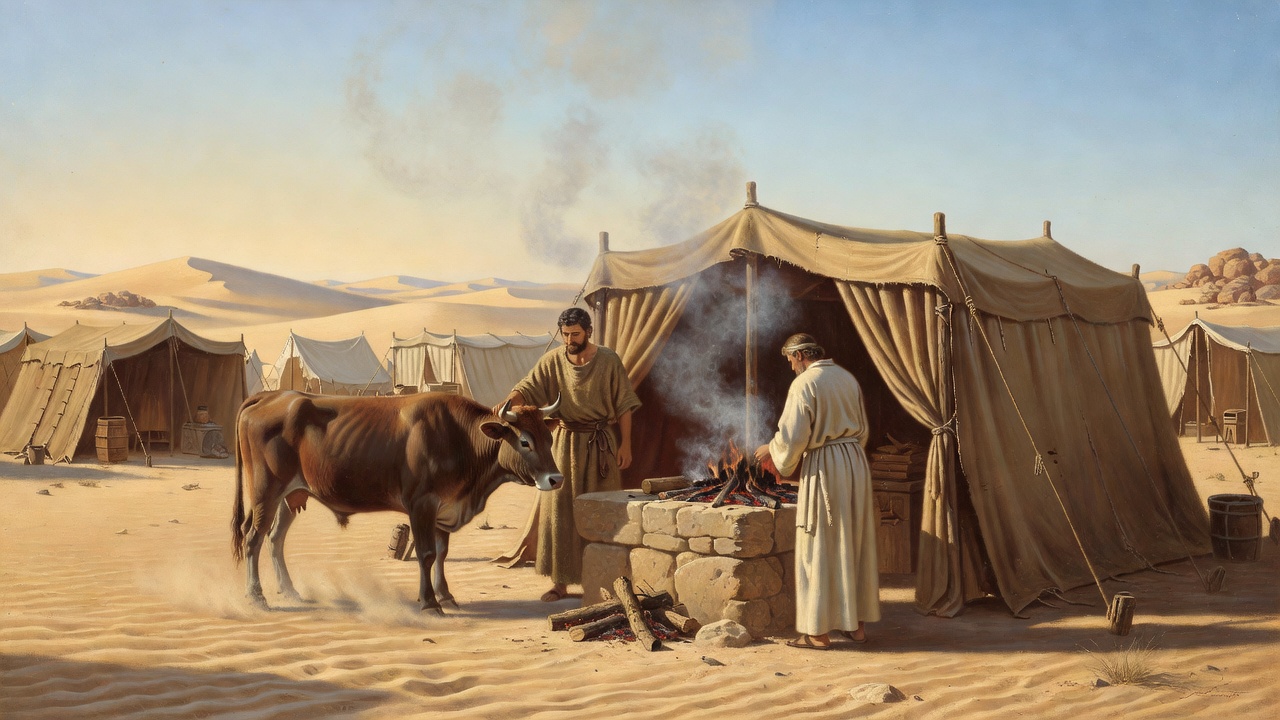
- As instruções para o holocausto previam diferentes condições materiais, permitindo ofertas do gado, do rebanho (ovelhas ou cabras) ou aves (rolinhas ou pombinhos). Para o gado e o rebanho, exigia-se um macho sem defeito.Fontes: o próprio texto bíblico
- O ritual estabelecia uma divisão clara de tarefas entre o adorador e os sacerdotes. O ofertante trazia o animal, colocava a mão sobre sua cabeça para expiação, abatia-o, esfolava-o e lavava suas partes internas, enquanto os filhos de Arão aspergiam o sangue e queimavam toda a oferta sobre o altar.Fontes: o próprio texto bíblico · Aaron
Notas escritas com auxílio de IA a partir de fontes abertas (Theographic Bible Metadata, CC BY-SA 4.0; Easton’s Bible Dictionary, domínio público) e revisadas antes de publicar.
Créditos e licença desta tradução
LXX2012: Septuagint in American English 2012
The Septuagint with Apocrypha, translated from Greek to English by Sir Lancelot C. L. Brenton and published in 1885, with some language updates (American English)
Public Domain
Language: English
Dialect (if applicable): American
Language in English: English
Translation by:
Sir Lancelot Charles Lee Brenton
Michael Paul Johnson
LXX2012: Septuagint in English 2012
This is a translation of the Old Testament and Apocrypha/Deuterocanon from Hebrew to Greek to 19th Century British English, with some updates of spelling and word usage to contemporary American English. The original English translation was done by Sir Lancelot Charles Lee Brenton and published by Samuel Bagster & Sons, Ltd., in London in 1851. It has entered the Public Domain due to the passage of sufficient time. In the process of scanning and typing the text, the original poetry and prose formatting, as well as peripheral material like introductions and notes, have been omitted.
This edition of the Septuagint has some language updates. Brenton's word order and punctuation has been mostly retained, meaning that quotation marks are not used, and sentences within quotes may not start with capital letters, as was standard usage in 1851. Names transliterated from Greek to those transliterated from Hebrew in the common English Bibles often differ. These language updates are dedicated to the Public Domain by the author of those edits, Michael Paul Johnson. Therefore this edition may be freely copied, published, etc.
Before considering making changes to the text of this work, I recommend that you consult with God, because this is really His Book.
If you find errors in the text, please report them so that we can correct them.
Donations to help with the expenses of operating this web site and thus help others have free access to the Word of God may be made to us, but are not required. Please see http://MLJohnson.org/partner/ for more about that.
Títulos de seção adaptados da Berean Standard Bible (domínio público); não fazem parte do texto bíblico desta tradução.
Fonte: http://ebible.org/eng-lxx2012/ · eBible.org