Gênesis 20
LXX2012: Septuagint in American English 2012 · Toque num versículo para ver as referências cruzadas.
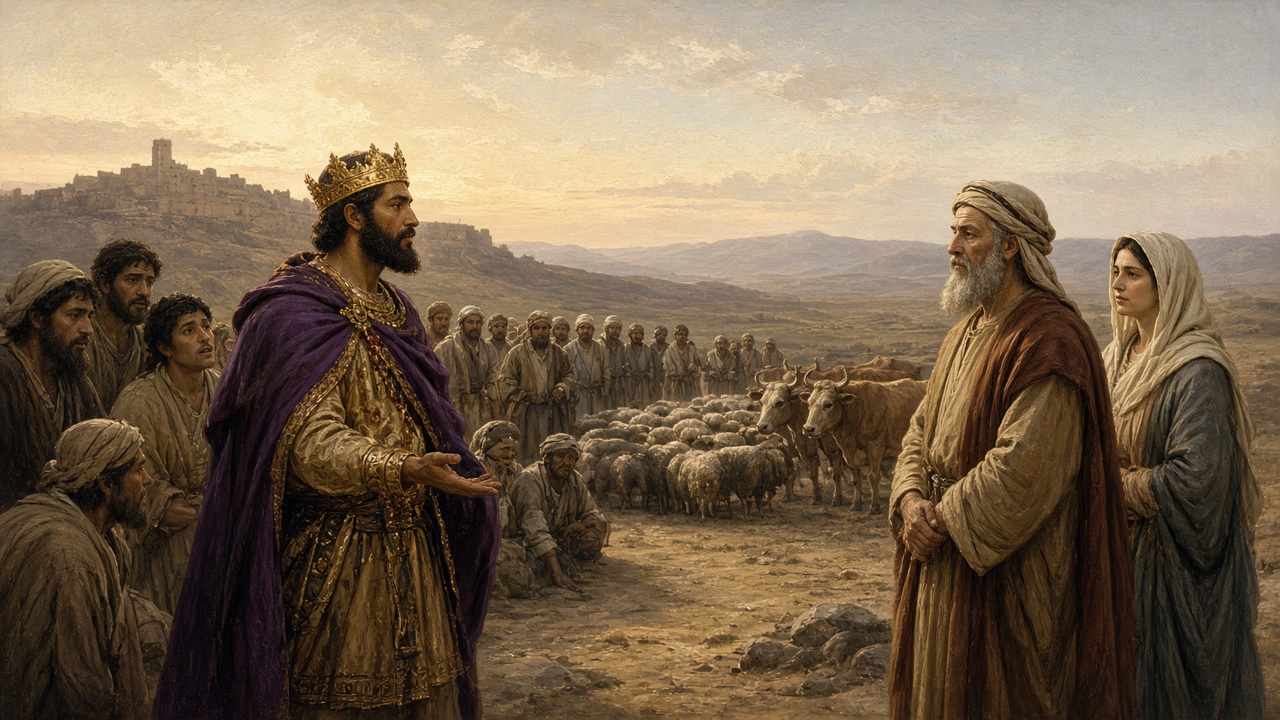
Abraham, Sarah, and Abimelech
1And Abraam removed thence to the southern country, and lived between Cades and Sur, and sojourned in Gerara. 2And Abraam said concerning Sarrha his wife, She is my sister, for he feared to say, She is my wife, lest at any time the men of the city should kill him for her sake. So Abimelech king of Gerara sent and took Sarrha. 3And God came to Abimelech by night in sleep, and said, Behold, you die for the woman, whom you have taken, whereas she has lived with a husband. 4But Abimelech had not touched her, and he said, Lord, will you destroy an ignorantly sinning and just nation? 5Said he not to me, She is my sister, and said she not to me, He is my brother? with a pure heart and in the righteousness of my hands have I done this. 6And God said to him in sleep, Yes, I knew that you did this with a pure heart, and I spared you, so that you should not sin against me, therefore I suffered you not to touch her. 7But now return the man his wife; for he is a prophet, and shall pray for you, and you shall live; but if you restore her not, know that you shall die and all your. 8And Abimelech rose early in the morning, and called all his servants, and he spoke all these words in their ears, and all the men feared exceedingly. 9And Abimelech called Abraam and said to him, What is this that you have done to us? Have we sinned against you, that you have brought upon me and upon my kingdom a great sin? You have done to me a deed, which no one ought to do. 10And Abimelech said to Abraam, What have you seen in me that you have done this? 11And Abraam said, Why I said, Surely there is not the worship of God in this place, and they will kill me because of my wife. 12For truly she is my sister by my father, but not by my mother, and she became my wife. 13And it came to pass when God brought me forth out of the house of my father, that I said to her, This righteousness you shall perform to me, in every place into which we may enter, say of me, He is my brother. 14And Abimelech took a thousand pieces of silver, and sheep, and calves, and servants, and maidservants, and gave them to Abraam, and he returned him Sarrha his wife. 15And Abimelech said to Abraam, Behold, my land is before you, dwell wherever it may please you. 16And to Sarrha he said, Behold, I have given your brother a thousand pieces of silver, those shall be to you for the price of your countenance, and to all the women with you, and speak the truth in all things. 17And Abraam prayed to God, and God healed Abimelech, and his wife, and his women servants, and they bore children. 18Because the Lord had fast closed from without every womb in the house of Abimelech, because of Sarrha Abraam's wife.
Você sabia?
Irmã e esposa em Gerar
- Abraão estava em Gerar, cidade e distrito muito antigos na fronteira sul da Palestina, governados então por um rei chamado Abimeleque. Ele tinha ido à região do Neguebe, o distrito árido ao sul da Palestina na rota das caravanas rumo ao Egito, e se estabeleceu entre Cades e Sur. Sur, nome que significa “muro”, era uma região desértica na borda nordeste do Egito, provavelmente assim chamada por causa da muralha de fronteira que os egípcios construíram ali.Fontes: o próprio texto bíblico · Gerar · Negeb · Shur
- Quando Abraão disse que Sara era sua irmã, o parentesco não era totalmente inventado: ela também era sua meia-irmã, filha de seu pai, mas não de sua mãe. O dicionário bíblico de Easton (1897) registra que o nome Sara significa “princesa” e que esse nome lhe foi dado quando se anunciou que ela seria a mãe da criança prometida.Fontes: o próprio texto bíblico · Sarah
- O nome Abimeleque volta a aparecer em Gerar na história de Isaque. O dicionário bíblico de Easton (1897) descreve esse rei posterior como provavelmente filho do Abimeleque que Abraão encontrou, e diz que ele repreendeu Isaque por um engano semelhante a respeito de sua esposa Rebeca, que o rei descobriu por acaso. A mesma obra diz que Gerar parece ter sido uma rica região de pastoreio.Fontes: Abimelech (King of Gerar) · Gerar
Notas escritas com auxílio de IA a partir de fontes abertas (Theographic Bible Metadata, CC BY-SA 4.0; Easton’s Bible Dictionary, domínio público) e revisadas antes de publicar.
Lugares deste capítulo
- Negeb · 31.245, 34.841 · versículo 1
Só aparecem lugares com identificação de alta confiança (90% ou mais segundo as fontes acadêmicas reunidas pelo OpenBible). Mapa da época: DARE (Digital Atlas of the Roman Empire), CC BY 4.0; mapa atual: © colaboradores do OpenStreetMap; lugares: OpenBible.info (CC BY 4.0).
Créditos e licença desta tradução
LXX2012: Septuagint in American English 2012
The Septuagint with Apocrypha, translated from Greek to English by Sir Lancelot C. L. Brenton and published in 1885, with some language updates (American English)
Public Domain
Language: English
Dialect (if applicable): American
Language in English: English
Translation by:
Sir Lancelot Charles Lee Brenton
Michael Paul Johnson
LXX2012: Septuagint in English 2012
This is a translation of the Old Testament and Apocrypha/Deuterocanon from Hebrew to Greek to 19th Century British English, with some updates of spelling and word usage to contemporary American English. The original English translation was done by Sir Lancelot Charles Lee Brenton and published by Samuel Bagster & Sons, Ltd., in London in 1851. It has entered the Public Domain due to the passage of sufficient time. In the process of scanning and typing the text, the original poetry and prose formatting, as well as peripheral material like introductions and notes, have been omitted.
This edition of the Septuagint has some language updates. Brenton's word order and punctuation has been mostly retained, meaning that quotation marks are not used, and sentences within quotes may not start with capital letters, as was standard usage in 1851. Names transliterated from Greek to those transliterated from Hebrew in the common English Bibles often differ. These language updates are dedicated to the Public Domain by the author of those edits, Michael Paul Johnson. Therefore this edition may be freely copied, published, etc.
Before considering making changes to the text of this work, I recommend that you consult with God, because this is really His Book.
If you find errors in the text, please report them so that we can correct them.
Donations to help with the expenses of operating this web site and thus help others have free access to the Word of God may be made to us, but are not required. Please see http://MLJohnson.org/partner/ for more about that.
Títulos de seção adaptados da Berean Standard Bible (domínio público); não fazem parte do texto bíblico desta tradução.
Fonte: http://ebible.org/eng-lxx2012/ · eBible.org