Salmos 42
American Standard Version (1901) · Toque num versículo para ver as referências cruzadas.
For the Chief Musician. Maschil of the sons of Korah.
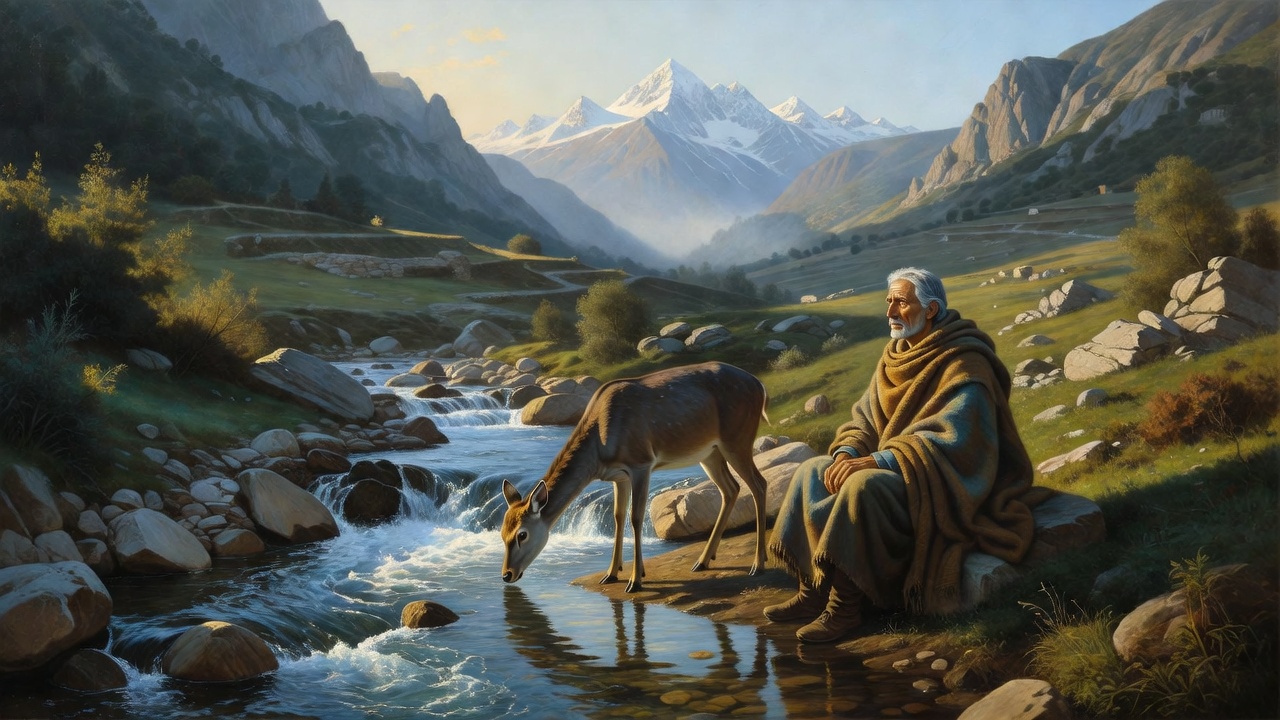
As the Deer Pants for the Water
1As the hart panteth after the water brooks,
So panteth my soul after thee, O God.
2My soul thirsteth for God, for the living God:
When shall I come and appear before God?
3My tears have been my food day and night,
While they continually say unto me, Where is thy God?
4These things I remember, and pour out my soul within me,
How I went with the throng, and led them to the house of God,
With the voice of joy and praise, a multitude keeping holyday.
5Why art thou cast down, O my soul?
And why art thou disquieted within me?
Hope thou in God; for I shall yet praise him
For the help of his countenance.
6O my God, my soul is cast down within me:
Therefore do I remember thee from the land of the Jordan,
And the Hermons, from the hill Mizar.
7Deep calleth unto deep at the noise of thy waterfalls:
All thy waves and thy billows are gone over me.
8Yet Jehovah will command his lovingkindness in the day-time;
And in the night his song shall be with me,
Even a prayer unto the God of my life.
9I will say unto God my rock, Why hast thou forgotten me?
Why go I mourning because of the oppression of the enemy?
10As with a sword in my bones, mine adversaries reproach me,
While they continually say unto me, Where is thy God?
11Why art thou cast down, O my soul?
And why art thou disquieted within me?
Hope thou in God; for I shall yet praise him,
Who is the help of my countenance, and my God.
Você sabia?
A Sede de Deus Longe de Casa
- O salmo é apresentado como um cântico dos filhos de Coré, uma família levítica descendente do levita Coré que participava da música e do culto no templo.Fontes: o próprio texto bíblico · Korah (Levite)
- O autor expressa sua saudade de Deus a partir das terras do norte, mencionando a região do Jordão, o monte Hermom e o monte Mizar. O Hermom é uma cadeia imponente com múltiplos cumes que chegam a cerca de 2.800 metros de altitude, enquanto Mizar (que significa 'pequenez') designa uma colina menor nas proximidades.Fontes: o próprio texto bíblico · Hermon · Hill Mizar
- O poema utiliza metáforas vívidas de água, partindo de uma corça sedenta que anseia por correntes até cascatas estrondosas e ondas impetuosas que simbolizam uma profunda aflição emocional.Fontes: o próprio texto bíblico
Notas escritas com auxílio de IA a partir de fontes abertas (Theographic Bible Metadata, CC BY-SA 4.0; Easton’s Bible Dictionary, domínio público) e revisadas antes de publicar.
Lugares deste capítulo
- Jordan · Hoje: Jordan River · 31.761, 35.558 · versículo 6
- Mount Hermon · 33.400, 35.850 · versículo 6
Só aparecem lugares com identificação de alta confiança (90% ou mais segundo as fontes acadêmicas reunidas pelo OpenBible). Mapa da época: DARE (Digital Atlas of the Roman Empire), CC BY 4.0; mapa atual: © colaboradores do OpenStreetMap; lugares: OpenBible.info (CC BY 4.0).
Créditos e licença desta tradução
American Standard Version (1901)
The American Standard Version of the Holy Bible, first published in 1901.
Public Domain
Language: English
Dialect: Archaic American
This public domain Bible translation is brought to you courtesy of eBible.org.
If you would like to make a donation to help keep free Bible access like this going, please visit https://eBible.org/give.php .
2026-10-02
Títulos de seção adaptados da Berean Standard Bible (domínio público); não fazem parte do texto bíblico desta tradução.
Fonte: http://ebible.org/eng-asv/ · eBible.org