Salmos 14
Brenton Septuagint Translation · Toque num versículo para ver as referências cruzadas.
The Fool Says There Is No God
1A Psalm of David.
O Lord, who shall sojourn in thy tabernacle? and who shall dwell in thy holy mountain?
2He that walks blameless, and works righteousness, who speaks truth in his heart. 3Who has not spoken craftily with his tongue, neither has done evil to his neighbour, nor taken up a reproach against them that dwelt nearest to him. 4In his sight an evil-worker is set at nought, but he honours them that fear the Lord. He swears to his neighbour, and disappoints him not. 5He has not lent his money on usury, and has not received bribes against the innocent. He that does these things shall never be moved.
Você sabia?
A corrupção humana e a esperança de Sião
- O Salmo 14 descreve a negação prática de Deus como a causa de corrupção generalizada e de opressão aos desamparados, afirmando que Deus permanece como refúgio para os justos.Fontes: o próprio texto bíblico
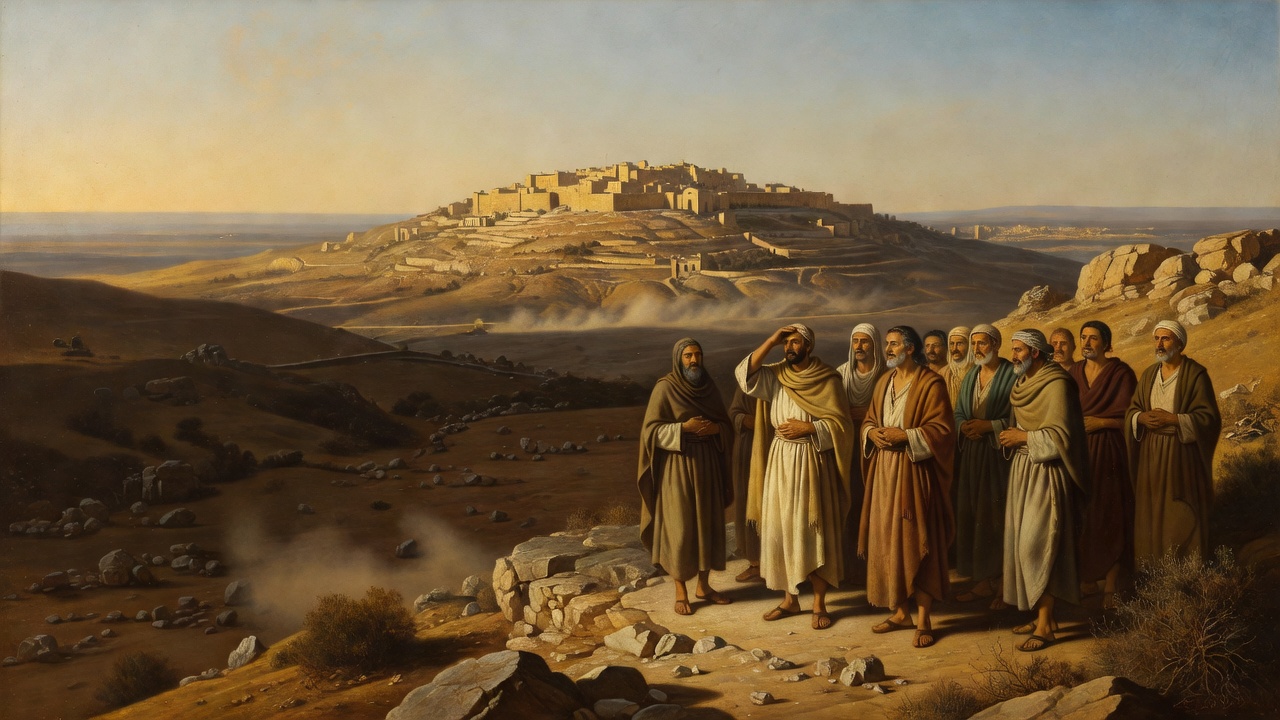
- No último versículo, o livramento é aguardado a partir de Sião, a colina ao sudeste de Jerusalém onde o rei Davi estabeleceu sua cidadela e cidade real.Fontes: Zion · o próprio texto bíblico
- A menção paralela de Jacó e Israel faz referência ao patriarca Jacó, o segundo filho gêmeo de Isaque que também recebeu o nome de Israel, nomes que passaram a representar toda a nação.Fontes: Jacob (Israel) · o próprio texto bíblico
Notas escritas com auxílio de IA a partir de fontes abertas (Theographic Bible Metadata, CC BY-SA 4.0; Easton’s Bible Dictionary, domínio público) e revisadas antes de publicar.
Lugares deste capítulo
- Zion · Hoje: Jerusalem · 31.777, 35.234 · versículo 7
Só aparecem lugares com identificação de alta confiança (90% ou mais segundo as fontes acadêmicas reunidas pelo OpenBible). Mapa da época: DARE (Digital Atlas of the Roman Empire), CC BY 4.0; mapa atual: © colaboradores do OpenStreetMap; lugares: OpenBible.info (CC BY 4.0).
Créditos e licença desta tradução
Translation of the Greek Septuagint into English by Sir Lancelot Charles Lee Brenton
Published in 1851, and now in the Public Domain.
If you find errors in the text, please report them so that we can correct them.
Títulos de seção adaptados da Berean Standard Bible (domínio público); não fazem parte do texto bíblico desta tradução.
Fonte: http://ebible.org/eng-Brenton/ · eBible.org