Salmos 100
Brenton Septuagint Translation · Toque num versículo para ver as referências cruzadas.
Make a Joyful Noise
1A Psalm of David.
I will sing to thee, O Lord, of mercy and judgment; I will sing a psalm, 2and I will be wise in a blameless way. When wilt thou come to me? I walked in the innocence of my heart, in the midst of my house. 3I have not set before mine eyes any unlawful thing; I have hated transgressors. 4A perverse heart has not cleaved to me; I have not known an evil man, forasmuch as he turns away from me. 5Him that privily speaks against his neighbour, him have I driven from me: he that is proud in look and insatiable in heart,—with him I have not eaten. 6Mine eyes shall be upon the faithful of the land, that they may dwell with me: he that walked in a perfect way, the same ministered to me. 7The proud doer dwelt not in the midst of my house; the unjust speaker prospered not in my sight. 8Early did I slay all the sinners of the land, that I might destroy out of the city of the Lord all that work iniquity.
Você sabia?
Salmo 100: Um Cântico de Louvor e Gratidão
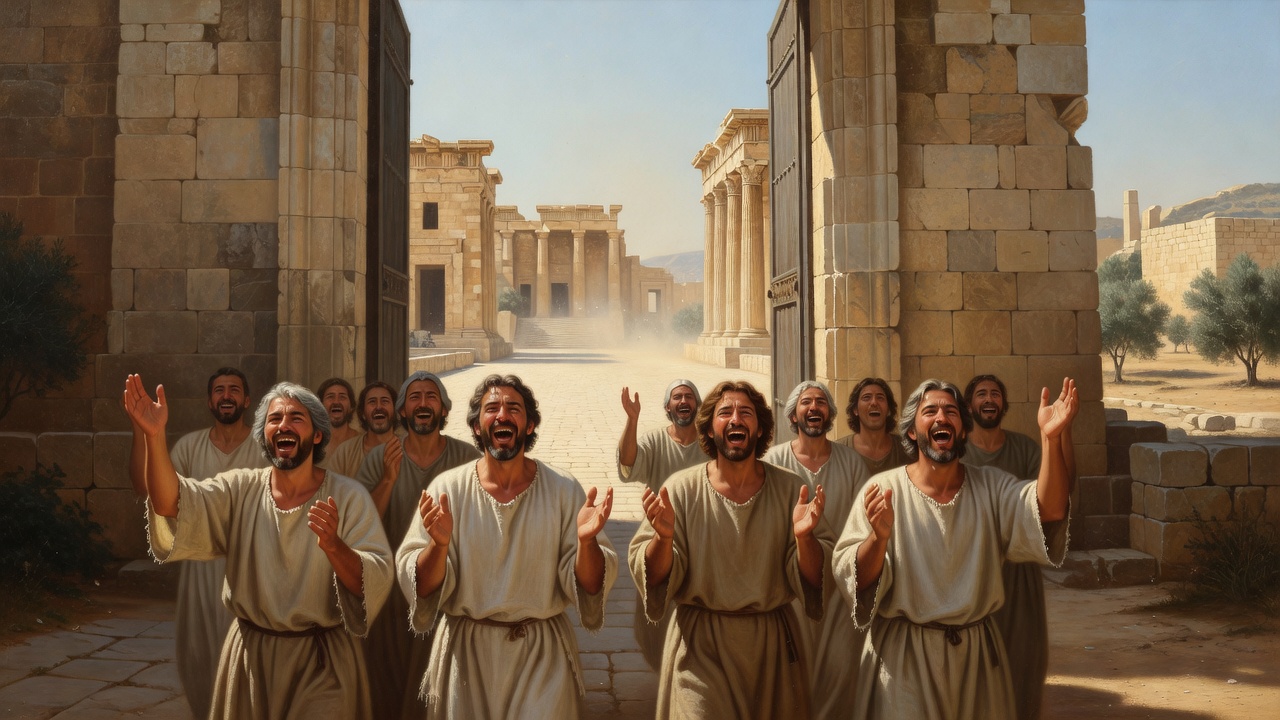
- O Salmo 100 é especificamente designado como um salmo de ações de graças, convocando não apenas Israel, mas toda a terra a servir a Deus com alegria e entoar cânticos alegres.Fontes: o próprio texto bíblico
- O salmo emprega imagens do santuário, convidando os adoradores a entrarem por suas portas e átrios com louvor, reconhecendo a Deus como seu Criador e a si mesmos como ovelhas do Seu pasto.Fontes: o próprio texto bíblico
- O fundamento do louvor do salmo baseia-se no próprio caráter de Deus: Sua bondade, Seu amor leal que dura para sempre e Sua fidelidade que se estende por todas as gerações.Fontes: o próprio texto bíblico
Notas escritas com auxílio de IA a partir de fontes abertas (Theographic Bible Metadata, CC BY-SA 4.0; Easton’s Bible Dictionary, domínio público) e revisadas antes de publicar.
Créditos e licença desta tradução
Translation of the Greek Septuagint into English by Sir Lancelot Charles Lee Brenton
Published in 1851, and now in the Public Domain.
If you find errors in the text, please report them so that we can correct them.
Títulos de seção adaptados da Berean Standard Bible (domínio público); não fazem parte do texto bíblico desta tradução.
Fonte: http://ebible.org/eng-Brenton/ · eBible.org