Jó 10
Brenton Septuagint Translation · Toque num versículo para ver as referências cruzadas.
Job’s Plea to God
1Weary in my soul, I will pour my words with groans upon him: I will speak being straitened in the bitterness of my soul. 2And I will say to the Lord, Do not teach me to be impious; and wherefore hast thou thus judged me? 3Is it good before thee if I be unrighteous? for thou hast disowned the work of thy hands, and attended to the counsel of the ungodly. 4Or dost thou see as a mortal sees? or wilt thou look as a man sees? 5Or is thy life human, or thy years the years of a man, 6that thou hast enquired into mine iniquity, and searched out my sins? 7For thou knowest that I have not committed iniquity: but who is he that can deliver out of thy hands?
8Thy hands have formed me and made me; afterwards thou didst change thy mind, and smite me. 9Remember that thou hast made me as clay, and thou dost turn me again to earth. 10Hast thou not poured me out like milk, and curdled me like cheese? 11And thou didst clothe me with skin and flesh, and frame me with bones and sinews. 12And thou didst bestow upon me life and mercy, and thy oversight has preserved my spirit. 13Having these things in thyself, I know that thou canst do all things; for nothing is impossible with thee.
14And if I should sin, thou watchest me; and thou hast not cleared me from iniquity. 15Or if I should be ungodly, woe is me: and if I should be righteous, I cannot lift myself up, for I am full of dishonour. 16For I am hunted like a lion for slaughter; for again thou hast changed and art terribly destroying me; 17renewing against me my torture: and thou hast dealt with me in great anger, and thou hast brought trials upon me.
18Why then didst thou bring me out of the womb? and why did I not die, and no eye see me, 19and I become as if I had not been? for why was I not carried from the womb to the grave? 20Is not the time of my life short? suffer me to rest a little, 21before I go whence I shall not return, to a land of darkness and gloominess; 22to a land of perpetual darkness, where there is no light, neither can any one see the life of mortals.
Você sabia?
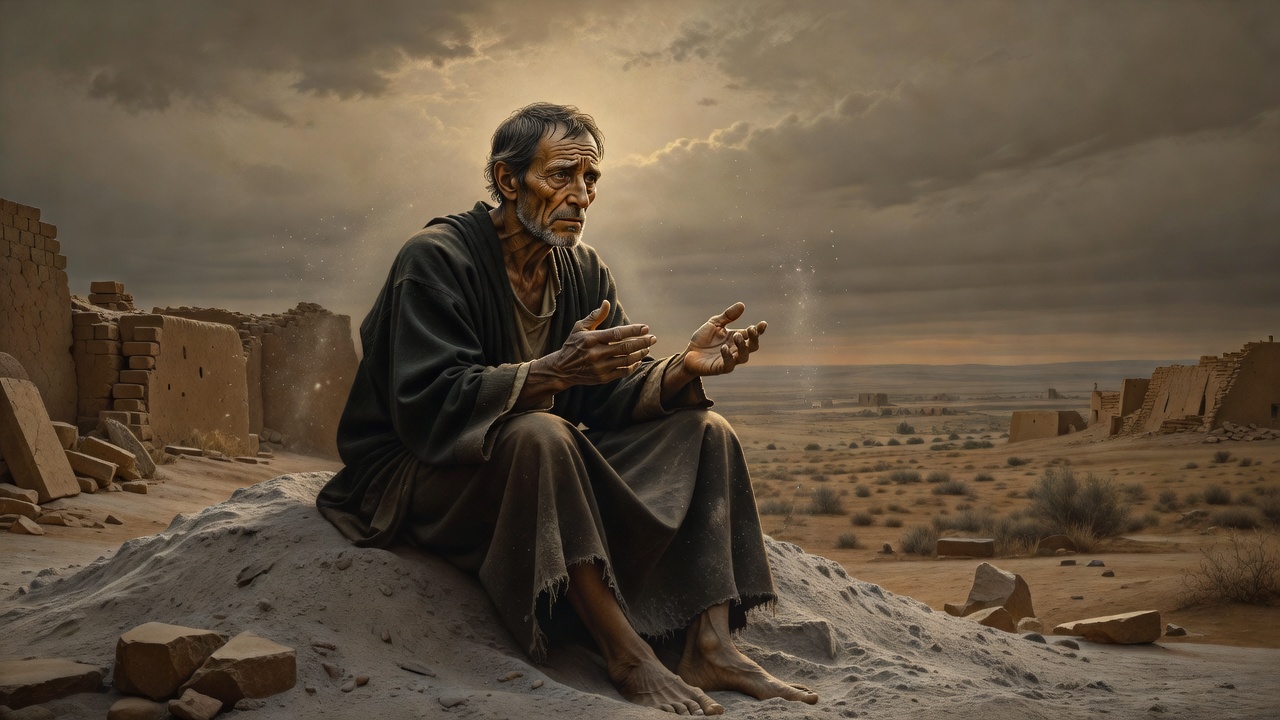
O clamor de Jó sobre sua criação e mortalidade
- Em seu clamor a Deus, Jó recorre a imagens cotidianas antigas, como a fabricação de queijo e a olaria, para descrever a formação da vida humana no ventre materno, retratando Deus como quem molda o barro, derrama o leite e entretece carne e ossos.Fontes: o próprio texto bíblico
- Jó retrata a morada dos mortos como um lugar de escuridão profunda, sombras e desordem, suplicando a Deus por um breve alívio antes de partir para esse destino sem retorno.Fontes: o próprio texto bíblico
Notas escritas com auxílio de IA a partir de fontes abertas (Theographic Bible Metadata, CC BY-SA 4.0; Easton’s Bible Dictionary, domínio público) e revisadas antes de publicar.
Créditos e licença desta tradução
Translation of the Greek Septuagint into English by Sir Lancelot Charles Lee Brenton
Published in 1851, and now in the Public Domain.
If you find errors in the text, please report them so that we can correct them.
Títulos de seção adaptados da Berean Standard Bible (domínio público); não fazem parte do texto bíblico desta tradução.
Fonte: http://ebible.org/eng-Brenton/ · eBible.org