Eclesiastes 5
Brenton Septuagint Translation · Toque num versículo para ver as referências cruzadas.
Approaching God with Awe
1Be not hasty with thy mouth, and let not thine heart be swift to utter anything before God; for God is in heaven above, and thou upon earth: therefore let thy words be few. 2For through the multitude of trial a dream comes; and a fool's voice is with a multitude of words.
3Whenever thou shalt vow a vow to God, defer not to pay it; for he has no pleasure in fools: pay thou therefore whatsoever thou shalt have vowed. 4It is better that thou shouldest not vow, than that thou shouldest vow and not pay. 5Suffer not thy mouth to lead thy flesh to sin; and say not in the presence of God, It was an error: lest God be angry at thy voice, and destroy the works of thy hands. 6For there is evil in a multitude of dreams and vanities and many words: but fear thou God.
7If thou shouldest see the oppression of the poor, and the wresting of judgment and of justice in the land, wonder not at the matter: for there is a high one to watch over him that is high, and high ones over them.
The Futility of Wealth
8Also the abundance of the earth is for every one: the king is dependent on the tilled field.
9He that loves silver shall not be satisfied with silver: and who has loved gain, in the abundance thereof? this is also vanity. 10In the multitude of good they are increased that eat it: and what virtue has the owner, but the right of beholding it with his eyes? 11The sleep of a servant is sweet, whether he eat little or much: but to one who is satiated with wealth, there is none that suffers him to sleep.
12There is an infirmity which I have seen under the sun, namely, wealth kept for its owner to his hurt. 13And that wealth shall perish in an evil trouble: and the man begets a son, and there is nothing in his hand. 14As he came forth naked from his mother's womb, he shall return back as he came, and he shall receive nothing for his labour, that it should go with him in his hand. 15And this is also an evil infirmity: for as he came, so also shall he return: and what is his gain, for which he vainly labours? 16Yea, all his days are in darkness, and in mourning, and much sorrow, and infirmity, and wrath.
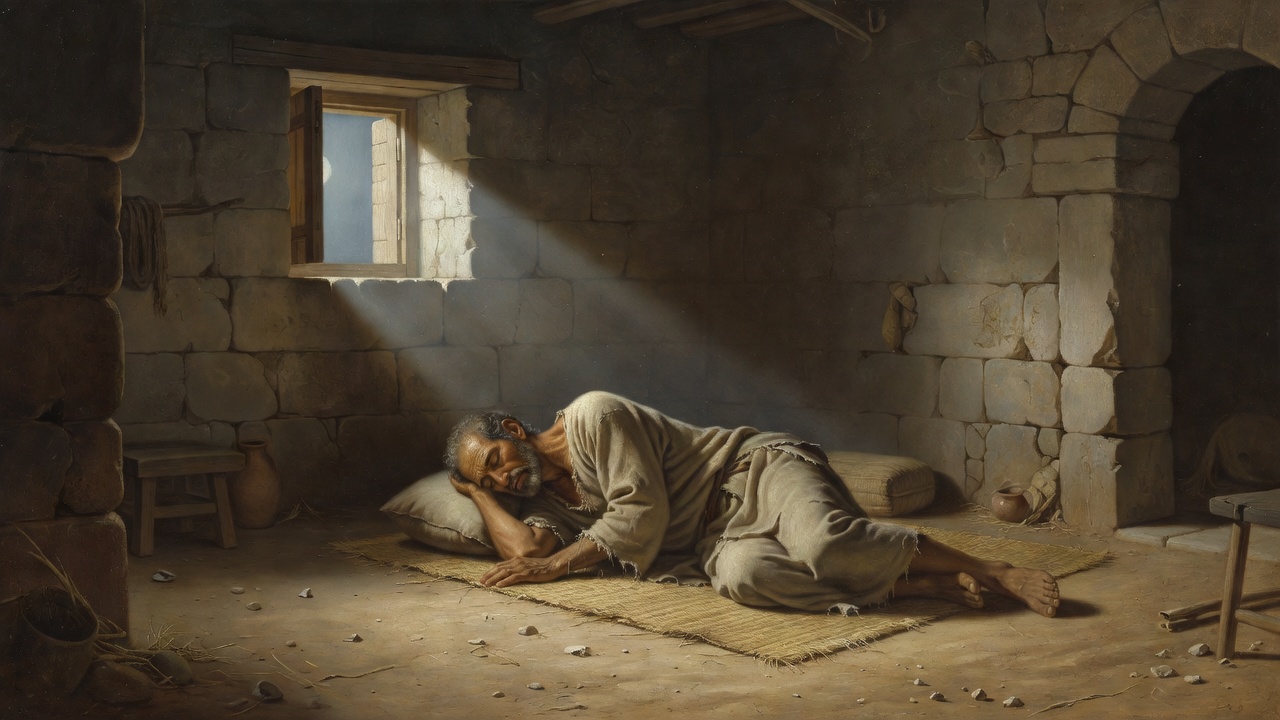
17Behold, I have seen good, that it is a fine thing for a man to eat and to drink, and to see good in all his labour in which he may labour under the sun, all the number of the days of his life which God has given to him: for it is his portion. 18Yea, and as for every man to whom God has given wealth and possessions, and has given him power to eat thereof, and to receive his portion, and to rejoice in his labour; this is the gift of God. 19For he shall not much remember the days of his life; for God troubles him in the mirth of his heart.
Você sabia?
Reverência, justiça e os limites da riqueza
- O autor adverte contra o falar precipitado no culto, lembrando aos adoradores que Deus está nos céus enquanto os mortais estão na terra. Os votos feitos a Deus eram considerados compromissos sérios; o texto adverte que adiar ou deixar de cumprir um voto é insensatez, sendo melhor não votar do que votar e não cumprir.Fontes: o próprio texto bíblico
- Ao abordar a injustiça e a opressão dos pobres em uma província, o autor aponta para a burocracia governamental em camadas, onde cada oficial é vigiado por uma autoridade superior. Apesar dessa hierarquia administrativa, todos os níveis, inclusive o rei, dependem, em última análise, dos frutos da terra.Fontes: o próprio texto bíblico
- O capítulo contrasta a insônia inquieta dos ricos com o sono doce de um trabalhador comum, observando que a busca por riquezas não traz satisfação duradoura. O verdadeiro contentamento surge quando a pessoa aceita sua porção e desfruta de comida, bebida e trabalho honesto como dádivas de Deus.Fontes: o próprio texto bíblico
Notas escritas com auxílio de IA a partir de fontes abertas (Theographic Bible Metadata, CC BY-SA 4.0; Easton’s Bible Dictionary, domínio público) e revisadas antes de publicar.
Créditos e licença desta tradução
Translation of the Greek Septuagint into English by Sir Lancelot Charles Lee Brenton
Published in 1851, and now in the Public Domain.
If you find errors in the text, please report them so that we can correct them.
Títulos de seção adaptados da Berean Standard Bible (domínio público); não fazem parte do texto bíblico desta tradução.
Fonte: http://ebible.org/eng-Brenton/ · eBible.org