Eclesiastes 2
Brenton Septuagint Translation · Toque num versículo para ver as referências cruzadas.
The Futility of Pleasure
1I said in my heart, Come now, I will prove thee with mirth, and behold thou good: and, behold, this is also vanity. 2I said to laughter, Madness: and to mirth, Why doest thou this?
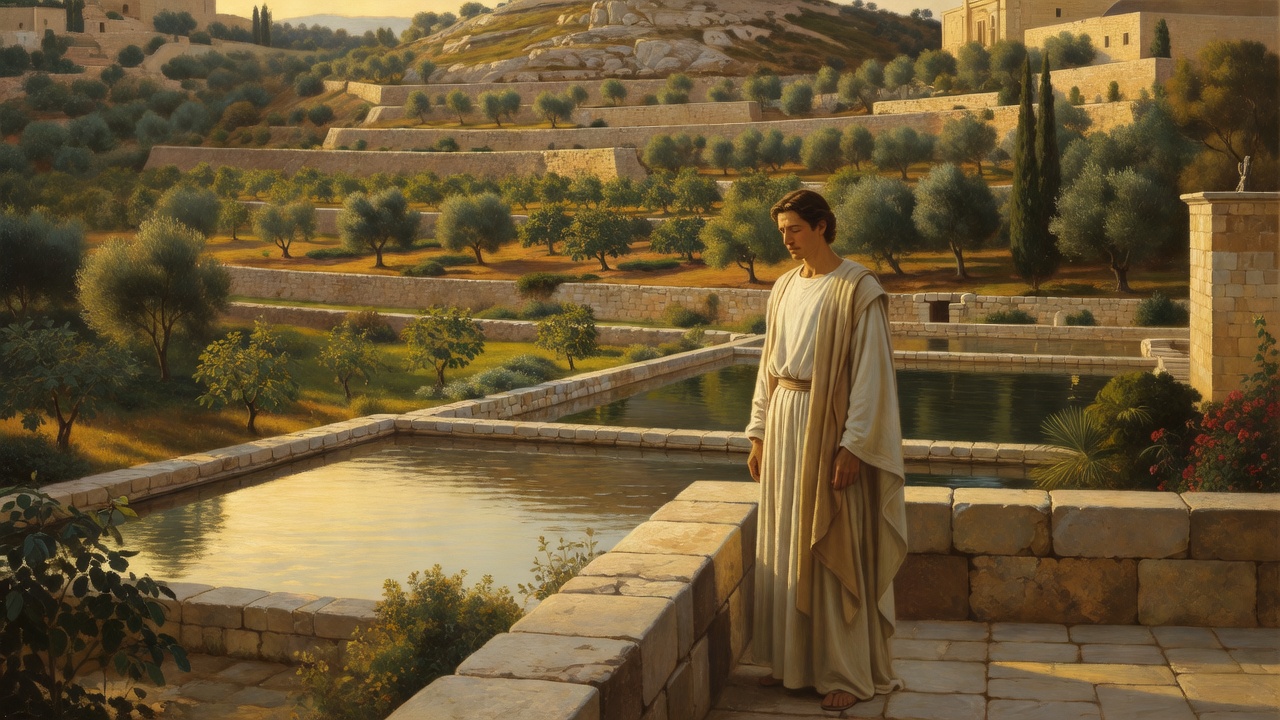
3And I examined whether my heart would excite my flesh as with wine, (though my heart guided me in wisdom,) and I desired to lay hold of mirth, until I should see of what kind is the good to the sons of men, which they should do under the sun all the days of their life. 4I enlarged my work; I built me houses; I planted me vineyards. 5I made me gardens and orchards, and planted in them every kind of fruit-tree. 6I made me pools of water, to water from them the timber-bearing wood. 7I got servants and maidens, and servants were born to me in the house: also I had abundant possession of flocks and herds, beyond all who were before me in Jerusalem. 8Moreover I collected for myself both silver and gold also, and the peculiar treasures of kings and provinces: I procured me singing men and singing women, and delights of the sons of men, a butler and female cupbearers.
9So I became great, and advanced beyond all that were before me in Jerusalem: also my wisdom was established to me. 10And whatever mine eyes desired, I withheld not from them, I withheld not my heart from all my mirth: for my heart rejoiced in all my labour; and this was my portion of all my labour. 11And I looked on all my works which my hands had wrought, and on my labour which I laboured to perform: and, behold, all was vanity and waywardness of spirit, and there is no advantage under the sun.
The Wise and the Foolish
12Then I looked on to see wisdom, and madness, and folly: for who is the man who will follow after counsel, in all things wherein he employs it? 13And I saw that wisdom excels folly, as much as light excels darkness. 14The wise man's eyes are in his head; but the fool walks in darkness: and I perceived, even I, that one event shall happen to them all.
15And I said in my heart, As the event of the fool is, so shall it be to me, even to me; and to what purpose have I gained wisdom? I said moreover in my heart, This is also vanity, because the fool speaks of his abundance. 16For there is no remembrance of the wise man with the fool for ever; forasmuch as now in the coming days all things are forgotten: and how shall the wise man die with the fool?
17So I hated life; because the work that was wrought under the sun was evil before me: for all is vanity and waywardness of spirit.
The Futility of Work
18And I hated the whole of my labour which I took under the sun; because I must leave it to the man who will come after me. 19And who knows whether he will be a wise man or a fool? and whether he will have power over all my labour in which I laboured, and wherein I grew wise under the sun? this is also vanity. 20So I went about to dismiss from my heart all my labour wherein I had laboured under the sun. 21For there is such a man that his labour is in wisdom, and in knowledge, and in fortitude; yet this man shall give his portion to one who has not laboured therein. This is also vanity and great evil. 22For it happens to a man in all his labour, and in the purpose of his heart wherein he labours under the sun. 23For all his days are days of sorrows, and vexation of spirit is his; in the night also his heart rests not. This is also vanity.
24A man has nothing really good to eat, and to drink, and to shew his soul as good in his trouble. This also I saw, that it is from the hand of God. 25For who shall eat, or who shall drink, without him? 26For God has given to the man who is good in his sight, wisdom, and knowledge, and joy: but he has given to the sinner trouble, to add and to heap up, that he may give to him that is good before God; for this is also vanity and waywardness of spirit.
Você sabia?
A Busca por Prazer e Significado
- O narrador de Eclesiastes testa o valor da riqueza realizando grandes projetos de construção, plantando vinhedos e pomares, construindo reservatórios e acumulando ouro, prata e servos, superando todos os que governaram em Jerusalém antes dele.Fontes: o próprio texto bíblico · Jerusalem
- Embora a sabedoria seja reconhecida como superior à insensatez assim como a luz supera as trevas, o autor observa que tanto o sábio quanto o tolo enfrentam no fim o mesmo destino da morte e do esquecimento.Fontes: o próprio texto bíblico
- Apesar do desespero com a futilidade de deixar o fruto do trabalho para um sucessor desconhecido, o capítulo conclui que poder comer, beber e desfrutar do próprio trabalho é um dom que vem das mãos de Deus.Fontes: o próprio texto bíblico
Notas escritas com auxílio de IA a partir de fontes abertas (Theographic Bible Metadata, CC BY-SA 4.0; Easton’s Bible Dictionary, domínio público) e revisadas antes de publicar.
Lugares deste capítulo
Só aparecem lugares com identificação de alta confiança (90% ou mais segundo as fontes acadêmicas reunidas pelo OpenBible). Mapa da época: DARE (Digital Atlas of the Roman Empire), CC BY 4.0; mapa atual: © colaboradores do OpenStreetMap; lugares: OpenBible.info (CC BY 4.0).
Créditos e licença desta tradução
Translation of the Greek Septuagint into English by Sir Lancelot Charles Lee Brenton
Published in 1851, and now in the Public Domain.
If you find errors in the text, please report them so that we can correct them.
Títulos de seção adaptados da Berean Standard Bible (domínio público); não fazem parte do texto bíblico desta tradução.
Fonte: http://ebible.org/eng-Brenton/ · eBible.org