Gênesis 8
Ekajuk Scriptures Bible Portions · Toque num versículo para ver as referências cruzadas.
Ana Alahb ka no
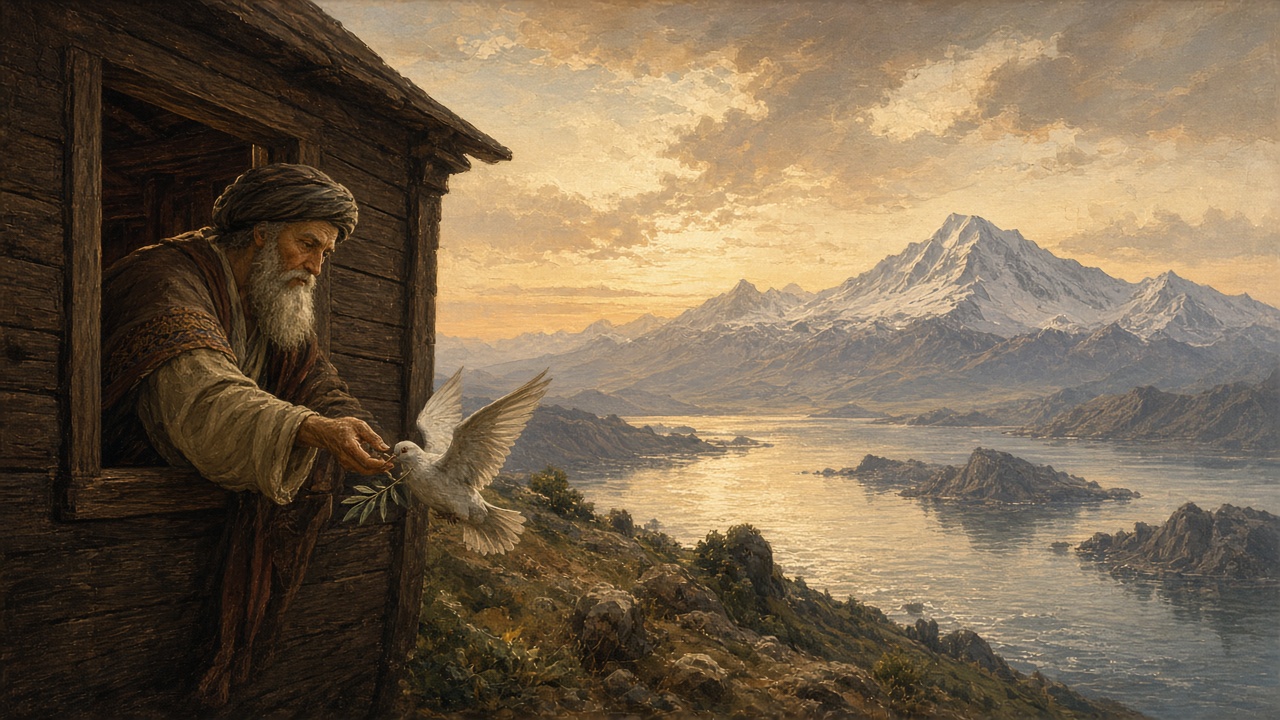
1Owo Esowo kehm buumu Noa, a enyam ekulugbe bi woomo a ne go egbang, a atohkondi atohkondi. Á kehm tumu elfeb tv go njini, nnyel alahb kehm kehme elrede. 2Abˈbehl alahb nya jolo go atahng ndi, a abuk alahb nya ya no go elbung sˈsahd, elahb tob rahke elnake. 3Owo alahb ma yele bulu njini kehm kehme elrede, eji ma kang nfung atahl asehma a nfung ewubu alahb ebsahb rˈrede. 4Go elku a nfung ebal nyi nnyahng esehma, egbang kehm ba kuumu go agburu awong nya Ararad. 5Alahb soro na asi jo rede tete rehng nnyahng ewubu, go ngbokambang efung bi nnyahng ewubu aro awong kehme ellohngo. 6Eji ma kang nfung atahl abal, Noa kehm lennge ewindu go egbang bi a limi no, 7kehm tumu nyakenyake mbare emel ebruk bi jo fonngo yannge na yannge tete alahb ka go ndi kpee. 8Á kehm tumu ebbehl re á song kpur joare alahb ebka mal go ndi. 9Jol ebbehl belem na edi ji á bahke ma kuumu, tibre alahb bulu ndi kpee, owo ebbehl kehm feere goji Noa egbang, Noa kehm tanne ebo ebe, ana ebbehl kuum-e go ebo á feere a ne kak go egbang. 10Kpe kang kan nfung esehma, á kehm kpe yehke ebbehl tum. 11Eji ebbehl feere no ba ngare elgung, á ko elyane oliv ni mbir mbir go ege a nnyo, ba a ni. Noa kehm kahne re alahb ebsahb rˈrede go ndi. 12Eji ma kpe kang nfung esehma yehko, á kpe tum ebbehl, wo esennge jia ebbehl kpeem feere goji Noa. 13Go ngbokambang efung bi ngbokambang a nnyahng, eji Noa ma kang nnya atahltahl, atahl awubu a elya anehng, ngare nyia alahb ebka go ndi, owo Noa kehm laade elkong egbang kehm seenge nyehn re ndi ebwum. 14Go eltahl a nfung esehma go etoono nnyahng ndi gohro wum kpee. 15Owo Esowo kehm bungu tong Noa re, 16<<Lohng go egbang, wo a nkal ewa, a abon eba, go akal abon eba. 17Yehke elkohn ejum ajehng ajehng go egbang ji li go elkpin, nrur, enyam, a nsol kpee nyi kpo tohng ala go ndi, eji bo lˈjel sahb rˈrur go njini. 18Owo Noa kehm lohngo go egbang, a nkal ewe, a abon ebe, go akal abon ebe. 19Enyam kpee, a nsol kpee nyi kpo tohng ala go ndi, a nruk kpee, go ejum ajehng ajehng ji kpo jen go ndi, bo kehm jo lohng go egbang nkohnakohn.
Noa limi njom ka Esowo
20Owo Noa kehm limi egudu njom alimi ka Jehova. Go ellong enyam, a nruk kpee nyi jolo saang ka Esowo, Noa yehke nyandiki, ko lim njom nyi eljahme fi ka Jehova, egudu njom jio. 21Jehova njom nyio kehme vohko esvsv eleenge, á kehm bungu go ege eltim re, <<N nehm kpe tiki su ndi tib esi ji nne, jol eji li li re ntir anyehng anyehng nyi nne go ge eltim tiki li ebi ntir, bomo ese ese. N nehm kpe tiki rannge nsol nyi li go elkpin kpee ana m ma lim a. 22<<Ana ndi tik kpe li, ngare elbahme a ngare elkpake, ngare alohk a ngare ewannge, elum a nnale, afung, a atv.>>
Você sabia?
As águas recuam
- A arca pousou sobre os montes de Ararate, nome que significa “terra sagrada” ou “terra alta” e designa um país em cujas montanhas a arca parou depois do dilúvio. O Easton's Bible Dictionary (1897) sugere que esses montes eram, provavelmente, a cordilheira curda do sul da Armênia, embora o nome também seja comumente aplicado a um pico alto e quase inacessível que se ergue da planície do Araxes. Em 2 Reis 19:37 e Isaías 37:38, a Authorized Version traduz o nome por “Armênia” e a Revised Version por “terra de Ararate”, enquanto Jeremias 51:27 o usa para a Armênia central ou meridional.Fontes: Ararat · o próprio texto bíblico
- O nome hebraico de Noé significa “descanso”, e neste capítulo a própria arca encontra descanso enquanto as águas baixam. Ele era filho de Lameque e neto de Matusalém, e pai de Sem, Cam e Jafé. O Easton's Bible Dictionary o descreve como o elo entre o mundo antigo e o novo, e como um segundo grande progenitor da família humana.Fontes: Noah · o próprio texto bíblico
- Notas cronológicas situam o Grande Dilúvio em 2347 a.C., com duração de um ano; o recuo das águas em 2346 a.C., ao longo de 220 dias; e a saída da arca em 2346 a.C., num único dia. No próprio capítulo, as águas já baixaram depois de 150 dias e a arca pousa no décimo sétimo dia do sétimo mês; no primeiro dia do primeiro mês do ano seiscentos e um de Noé as águas secaram, e no vigésimo sétimo dia do segundo mês a terra está completamente seca.Fontes: The Great Flood · The flood subsides · Leaving the Ark · o próprio texto bíblico
Notas escritas com auxílio de IA a partir de fontes abertas (Theographic Bible Metadata, CC BY-SA 4.0; Easton’s Bible Dictionary, domínio público) e revisadas antes de publicar.
Lugares deste capítulo
- Ararat · Hoje: Urartu · 39.703, 44.300 · versículo 4
Só aparecem lugares com identificação de alta confiança (90% ou mais segundo as fontes acadêmicas reunidas pelo OpenBible). Mapa da época: DARE (Digital Atlas of the Roman Empire), CC BY 4.0; mapa atual: © colaboradores do OpenStreetMap; lugares: OpenBible.info (CC BY 4.0).
Créditos e licença desta tradução
Ekajuk Scriptures Bible Portions
Ekajuk: Ekajuk Scriptures Bible Portions (Bible)
copyright © 2024 Luke Initiative for Scripture Translation and The Seed Company
Language: Ekajuk
Contributor: Luke Initiative for Scripture Translation
This translation is made available to you under the terms of the
Creative Commons Attribution Share-Alike license 4.0.
You have permission to share and redistribute this Bible translation in any format and to make reasonable revisions and adaptations of this translation, provided that:
You include the above copyright and source information.
If you make any changes to the text, you must indicate that you did so in a way that makes it clear that the original licensor is not necessarily endorsing your changes.
If you redistribute this text, you must distribute your contributions under the same license as the original.
Pictures included with Scriptures and other documents on this site are licensed just for use with those Scriptures and documents.
For other uses, please contact the respective copyright owners.
Note that in addition to the rules above, revising and adapting God's Word involves a great responsibility to be true to God's Word. See Revelation 22:18-19.
2025-07-02
Fonte: http://ebible.org/eka/ · eBible.org