Gênesis 4
Ekajuk Scriptures Bible Portions · Toque num versículo para ver as referências cruzadas.
Eka ji Ken a Ebel
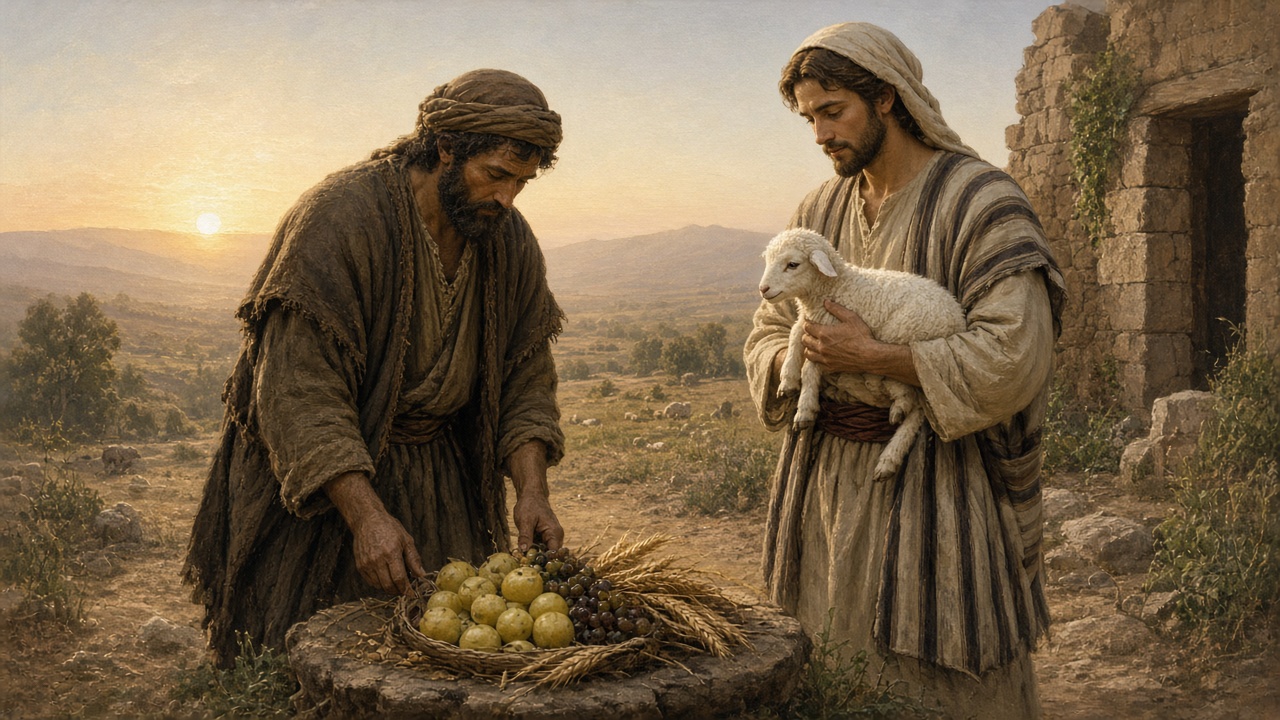
1Owo Adam kehm noongo a Iv nkal ewe á kehm sake ela. Eji ngare rehnge no, á kehm soro jel Ken. Iv kehm bungu re, <<Go ekakebo ji Jehova, me n jel nnenlum.>> 2Eji ma kang a, á kehm kpe jel etoono mmon no nlum, kehm-e gungu mbing re, Ebel.
Ebel jolo nne no jo le ebul, Ken jolo mbahmgbe. 3Efung abehng eji nkpake egbe ma rehng, Ken kehm koko nsol mbahmandi enye re á ba lim njom ka Jehova. 4Abel kehm tob jak atingi agbokombang ebul re á tob ba lim njom ka Jehova. Jehova bele eyebatahng a Ebel a njom enye, 5a belem eyebatahng a Ken a njom enye. Owo Ken eltim kehm-e sahb rˈrak, á fere go guunu.
6Jehova kehm bahbe Ken re, <<Jenji wahnge eltim kp-a rake ano? Nˈnan a kpˈguunu? 7A lˈlim ji kpˈnobo, bo wa nehm koa? A tohko fere lim ji kpˈnobo, kunu ekpu, tibre abiafem yim na yim rib rib go ga mbutahk kp-a siki, re boba, a bahke ma ga abiafem nyao.
8Ken kehm tongo Ebel mmonannyehn re, <<Wahr tahm ekulee.>> Eji bo jolo go ekulugbe, Ken kehm noko a Ebel mmonannyehn wul-e.
9Owo Jehova kehm bahbe Ken re, <<Mmonanne Ebel mee?>> Á kehm faange re, <<Me n nehme kahn. Anv, me wo kpo kpur mmonaneea?>>
10Jehova kehm bahbe re, <<Jenji a ma lim? Wuungu atung! Alung mmonanne kpˈlingi tob-m go atahng ndi. 11Nkuk a na. M ma-a kam go ndi nyio nyi lennge nnyo wo alung mmonanne go ega ebo. 12A lˈlim eltum, ndi nehm kpe jo lak nsol gbˈgbal ka-a. A bahke jolo nne no ki kpi ekehnge go njini nyia, a bahke fere jo yannge na yannge adi adi.>>
13Ken kehm bungu tong Jehova re, <<Erem ebame ebgbal sehng ana m bahke ma sol.>> 14Lela a ma-m kam yehke go ndi, m bahke jo biiri go ega esamahr. A ma-m lim re me n jo yannge na yannge, kˈbel erekekv. Nne awohng awohng no nyehn-m no, bahk-m wulu.
15Jehova kehm-e faange re, <<Bo wa nehm wul, tibre nne awohng awohng no wul-a no, m bahk-e bongo nkpel esehma.>> Owo Jehova kehm kake Ken elliingi, eji nne awohng awohng no lˈnyehn-e, á lˈki-e wul. 16Ken kehm soro mehl lohng esamahr ni Jehova, fere song lene go ndi nyi Nod, go ero nfam nyio nyi Eden.
17Owo Ken kehm noonga nkal ewe, á soro sa ela jel Enok. Ngare nyio Ken jo si ejahbe, á koo mbing a mmon ewe Enok gungu ejahbe. 18Enok wo jolo nde no Irad, Irad jol nde no Mehujael, Mehujael jol nde no Metusael, Metusael jol nde no Lamek.
19Lamek baange akal abal. Awohng bo jo lung-e re, Ada, noko Jila. 20Ada jele mmon no nlum no bo jo lung-e re Jabal; Ye wo jolo ngbokambang nne no jo lene go nkpatahk, jo le atohkondi. 21Mmonannyehn no nlum bo jo lung-e re Jubal. Ye wo jolo ngbokambanga nne no kub ebuk, fere jo wor efiri. 22Jila ji jolo nfahb no Ada, jele Tubal Ken. Ye wo gbo mbang jo tahl ajoobo akuungu, a abilikpi. Mmonannyehn Tubal Ken no nkal bo jo lung-e re Naama.
23Lamek kehm tongo akal ebe, Ada abola Jila re, wuung-m wahn atung nobnob, wahn akal ba Lamek, wahn wuk-m. Me n wul nne no ba kehme elnoko aname, njankun nyi lim-m nsol. 24Lˈjol re nne no wulu Ken, bo bahk-e bongo nkpel esehma, Noo nne no lˈwul Lamek bo bahke bongo nkpel atahl ara a nkpel elku ebal.
25Owo Adam kehm kpe noongo a nkal ewe, á kehm kpe jel mmon no nlum. Iv gung-e mbing re Set. Tibre Iv bungu re, <<Esowo ma-m ka mmon no nlum, enyo ji Ebel ji Ken wul-e no. 26Set tob bele mmon no nlum, á gung-e mbing re Enos.
Ngare nyio o wo, ane kehme ellungu mbinga Jehova nyi li saang go elkake.
Você sabia?
Caim, Abel e a vida a leste do Éden
- O nome hebraico de Abel significa “sopro” ou “vaidade”. Ele cuidava de ovelhas, enquanto seu irmão Caim cultivava o solo: Abel trouxe as melhores porções dos primogênitos do rebanho, e Caim trouxe fruto do solo. O Dicionário Bíblico de Easton (1897) lê a expressão “no decorrer do tempo” (à margem, “ao fim dos dias”) como provável referência ao sábado.Fontes: Abel · Cain · o próprio texto bíblico
- Depois da morte de Abel, Caim foi morar na terra de Node, a leste do Éden, nome que significa exílio, errância ou inquietação. Ali construiu uma cidade e deu-lhe o nome de seu filho Enoque. O Dicionário Bíblico de Easton observa que essa é a primeira cidade mencionada nas Escrituras.Fontes: Nod · Enoch (son of Cain) · o próprio texto bíblico
- Lameque, quinto na descendência de Caim, casou-se com duas mulheres, Ada e Zilá. O Dicionário Bíblico de Easton chama o discurso dele a elas de único exemplo conservado de poesia antediluviana, às vezes conhecido como “cântico da espada de Lameque”. Os filhos deles se ligam a modos de vida antigos: Jabal, às tendas e ao gado; Jubal, à harpa e à flauta; e Tubalcaim, à forja de bronze e ferro.Fontes: Lamech (descendant of Cain) · Adah (wife of Lamech) · Zillah · o próprio texto bíblico
Notas escritas com auxílio de IA a partir de fontes abertas (Theographic Bible Metadata, CC BY-SA 4.0; Easton’s Bible Dictionary, domínio público) e revisadas antes de publicar.
Créditos e licença desta tradução
Ekajuk Scriptures Bible Portions
Ekajuk: Ekajuk Scriptures Bible Portions (Bible)
copyright © 2024 Luke Initiative for Scripture Translation and The Seed Company
Language: Ekajuk
Contributor: Luke Initiative for Scripture Translation
This translation is made available to you under the terms of the
Creative Commons Attribution Share-Alike license 4.0.
You have permission to share and redistribute this Bible translation in any format and to make reasonable revisions and adaptations of this translation, provided that:
You include the above copyright and source information.
If you make any changes to the text, you must indicate that you did so in a way that makes it clear that the original licensor is not necessarily endorsing your changes.
If you redistribute this text, you must distribute your contributions under the same license as the original.
Pictures included with Scriptures and other documents on this site are licensed just for use with those Scriptures and documents.
For other uses, please contact the respective copyright owners.
Note that in addition to the rules above, revising and adapting God's Word involves a great responsibility to be true to God's Word. See Revelation 22:18-19.
2025-07-02
Fonte: http://ebible.org/eka/ · eBible.org